
Maker Builds Real-World 'Tricorder' with Spectrometer and Thermal Camera
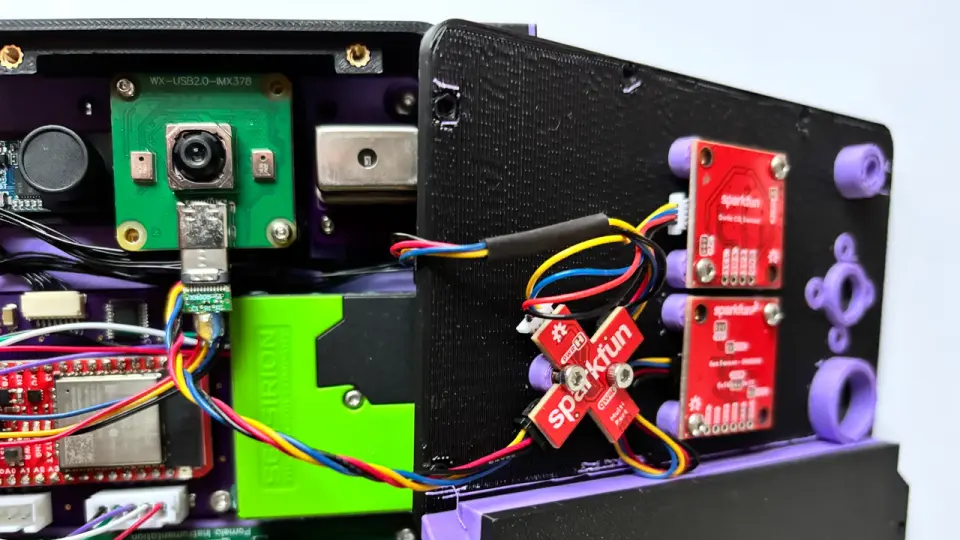
A decade-long open-source project has produced a functional handheld device inspired by Star Trek's tricorder, featuring a scintillation crystal for radiation detection, a visible light spectrometer, and thermal imaging. Built on a Clockwork Pi uConsole with a Compute Module 5, the device prioritizes practical scientific utility over screen accuracy. The project, led by PeterAJansen, is fully documented on GitHub for community replication.
Key points
- The device includes a scintillation crystal for beta and gamma-ray spectroscopic analysis, a visible light spectrometer, thermal camera, and magnetic field camera.
- It also features standard environmental sensors for temperature, pressure, humidity, particulate matter, VOCs, and CO2 concentration.
- The hardware is based on a Clockwork Pi uConsole, utilizing a Compute Module 5 for data processing and an IPS display with a QWERTY keyboard.
- The project is open-source, with assembly instructions and operational videos available on GitHub.
- The creator, PeterAJansen, has worked on this concept for over a decade, previously developing the 'arducorder'.
Background
This project follows a trend of DIY attempts to recreate Star Trek technology, but unlike many predecessors that focused on visual fidelity, this iteration emphasizes genuine scientific capability. It aligns with broader open-source hardware movements where community-driven projects aim to make advanced instrumentation accessible. The device represents a shift from cosmetic homage to functional utility, integrating multiple sensor types into a single handheld form factor.
Why it matters
The project demonstrates the feasibility of integrating complex scientific sensors, such as radiation detectors and spectrometers, into a portable, open-source platform. It highlights the potential for hobbyists and researchers to build custom diagnostic tools without relying on proprietary commercial equipment, potentially lowering barriers to entry for field science and environmental monitoring.
What to watch
The community can now replicate the device using the provided GitHub resources. Future iterations may incorporate additional sensors suggested by commenters, such as EEG, EKG, or blood oxygen monitors, though these are not part of the current build. The project's success may inspire further open-source scientific instrument development.
Want the full story? Read the original reporting
Read on Hackaday