
Margaret Hamilton, architect of Apollo's flight software, dies at 90
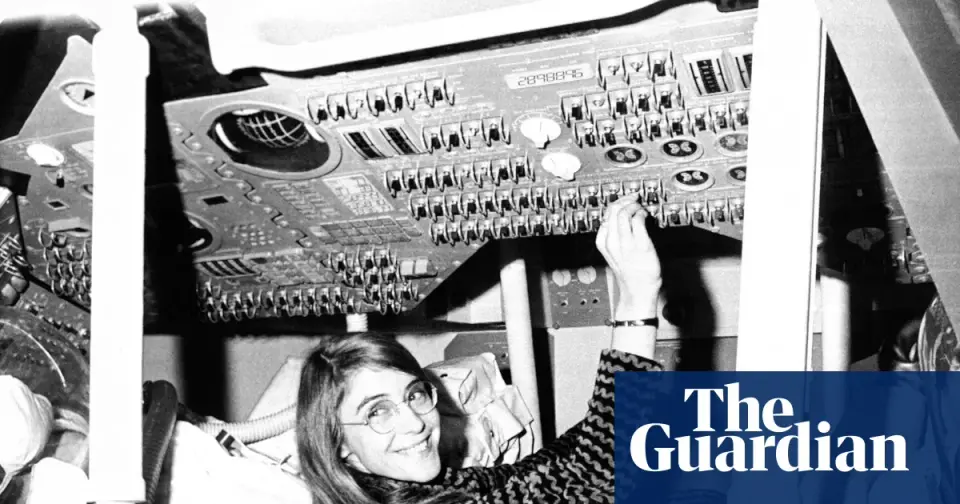
Margaret Hamilton, the software engineer who led the team that developed the guidance computer for NASA's Apollo missions, has died at age 90. Her work was critical to the success of the 1969 moon landing, and she is credited with coining the term 'software engineering' to elevate the status of programming.
Key points
- Hamilton died on September 30, 2026, at the age of 90.
- She directed the software engineering division at MIT's Instrumentation Laboratory, which developed the Apollo Guidance Computer (AGC).
- Her team's software prevented a catastrophic failure during the Apollo 11 moon landing by prioritizing essential tasks when the computer was overloaded.
- She coined the term 'software engineering' to distinguish her work from theoretical computer science and to gain respect for the field.
- Hamilton received the Presidential Medal of Freedom from President Barack Obama in 2016.
Background
Our archive from October 2026 confirms that Hamilton's death was widely reported, with earlier articles highlighting her role in saving the Apollo 11 mission and her legacy in establishing software engineering as a distinct discipline. The current sources provide additional details on her life and career, including her early work with meteorologist Edward Lorenz and her founding of two software companies.
How outlets are covering it
The Guardian emphasizes Hamilton's role in the Apollo 11 mission, noting that her simulations helped mission control decide not to abort the landing. The Financial Times highlights the 'Lauren bug' incident during Apollo 8, where Hamilton's knowledge of a similar error allowed for a mid-mission fix. The Mining Gazette focuses on her personal life and early years in Ripley, Michigan, describing her as a popular and sociable student. All sources agree on her significance as a pioneer in software engineering and her contributions to the Apollo program.
Why it matters
Hamilton's work laid the foundation for modern software engineering practices, and her advocacy for the field helped establish it as a respected discipline. Her legacy continues to inspire women in STEM and her contributions to the Apollo program remain a testament to the importance of meticulous software development in space exploration.
What to watch
There are no immediate next steps related to Hamilton's death, but her legacy will continue to be remembered and celebrated in the technology and space exploration communities. Her work will likely be studied and analyzed by future generations of software engineers and computer scientists.
- Margaret Hamilton obituary The Guardian
- Computer scientist Margaret Hamilton was a problem-solver for the ages (op-ed) Space
- Margaret Hamilton, software engineer, 1936-2026 Financial Times
- Remembering Margaret Heafield Hamilton The Mining Gazette
- Last Word | Margaret Hamilton: the woman who helped put man on the moon BBC
Want the full story? Read the original reporting
Read on The Guardian