Tag

Software Engineering

All articles tagged with #software engineering

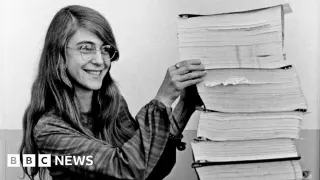
Margaret Hamilton, architect of Apollo's flight software, dies at 90
science-and-technology18 hours ago

Margaret Hamilton, architect of Apollo's flight software, dies at 90

Margaret Hamilton, the computer scientist who led the software team for NASA's Apollo program and coined the term 'software engineering,' has died at age 90. Her priority-driven code prevented a critical failure during the 1969 moon landing, and her work established software as a distinct professional discipline. She received the Presidential Medal of Freedom in 2016 and founded multiple technology companies after leaving MIT.


Margaret Hamilton, the architect of Apollo's flight software, dies at 90

Margaret Hamilton, the architect of Apollo's flight software, dies at 90

Margaret Hamilton, the computer scientist who led the software team for NASA's Apollo missions and coined the term 'software engineering,' has died at age 90. Her priority-driven code prevented a critical failure during the 1969 moon landing, and her work established software as a distinct professional discipline. She received the Presidential Medal of Freedom in 2016 and founded multiple technology companies after leaving MIT.

Margaret Hamilton, Apollo Software Pioneer, Dies at 90
obituaries5 days ago

Margaret Hamilton, Apollo Software Pioneer, Dies at 90

Margaret Hamilton, the computer scientist whose priority-driven software prevented a catastrophic failure during the Apollo 11 moon landing, has died at age 90. She is credited with coining the term 'software engineering' and leading the team at MIT that developed the code for NASA's lunar missions. Her work established error-detection protocols that prevented mission failure during critical moments in space.

Margaret Hamilton, Apollo Software Pioneer, Dies at 90

Margaret Hamilton, Apollo Software Pioneer, Dies at 90

Margaret Hamilton, the computer scientist whose priority-driven software ensured the safety of the Apollo 11 moon landing, has died at age 90. She is credited with coining the term 'software engineering' and leading the team at MIT that developed the code for NASA's lunar missions. Her work established error-detection protocols that prevented mission failure during critical moments in space.

Margaret Hamilton, Architect of Apollo’s Critical Software, Dies at 90

Margaret Hamilton, Architect of Apollo’s Critical Software, Dies at 90

Margaret Hamilton, the computer scientist whose priority-driven software prevented a catastrophic failure during the Apollo 11 moon landing, has died at age 90. She was the first woman hired for the Apollo project and is credited with coining the term 'software engineering' to establish it as a distinct professional discipline. Her work at MIT’s Instrumentation Lab led to the development of error-detection systems that allowed the lunar module to land safely despite hardware alarms. Hamilton received the Presidential Medal of Freedom in 2016 and founded multiple software companies after leaving MIT in the 1970s.

Margaret Hamilton, Apollo Software Pioneer, Dies at 90
science-and-technology6 days ago

Margaret Hamilton, Apollo Software Pioneer, Dies at 90

Margaret Hamilton, the computer scientist who led the software team for NASA’s Apollo program and helped establish software engineering as a discipline, has died at age 90. Her priority-driven code prevented a catastrophic failure during the Apollo 11 moon landing, and her legacy includes founding companies and receiving the Presidential Medal of Freedom.

AI coding rivals Factory and Cognition clash over executive poaching
technology12 days ago

AI coding rivals Factory and Cognition clash over executive poaching

A public dispute has erupted between AI coding startups Factory and Cognition over the hiring of Chris Degnan, a former Factory board observer who joined Cognition as chief revenue officer. Factory CEO Matan Grinberg accused Cognition of unethical recruitment tactics, including faking interviews to gather confidential information, while Cognition CEO Scott Wu denied the claims. The conflict highlights intense competition in the AI coding market, where both companies recently secured massive funding rounds at valuations exceeding $40 billion. Industry figures have weighed in, with some condemning the breach of trust and others defending the move as standard business practice.

The Missing Overbar That Sank Mariner 1 and Redefined Software QA
space2 months ago

The Missing Overbar That Sank Mariner 1 and Redefined Software QA

In July 1962, a single missing overbar in the Mariner 1 guidance code caused it to misinterpret raw radar data as real course deviations, leading to destructive corrections and the mission’s destruction 293 seconds after liftoff (costing about $18.5 million then, ~$190 million today). Arthur C. Clarke later dubbed it the most expensive hyphen in history. A separate hardware fault also contributed, but the episode spurred rigorous code review, equation-to-code verification, and formal testing practices that shaped software engineering for space missions; Mariner 2, launched five weeks later, successfully reached Venus and provided crucial data. The event remains a cautionary tale about the gap between paper mathematics and executable code.

AI disruption reshapes software engineering as engineers upskill and organize
technology3 months ago

AI disruption reshapes software engineering as engineers upskill and organize

The Guardian reports that AI is rapidly transforming software engineering: tens of thousands have faced layoffs or underemployment since AI tools began dominating coding tasks, prompting engineers to double down on fundamentals like problem definition and system design and to develop skills for validating and working with AI-written code. Some workers are pivoting to AI-focused roles or non‑coding paths, while others are seeking collective protections and wageNegotiations through unions and worker centers (e.g., What We Will). The piece emphasizes that coding expertise may be decreasing in value, but the ability to guide, review, and manage AI-assisted development remains essential. Overall, the industry is moving from pure coding to AI‑management, with ongoing debates about regulations, unionization, and the future of software careers.

Veteran Coders Tap AI to Win in Silicon Valley's Shifting Hiring
technology3 months ago

Veteran Coders Tap AI to Win in Silicon Valley's Shifting Hiring

The piece profiles Ben Kovitz, a veteran programmer who navigates Silicon Valley’s AI-driven hiring shift, showing that experienced engineers who can work with AI are in demand, often using AI-powered job tools and coaching to stand out. The market is skewing toward senior, AI-fluent talent and new roles like forward-deployed engineers, with Kovitz ultimately landing a position at Impulse Labs after months of applications and strategic interviewprep.

AI Rewrites the Software Engineer Hiring Playbook
technology3 months ago

AI Rewrites the Software Engineer Hiring Playbook

AI is reshaping software engineering hiring: interviews now test candidates' ability to reason through architectures, use AI in workflows, and demonstrate judgment over pure code speed. Big companies hunt on GitHub and X, test with project-based exercises and work trials, and integrate AI-assisted environments into interviews. Employers prize systems thinking, problem solving, and adaptability to AI tools, along with culture fit. The market remains competitive—though hiring is up, about 74% of developers report difficulty landing jobs per a 2025 HackerRank study—requiring candidates to present a broad, versatile skill set and to show real work in addition to résumés.

AI's Productivity Promise Is Slow to Materialize Across Companies
technology4 months ago

AI's Productivity Promise Is Slow to Materialize Across Companies

AI is boosting some individual coding speed and driving heavy spending, but broad productivity gains remain elusive: most firms report little to no impact on productivity, and experts warn that many pilots don’t scale across operations. The piece describes an “uncomfortable AI middle” where output grows without a clear macro boost, suggesting a gradual payoff later this decade as companies reinvent workflows, adopt AI more broadly, and measure real outcomes rather than token usage.