MIT researchers found that 50-millisecond bursts of pink noise, timed to slow brain waves during sleep, can strengthen cerebrospinal fluid flow, potentially aiding waste removal linked to Alzheimer's.
A new study suggests that sulfuric acid, rather than water, could support complex biological processes on other worlds. Researchers at MIT have demonstrated that certain biological molecules remain stable in highly acidic environments, challenging the traditional assumption that water is the only viable solvent for life. This finding expands the search for extraterrestrial life to include planets with thick, corrosive atmospheres, such as Venus.
MIT scientists have developed a method to engineer natural killer (NK) cells directly inside the body using lipid nanoparticles carrying messenger RNA. In mouse trials, this approach successfully eliminated tumors in aggressive melanoma and T cell lymphoma models, as well as reversed autoimmune liver damage, potentially simplifying the production of cell therapies.
A team led by MIT researchers has demonstrated that using highly flexible molecular connectors, rather than rigid ones, allows nanoparticles to self-assemble into less dense, previously unseen crystal structures. Published in Nature Materials, the study challenges the long-standing assumption that directional bonding requires fixed geometry. By utilizing electrostatically charged, deformable polymer ligands, the team achieved control over particle coordination without bespoke surface patterning, offering a scalable route to designer materials for photonics, catalysis, and medicine.
A new lightweight robot called FAAV, developed by MIT researchers, can transition between flying and swimming using flexible wings inspired by diving birds. Published in Science, the device moves at speeds comparable to real birds and aims to improve ocean data collection.
Margaret Hamilton, the software engineer who led the team that developed the guidance computer for NASA's Apollo missions, has died at age 90. Her work was critical to the success of the 1969 moon landing, and she is credited with coining the term 'software engineering' to elevate the status of programming.
A Suffolk County jury awarded former MIT scientist David Sabatini $6 million in damages for defamation, rejecting his former colleague Kristin Knouse's claims of sexual coercion. The verdict concludes a five-year legal battle that began after Sabatini lost his position at the Whitehead Institute in 2021.
Dr. David Sabatini, a former MIT and Whitehead Institute researcher, was awarded $6 million in damages by a Suffolk County jury on October 17, 2026. The verdict followed a five-year legal dispute with former colleague Dr. Kristin Knouse, who had accused Sabatini of sexual misconduct and coercion. The jury rejected Knouse's counterclaims, finding that Sabatini had defamed her. Sabatini had lost his position at the Whitehead Institute in 2021 after an internal investigation found he had fostered a sexualized atmosphere in his lab, though he maintained the relationship was consensual. The case involved text messages and testimony regarding the nature of their 2018-2019 relationship. Sabatini’s legal team argued Knouse sought to have him fired out of jealousy. The verdict does not resolve claims against the Whitehead Institute, which Sabatini’s team intends to pursue. Knouse’s attorneys plan to appeal. Sabatini, who has since relocated to Prague and Boston, expressed relief but noted the personal toll of the allegations, including threats against his family.
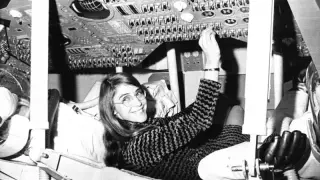
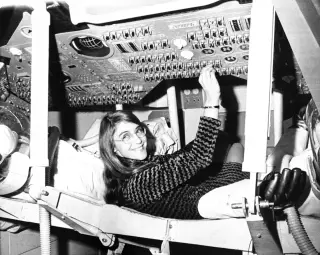
Margaret Hamilton, the software engineer whose priority-driven code prevented a catastrophic failure during the Apollo 11 Moon landing, has died at age 90. Born in 1936 in Paoli, Indiana, Hamilton led the software team at MIT’s Instrumentation Lab for NASA’s Apollo program. Her work established software engineering as a distinct discipline and saved the Apollo 8 mission by resolving a navigation error she dubbed the 'Lauren bug.'
Margaret Hamilton, the computer scientist who led the software team for NASA's Apollo program and coined the term 'software engineering,' has died at age 90. Her priority-driven code prevented a critical failure during the 1969 moon landing, and her work established software as a distinct professional discipline. She received the Presidential Medal of Freedom in 2016 and founded multiple technology companies after leaving MIT.
Margaret Hamilton, the computer scientist who led the software team for NASA's Apollo program, has died at age 90. She is credited with developing the priority-driven code that ensured the safe landing of Apollo 11 and for coining the term 'software engineering.'
Margaret Hamilton, the computer scientist who led the software team for NASA's Apollo missions and coined the term 'software engineering,' has died at age 90. Her priority-driven code prevented a critical failure during the 1969 moon landing, and her work established software as a distinct professional discipline. She received the Presidential Medal of Freedom in 2016 and founded multiple technology companies after leaving MIT.
Margaret Hamilton, the computer scientist whose priority-driven software prevented a catastrophic failure during the Apollo 11 moon landing, has died at age 90. She is credited with coining the term 'software engineering' and leading the team at MIT that developed the code for NASA's lunar missions. Her work established error-detection protocols that prevented mission failure during critical moments in space.
Margaret Hamilton, the computer scientist whose priority-driven software ensured the safe landing of Apollo 11, has died at age 90. She led the software team at MIT's Instrumentation Lab and is credited with coining the term 'software engineering' to establish it as a distinct professional discipline.
Margaret Hamilton, the computer scientist whose priority-driven software ensured the safety of the Apollo 11 moon landing, has died at age 90. She is credited with coining the term 'software engineering' and leading the team at MIT that developed the code for NASA's lunar missions. Her work established error-detection protocols that prevented mission failure during critical moments in space.