
Space-Based Solar Power Moves from Fiction to Feasibility as Global Projects Target 2030s
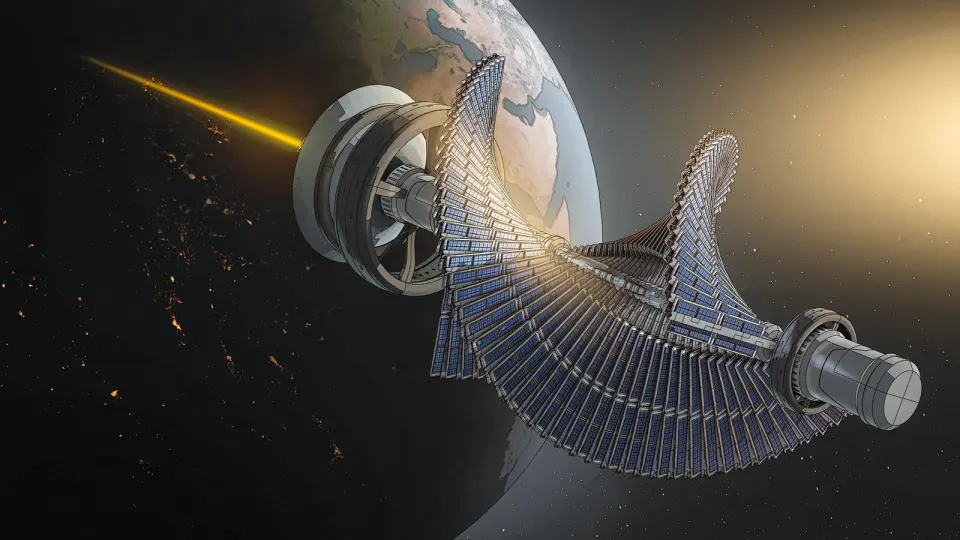
Space-based solar power (SBSP) is transitioning from a theoretical concept to an active engineering race, with major projects in China, the U.S., the U.K., and Japan targeting test launches within five years. Proponents argue that orbital satellites can harvest sunlight 24/7 without atmospheric interference, potentially meeting Earth's energy needs many times over. While launch costs have dropped significantly due to reusable rockets like SpaceX's Starship, critics remain skeptical about the high initial costs and technical challenges of beaming gigawatts of power to Earth via microwaves or lasers.
Key points
- China's ZhuRi, Japan's OHISAMA, the U.K.'s Space Solar, and U.S. efforts by Caltech and the Air Force are all developing SBSP prototypes for near-term testing.
- The U.K. government awarded 4.3 million pounds in seed funding in 2023 to support SBSP development, following a 2021 assessment that deemed the technology potentially cheaper than nuclear or biomass over its lifetime.
- Space Solar's CASSIOPeiA design uses a DNA-like structure to maintain constant sun alignment without heavy moving parts, aiming to beam 2 gigawatts to a single city.
- Microwave beaming is preferred for utility-scale power due to lower atmospheric attenuation, though it requires massive ground receivers; laser beaming is being tested by startups like Aetherflux but faces efficiency issues in cloudy conditions.
- Critics argue SBSP remains too expensive and complex for urgent green energy transitions, while proponents note that falling launch costs and superior solar exposure in orbit make it increasingly viable.
Background
SBSP concepts date back to 1923, with early proposals by Konstantin Tsiolkovsky and later formalized by Peter Glaser in 1968. Previous studies, including a 2015 U.S. Army War College report, deemed the technology technically feasible but economically uncompetitive. Recent advances in reusable rocketry have lowered launch costs by up to 30 times compared to the Space Shuttle era, revitalizing interest in orbital energy infrastructure. This development aligns with broader trends in space-based energy, such as Blue Origin's lunar power towers and fusion propulsion research, though SBSP remains distinct in its focus on Earth-bound power transmission.
Why it matters
If successful, SBSP could provide a stable, high-density renewable energy source capable of powering remote or grid-strained regions without land use or weather dependency. It may also reduce reliance on fossil fuels and nuclear energy, though military applications of power-beaming technology raise security concerns. The outcome of these near-term tests will determine whether SBSP becomes a viable component of the global energy mix or remains a niche technology.
What to watch
Watch for test launches of SBSP prototypes by 2030, including Aetherflux's October 1 infrared laser demonstration and U.S. Air Force microwave experiments. Monitor progress in reducing launch costs and improving power-beaming efficiency, as well as potential regulatory or safety frameworks for orbital energy transmission.
Want the full story? Read the original reporting
Read on Live Science