
New Mexico Footprints Reveal 2,000-Year Human Survival Amid Ice Age Climate Chaos
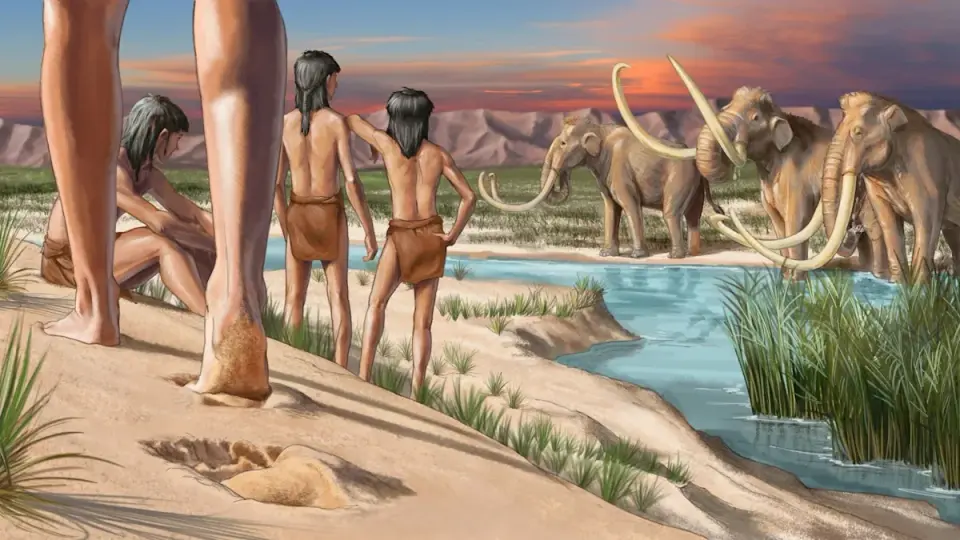
A new study published in Science Advances confirms that early humans in New Mexico lived through rapid, extreme climate shifts during the last ice age. By analyzing sediment layers at White Sands National Park, researchers found that people inhabited the area for nearly 2,000 years while the environment swung between wet and arid conditions. The findings suggest that human presence was not continuous but occurred in pulses, often coinciding with geological changes that preserved footprints.
Key points
- Researchers identified 20 distinct sediment horizons containing human footprints at White Sands, spanning from 23,500 to 21,700 years ago.
- The study reveals that the local environment changed dramatically within human lifetimes, including a shift from conifer forests to sagebrush and a significant shrinkage of Lake Otero.
- A short but severe drought occurred around 23,200 years ago, coinciding with rapid climate changes recorded in Greenland ice cores.
- Computer models suggest that footprints are preserved in 'pulses' during environmental transitions, meaning gaps in the record do not necessarily indicate human absence.
- The findings build on 2021 research that pushed back the date of earliest human activity in the Americas by several thousand years.
Background
This research expands on 2021 findings that established the presence of humans in North America thousands of years earlier than previously accepted. Recent global climate reports have highlighted accelerating warming and extreme weather patterns, providing a modern parallel to the rapid environmental shifts documented in this ancient record. The study also complements earlier findings from the same site regarding the development of early human transport systems.
How outlets are covering it
The Conversation and Live Science emphasize the dynamic nature of the climate, noting that people experienced rapid swings between wet and dry conditions. The University of Reading highlights the practical implications, suggesting that shrinking lakes may have concentrated resources, attracting humans to the area. While all sources agree on the timeline, The Conversation cautions that footprints are 'snapshots' rather than a continuous record, warning against interpreting gaps as periods of human absence. The University of Reading notes that while the footprints prove presence, they cannot fully determine precise human movements or behaviors.
Why it matters
This study provides critical evidence that early humans in the Americas were not just passive observers but active participants in a rapidly changing environment. It challenges previous assumptions about human migration timelines and highlights the resilience of early populations in adapting to extreme climatic shifts. Understanding these historical adaptations offers valuable insights into how human societies respond to environmental stressors, a relevant consideration in the context of modern climate change.
What to watch
Researchers will continue to analyze the sediment layers to refine the timeline of human presence and environmental changes. Further studies may explore the specific behaviors and adaptations of early humans in response to the shifting climate, potentially revealing more about their social structures and resource management strategies.
- Ancient Indigenous people in New Mexico lived through extreme climate change, study suggests Yahoo
- White Sands footprints suggest humans experienced abrupt environmental shifts during the last ice age Phys.org
- Early humans in America endured climate chaos – new research The Conversation
- Ancient Indigenous people in New Mexico lived through extreme climate change 23,000 years ago, study suggests Live Science
- First humans in America experienced dramatic climate change University of Reading
Want the full story? Read the original reporting
Read on Yahoo