
NASA Satellites Capture Pacific Ocean Turning Blue as Super El Niño Starves Phytoplankton
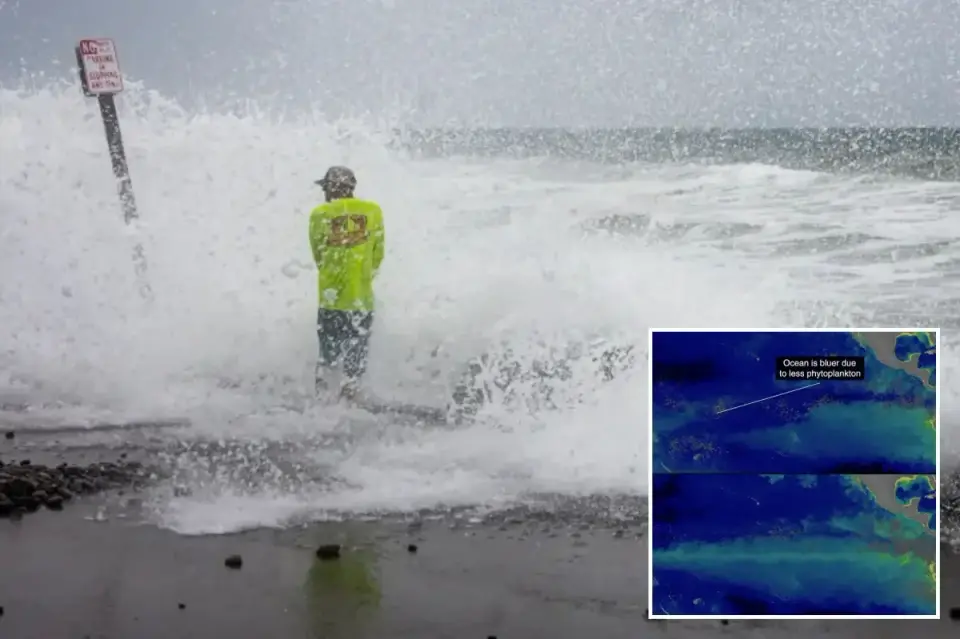
A historic El Niño event is causing the equatorial Pacific Ocean to shift from green to deep blue. NASA’s PACE satellite confirms that warming waters are suppressing nutrient upwelling, which starves phytoplankton populations. This color change signals a potential record-breaking climate event with severe global weather implications.
Key points
- NASA’s PACE satellite, launched in 2024, has documented a dramatic shift in the equatorial Pacific’s color from green to blue over the past year.
- The color change is caused by the decline of phytoplankton, which thrive in cool, nutrient-rich waters but die off when El Niño suppresses nutrient upwelling.
- NOAA estimates an 83% probability that the current event will be the strongest El Niño in 75 years, with sea surface temperatures already 3 degrees above average.
- The warming is causing sea levels to rise by up to 12 inches in some areas, prompting California Governor Gavin Newsom to declare a statewide emergency in September 2026.
- Scientists warn that the event could peak in late 2026 or early 2027, potentially becoming the strongest in recorded history.
Background
This development follows a series of record-breaking temperature anomalies in the Pacific observed since late 2025. Previous reporting indicated that the 2026 El Niño was already surpassing the 2015-2016 event in speed and strength, with sea surface anomalies reaching 3.8°C above normal in the Niño 3 region. The current color shift is a visible manifestation of the broader atmospheric and oceanic disruptions predicted in September 2026, including altered hurricane patterns and extreme coastal flooding risks.
How outlets are covering it
The New York Post emphasizes the visual spectacle of the color change, describing it as a 'mutant' phenomenon that is altering the face of the Pacific. FOX 29 Philadelphia focuses on the biological mechanism, explaining that the loss of green phytoplankton is a direct result of nutrient starvation caused by warm water blocking upwelling. The Independent highlights the technical capability of NASA’s PACE satellite to detect hundreds of distinct ocean colors, framing the shift as a critical data point for global weather forecasting. While all sources agree on the cause, the New York Post places greater emphasis on the immediate coastal impacts in California, whereas FOX 29 and The Independent focus more on the global atmospheric consequences and the scientific tracking of the event.
Why it matters
The visible color shift serves as a tangible indicator of the El Niño’s unprecedented strength. As phytoplankton populations collapse, the marine food web is disrupted, potentially affecting global fisheries. Furthermore, the associated warming and rising sea levels are already triggering coastal emergencies and altering global weather patterns, including increased rainfall and flooding risks in vulnerable regions. Understanding these changes is crucial for preparing for the extreme weather events expected through 2027.
What to watch
Forecasters expect the El Niño to continue strengthening through the winter of 2026-2027. Scientists anticipate that sea surface temperatures may rise by an additional fraction of a degree in the coming months. The event is expected to peak in November or December, potentially setting new records for ocean temperature anomalies and driving extreme weather events across the globe. Continued monitoring by NASA’s PACE satellite will provide critical data on the extent of the phytoplankton decline and the resulting impact on marine ecosystems.
- Super El Niño forces dramatic color shift in the Pacific — as record-breaking temperatures threaten marine life New York Post
- El Niño is making the Pacific Ocean bluer: See the NASA satellite images FOX 29 Philadelphia
- How Science Is Helping Coastal Communities Build Resilience to El Niño The Pew Charitable Trusts
- How the ‘Super El Niño’ is changing the colour of the ocean The Independent
Want the full story? Read the original reporting
Read on New York Post