Tag

Phytoplankton

All articles tagged with #phytoplankton

Antarctic Earthquakes Trigger Rapid Surface Phytoplankton Blooms
environment1 month ago

Antarctic Earthquakes Trigger Rapid Surface Phytoplankton Blooms

New research links underwater earthquakes near the Australian Antarctic Ridge to boosted surface phytoplankton blooms by enhancing iron release from hydrothermal vents, speeding nutrient delivery to the surface and cascading through the Southern Ocean food web, with potential implications for ocean carbon uptake and climate models. The study combines decades of satellite data with seismic records and points to a surprising, faster-than-expected pathway from deep-sea fluids to surface life.

Hidden Ocean Fronts Drive Surprising Carbon Uptake
science2 months ago

Hidden Ocean Fronts Drive Surprising Carbon Uptake

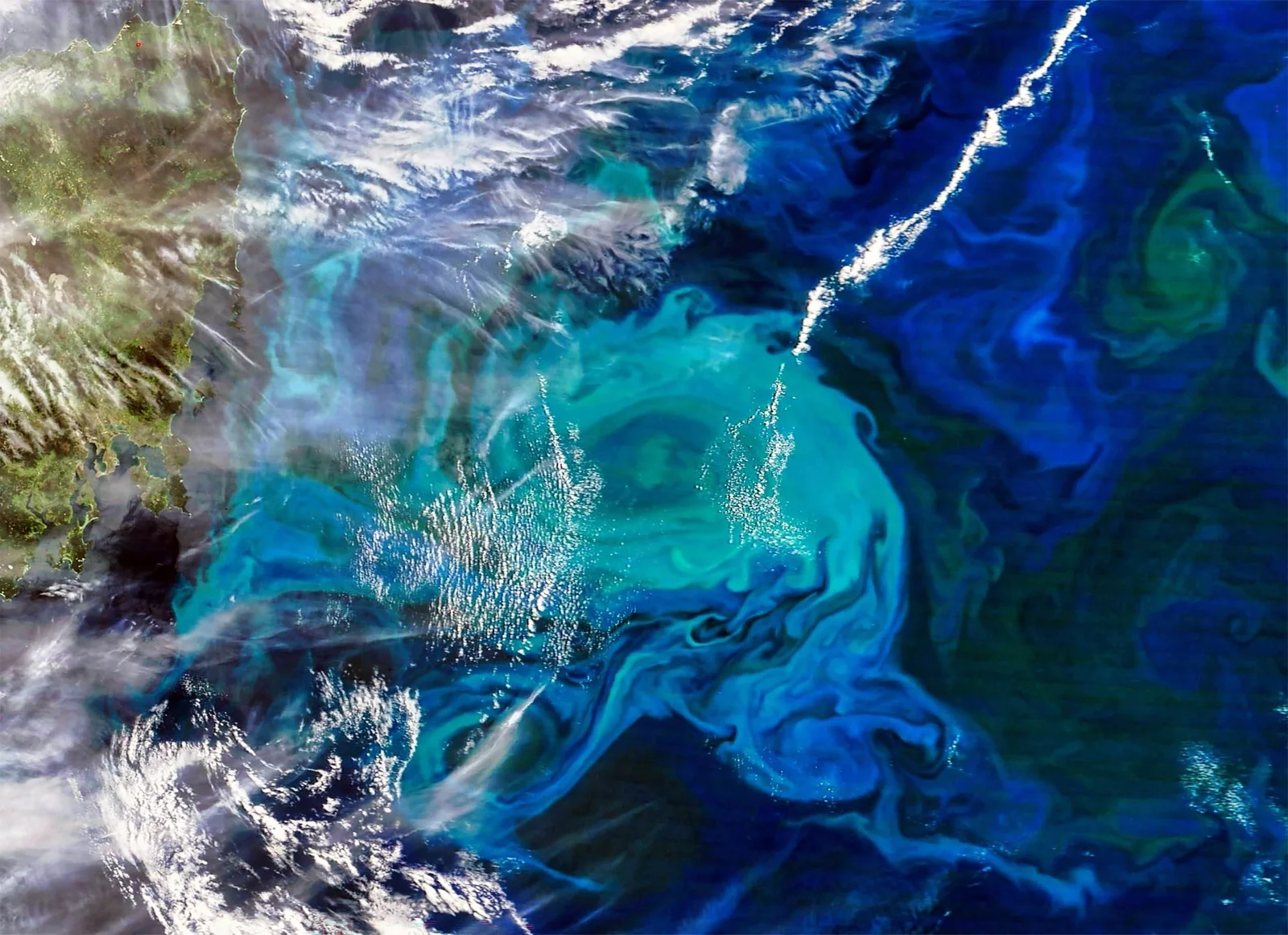
Two decades of satellite data show that narrow ocean fronts—where water masses meet—are hotspots for carbon capture due to vertical mixing and phytoplankton blooms. These small zones disproportionately absorb CO₂, suggesting climate models may underestimate ocean carbon storage if they ignore front dynamics; incorporating them could improve predictions of the carbon cycle.

Samsung Launches 13-Inch Color E-Paper With Phytoplankton Bio-Resin Housing
technology2 months ago

Samsung Launches 13-Inch Color E-Paper With Phytoplankton Bio-Resin Housing

Samsung today announced the global launch of the 13-inch Color E-Paper (EM13DX), the world’s first commercial display with a phytoplankton-based bio-resin housing. The ultra-thin, 1,600×1,200 color panel runs on ultra-low power (static images at zero watts) and uses a rechargeable battery, USB-C, and flexible mounting, while its housing uses 45% recycled plastic and 10% bio-resin, cutting carbon emissions by more than 40% versus petroleum plastics; packaging is 100% paper. Content is managed via the Samsung E-Paper App or Samsung VXT, with a 20-inch model to follow at ISE 2026 as Samsung expands its digital signage lineup.

NASA Spots a Ring of Blooms Around the Chatham Islands
science2 months ago

NASA Spots a Ring of Blooms Around the Chatham Islands

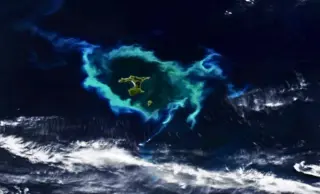
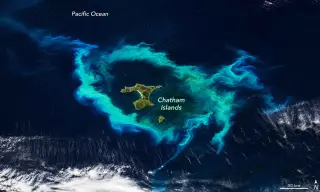
NASA's VIIRS satellite captured a ring-shaped phytoplankton bloom around the Chatham Islands, where nutrient-rich upwelling from the Chatham Rise and the clash of cold Antarctic and warmer subtropical waters fuel rapid algae growth. The vivid greens and blues reveal a seasonal, highly productive marine ecosystem that supports fisheries and marine mammals, though the area is also known for mass strandings tied to its complex oceanography.

Satellite View Captures Ring of Phytoplankton Around Chatham Islands
science2 months ago

Satellite View Captures Ring of Phytoplankton Around Chatham Islands

NASA's Earth Observatory captured a vibrant ring of phytoplankton encircling the remote Chatham Islands in January 2026, observed by the VIIRS instrument on NOAA-20. The bloom forms where cold, nutrient-rich Antarctic waters meet warmer subtropical waters around the Chatham Rise, supporting local fisheries and marine life, though the region is also known for whale and dolphin strandings.

Arctic Changes Threaten Global Climate Stability
environment8 months ago

Arctic Changes Threaten Global Climate Stability

A study published in Nature Climate Change reveals significant shifts in Antarctic phytoplankton communities over nearly three decades, driven by reduced sea ice and iron availability, leading to a decline in diatoms crucial for carbon sequestration. These changes threaten to disrupt the marine food web and accelerate global climate change by decreasing the ocean's ability to store carbon, highlighting the importance of long-term data collection in understanding climate impacts.

NASA Supercomputers Uncover Greenland's Melting Ice Impact on Marine Ecosystems
science8 months ago

NASA Supercomputers Uncover Greenland's Melting Ice Impact on Marine Ecosystems

NASA-supported research using supercomputers has revealed that melting glaciers in Greenland, particularly the Jakobshavn Glacier, are releasing nutrients that boost phytoplankton growth, which could impact marine food webs and carbon cycling, with broader implications for understanding climate change effects on ocean ecosystems worldwide.

Unstoppable Shift: Earth's Oceans Change Color
environment1 year ago

Unstoppable Shift: Earth's Oceans Change Color

Over the past 20 years, more than half of the world's oceans have changed color, a shift linked to human-driven climate change affecting phytoplankton communities. These microscopic organisms are crucial for marine ecosystems and carbon capture. The changes, observed via satellite data, indicate significant impacts on the marine food web and highlight the urgent need to address climate change.

"NASA's PACE Satellite: Unprecedented View of Earth's Tiniest Mysteries from Space"
science-and-technology2 years ago

"NASA's PACE Satellite: Unprecedented View of Earth's Tiniest Mysteries from Space"

NASA is set to launch the PACE satellite on Feb. 6 to monitor Earth's oceans, atmosphere, and land from space. The mission aims to study phytoplankton dynamics in the ocean, track aerosols and clouds in the atmosphere, and observe land vegetation stress. PACE will provide valuable insights into marine ecosystem health, air quality, and climate change impacts, offering a comprehensive view of our planet's health from space.