
Unveiling the Universe's Expansion Rate through Gravitational Waves and Black Hole Ripples
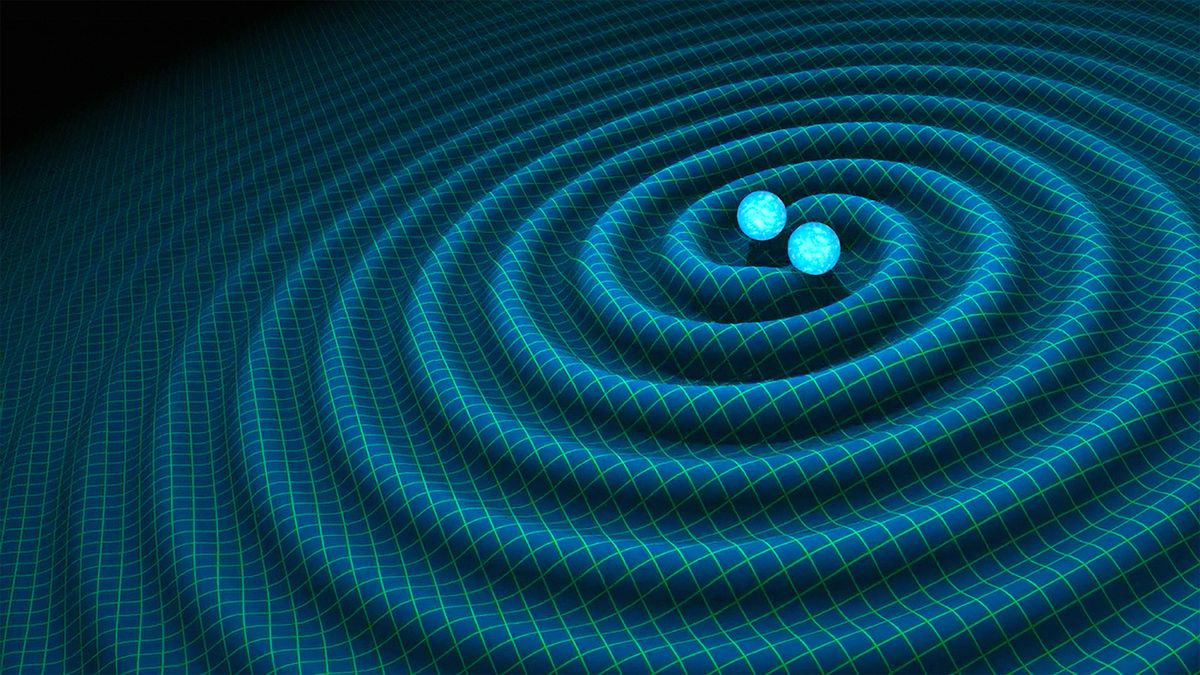
Gravitational waves emitted during black hole mergers could be used to measure the rate at which the universe is expanding, known as the Hubble constant. The two main methods currently used to measure cosmic expansion give different values, leading scientists to search for a corroborating method. A new study suggests using gravitational lensing, a phenomenon predicted by Albert Einstein, to measure the Hubble constant. Gravitational waves, like light, can be affected by gravitational lensing, and their arrival time delay can be used as a measure of the Hubble constant. This method could allow astronomers to observe further back into the history of the universe than with light alone. While this technique is still in its early stages, recent upgrades to ground-based gravitational wave detectors and the upcoming launch of the space-based Laser Interferometer Space Antenna (LISA) could provide the necessary data for further exploration.
- Gravitational waves could reveal universe's expansion rate Space.com
- Black hole ripples could help pin down expansion of universe Phys.org
- Gravitational Waves Can Be Gravitationally Lensed, and This Could Provide Another Way to Measure the Expansion of the Universe Universe Today
- Black Hole Echoes Could Help Resolve Tension Around How Fast The Universe Is Expanding IFLScience
- Gravitational lensing of waves: A better way to measure the universe's expansion? Interesting Engineering
Reading Insights
0
11
4 min
vs 5 min read
85%
986 → 144 words
Want the full story? Read the original article
Read on Space.com