Tag

Universe Expansion

All articles tagged with #universe expansion

Universe Could End in 33 Billion Years, New Dark-Energy Model Suggests
space1 month ago

Universe Could End in 33 Billion Years, New Dark-Energy Model Suggests

A new study applying a hybrid axion dark energy model to Dark Energy Survey data hints that dark energy may be dynamic. If correct, this could cause the universe’s expansion to slow, halt, and reverse, leading to a Big Crunch about 33.3 billion years from now—much sooner than the trillion-year lifetime traditionally assumed—though the result depends on several variables and requires further verification.

Largest 3D Map of the Universe Deepens Cosmology Puzzle
space1 month ago

Largest 3D Map of the Universe Deepens Cosmology Puzzle

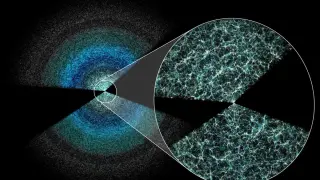
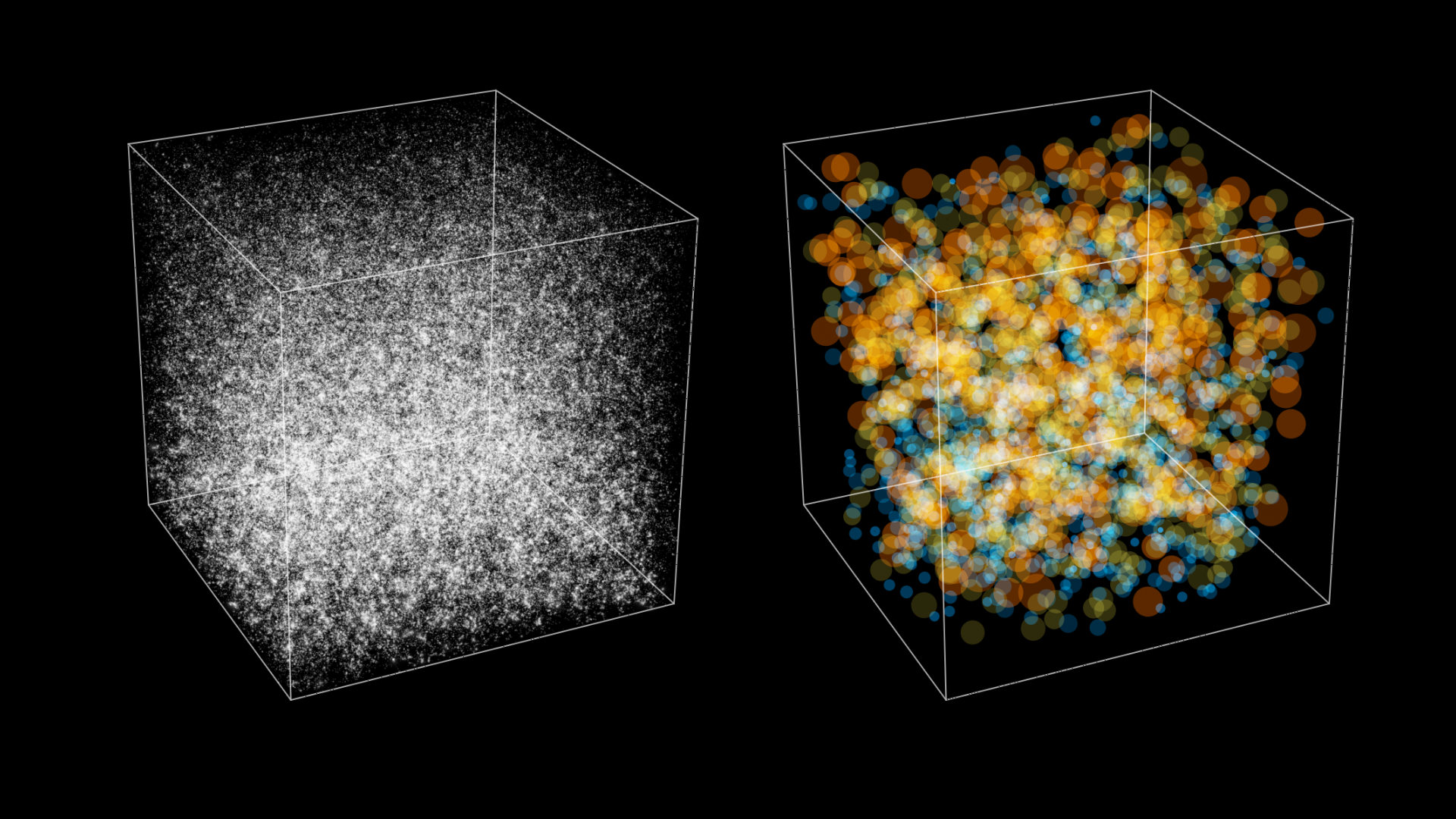
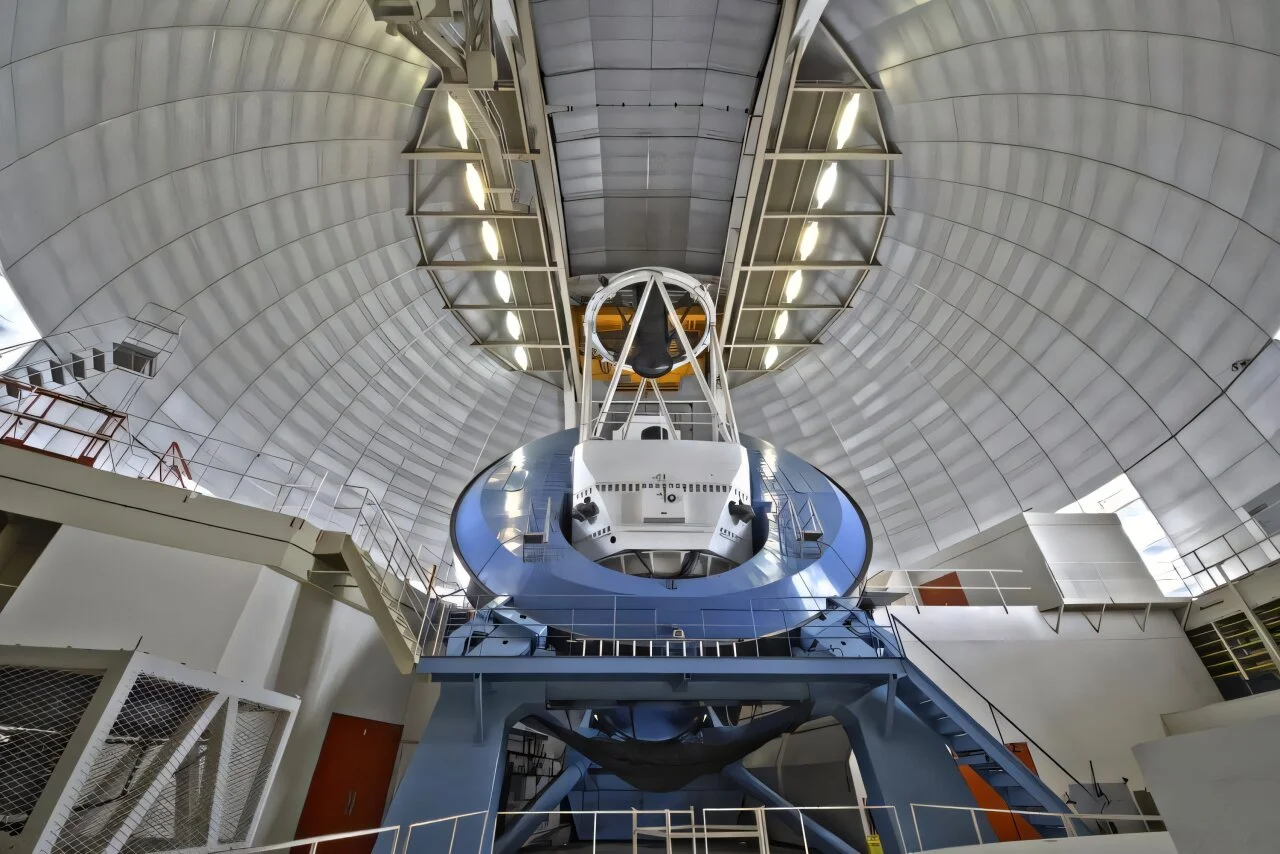
DESI finished its first official survey, delivering the largest high‑resolution 3D map of the cosmos—47 million galaxies and 20 million stars across 11 billion years—unlocking a data trove that could test the constant nature of dark energy (lambda) and reveal potential evolution. While previous hints suggested possible tensions with the standard model, scientists emphasize careful error analysis and independent confirmation. With six data‑heavy paper batches planned and follow‑on surveys like Euclid and Rubin Observatory on the horizon, the DESI results are likely to refine or challenge current cosmology rather than settle it outright.

New Hubble Constant Precision Keeps Cosmology in Tension
science1 month ago

New Hubble Constant Precision Keeps Cosmology in Tension

An international team reports the most precise measurement of the Hubble constant to date (about 73.5 km/s/Mpc with ~1% accuracy). While tighter, the result reinforces the long-standing Hubble tension between local measurements and the standard cosmological model, raising the possibility of undiscovered physics or systematic issues and underscoring the need to reassess our understanding of the universe’s expansion.

science6 months ago

Universe's Expansion Is Now Slowing Down

A recent study suggests that the universe's expansion is slowing down rather than accelerating, challenging the standard cosmological model and implying potential new physics or models like a cyclic universe. The findings focus on the impact of progenitor star age on Type Ia supernova luminosity, which could bias previous measurements of cosmic expansion. While intriguing, the results are met with cautious skepticism and require further validation with upcoming data.

Emerging Evidence Indicates Universe's Expansion Is Slowing, Challenging Dark Energy Theories
science6 months ago

Emerging Evidence Indicates Universe's Expansion Is Slowing, Challenging Dark Energy Theories

New research suggests that the universe's expansion may be slowing down and dark energy might not be accelerating it anymore, potentially marking a major shift in cosmological understanding. This conclusion is based on findings that challenge the standard model of dark energy, indicating the universe has already entered a phase of decelerated expansion, with future observations from the Vera C. Rubin Observatory expected to further test these results.

Emerging Evidence Indicates Universe's Expansion Is Decelerating
science6 months ago

Emerging Evidence Indicates Universe's Expansion Is Decelerating

A new study suggests that the universe's expansion is slowing down rather than accelerating, challenging the long-held belief that dark energy is causing an ever-increasing expansion rate. The findings indicate that dark energy may weaken over time, leading to a transition from acceleration to deceleration, which could significantly alter our understanding of the universe's past and future.

Potential Clues to the Pre-Big Bang Universe
science6 months ago

Potential Clues to the Pre-Big Bang Universe

Recent cosmological research suggests that understanding the universe's ultimate fate—whether it will end in a Big Crunch, Big Freeze, or a cyclical Big Bounce—could provide insights into what preceded the Big Bang, especially with new evidence indicating that dark energy may not be constant but evolving over time, possibly involving particles called axions that influence cosmic expansion.