
US Food Aid Cuts Squeeze Farmers and Disrupt Global Hunger Programs
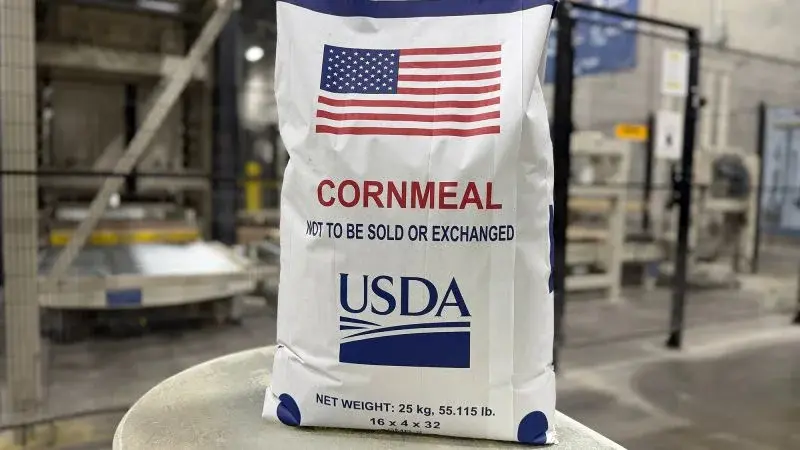
US cuts to food assistance programs have reduced demand for American crops, hurting farmers in Nebraska and Wisconsin, while humanitarian experts warn that funding reductions are leaving millions without critical food aid. Congress lowered Food for Peace funding by 25% for FY2026, and USDA spending on food aid commodities dropped 55% compared to 2024 levels. The Trump administration transferred the program to the USDA, which has dropped several famine-risk countries from its recipient list, including Somalia and South Sudan. While the White House calls the programs inefficient, critics argue the cuts threaten global leadership and human lives.
Key points
- Congress cut Food for Peace funding by 25%, from $1.62 billion to $1.2 billion for FY2026, while USDA spending on food aid commodities fell 55% in 2025-2026 compared to 2024.
- Nebraska bean farmer Jim Darnell and others report that losing aid program buyers has disrupted crop prices, compounding challenges from drought and high input costs.
- The Trump administration transferred Food for Peace to the USDA after dismantling USAID, leading to the exclusion of famine-risk countries like Somalia and South Sudan from the 2026 recipient list.
- Wisconsin’s Didion Inc. suspended production of malnutrition-treatment cereal in 2025 due to supply chain disruptions, though production resumed in 2026.
- The White House labeled Food for Peace and McGovern-Dole 'inefficient' and 'wasteful,' while critics argue the cuts undermine US global leadership and endanger vulnerable populations.
Background
The US has a bipartisan history of supporting food assistance programs since the 1950s, with Food for Peace feeding over 4 billion people. The Trump administration’s dismantling of USAID in 2025 transferred remaining programs to the USDA and State Department, sparking debates over efficiency and humanitarian impact. A 2026 Lancet study projected that global aid cuts could lead to 9.4 million additional deaths by 2030, highlighting the long-term consequences of reduced assistance.
How outlets are covering it
CNN and Mezha.net emphasize the humanitarian crisis and farmer impacts, citing experts like Sam Vigersky and Riley Didion. SuaraGarut.ID mirrors these points but adds less detail on the USDA’s recipient list changes. The White House, via OMB, defends the cuts as necessary to eliminate 'inefficient' programs, while critics like Jocilyn Estes and Cathy Kaufman argue the cuts undermine US global leadership and ignore the programs’ bipartisan support.
Why it matters
The cuts affect both American farmers, who rely on aid programs for surplus crop sales, and global populations facing hunger. Reduced funding threatens the US’s role as a humanitarian leader and could exacerbate food insecurity in crisis zones, with long-term economic and geopolitical implications.
What to watch
The USDA is working to restore some McGovern-Dole projects, but funding uncertainty remains. Humanitarian groups like World Vision are adjusting ration sizes and distribution plans in response to reduced aid. The White House has not redirected the cut funds to other programs, leaving the future of Food for Peace and McGovern-Dole in flux.
Want the full story? Read the original reporting
Read on CNN