
Warsh’s Jackson Hole speech tests Fed’s new market-led strategy
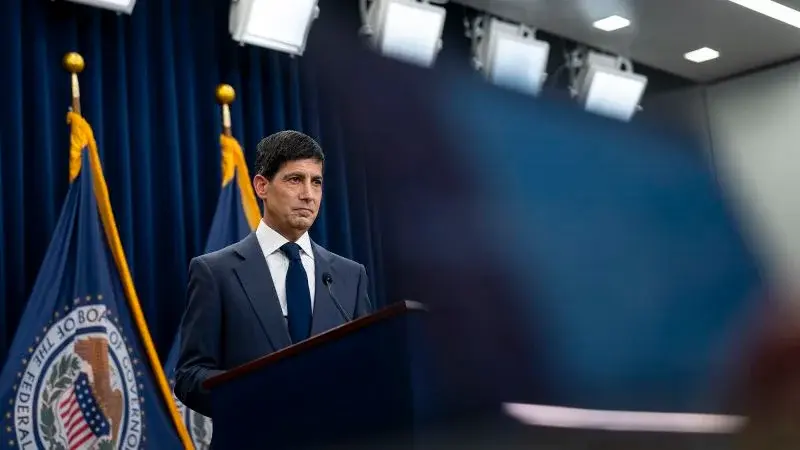
Federal Reserve Chair Kevin Warsh faces intense pressure to clarify the central bank’s policy stance at the Jackson Hole symposium. After three months of avoiding forward guidance, Warsh must decide whether to define his 'reaction function' or maintain his market-led approach, a choice that could trigger significant volatility in bond markets.
Key points
- Warsh is expected to break from tradition by not providing explicit interest rate signals at the Jackson Hole symposium, a move that has frustrated investors seeking clarity.
- A CNBC survey found that 80% of economists and investors want Warsh to explain his economic views in more detail, particularly regarding how he interprets inflation and monetary policy channels.
- Some Fed officials are calling for a rate hike for the first time since July 2023, as inflation has risen due to tariffs, geopolitical conflicts, and massive AI infrastructure spending.
- Treasury Secretary Scott Bessent announced a plan to double the size of debt buybacks starting September 9, a move that some analysts argue contradicts Warsh’s hands-off market strategy.
- If Warsh fails to signal a willingness to raise rates, analysts warn that long-dated Treasury yields could surge, potentially pushing the 30-year yield to 5.5% or higher.
Background
Since taking office in May 2026, Warsh has shifted the Fed’s approach by relying more on market signals than explicit forward guidance. This strategy has led to a volatile environment where long-term yields have risen significantly, with the 30-year yield reaching 5.27% in early August. While some market participants have interpreted this as a sign of tightening financial conditions, others view the lack of clarity as a source of unnecessary risk. Warsh has also established five task forces to modernize the Fed’s functions, including using AI to better gauge the economy, but these reforms have not yet resolved the current policy uncertainty.
How outlets are covering it
CNN emphasizes the risk of Warsh’s silence, noting that his refusal to define a 'reaction function' has led to a surge in long-term bond yields and increased uncertainty. In contrast, CNBC highlights the tension between Warsh’s market-led approach and the Treasury’s recent decision to double debt buybacks, which some analysts argue undermines the Fed’s strategy. While CNN focuses on the potential for market volatility if Warsh remains cryptic, CNBC points to the possibility that Warsh might use the speech to discuss broader structural themes like productivity, which could be interpreted as dovish and trigger a sell-off in Treasurys.
Why it matters
The outcome of Warsh’s Jackson Hole speech will determine the direction of US monetary policy and the stability of bond markets. If Warsh fails to provide clarity, it could lead to a sharp rise in long-term interest rates, increasing borrowing costs for the federal government, which already faces a $40 trillion debt load. Conversely, a clear signal of a potential rate hike could help stabilize markets and address rising inflation, but it may also slow economic growth. The speech will also test the viability of Warsh’s new market-led strategy, which has so far produced mixed results and raised questions about the Fed’s ability to manage inflation effectively.
What to watch
Investors will closely monitor Warsh’s speech for any hints about the Fed’s future policy direction, particularly regarding the September 15-16 meeting, where there is currently a 34% chance of a rate hike. If Warsh remains silent, markets may interpret this as a sign of dovishness, leading to a sell-off in Treasurys. Conversely, a clear signal of a potential rate hike could stabilize markets and reduce volatility. The Treasury’s upcoming debt buybacks will also be a key factor, as they could further complicate the Fed’s efforts to manage inflation and interest rates.
- Fed Chairman Kevin Warsh faces pressure to show his hand CNN
- Fed Chairman Kevin Warsh delivers his key Jackson Hole speech Friday. Here's what to expect CNBC
- US Stock Futures Slip Before Warsh, Bonds Steady: Markets Wrap Bloomberg.com
- Shares turn cautious ahead of Warsh's Jackson Hole debut; FX, bonds hold breath Reuters
- Kevin Warsh has a plan for the Fed. Scott Bessent is getting in the way CNN
Want the full story? Read the original reporting
Read on CNN