
Lithuania Advances Nuclear Ban Repeal, Prompting Kremlin Escalation Warnings
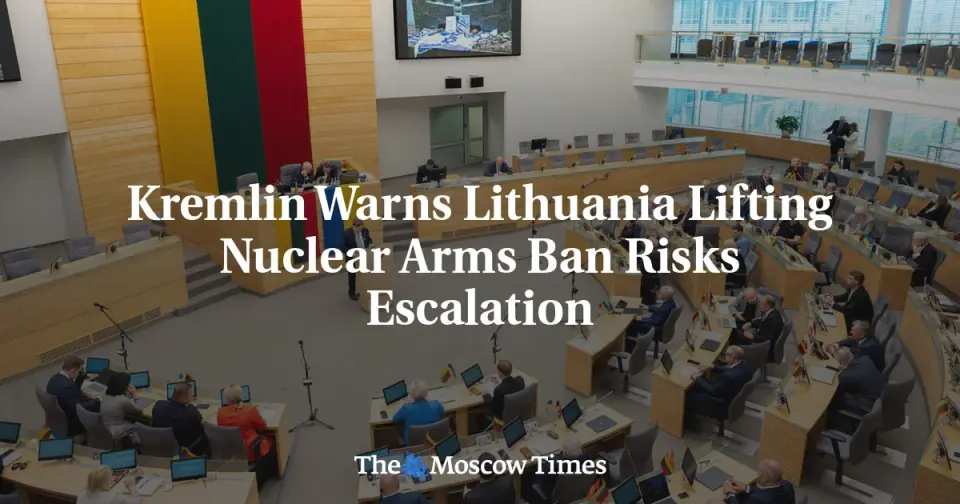
Lithuania’s parliament voted 106-18 to advance a constitutional amendment lifting bans on nuclear weapons and foreign military bases. The Kremlin warned this move, alongside potential U.S. base expansion, risks significant regional escalation. A final vote is scheduled for January 12, 2027, requiring a two-thirds majority.
Key points
- Lithuanian lawmakers passed the first of two required votes to repeal Article 137 of the constitution, which prohibits weapons of mass destruction and foreign bases.
- Kremlin spokesman Dmitry Peskov stated that moving U.S. military infrastructure closer to Russian borders and deploying nuclear weapons in neighboring states constitutes a step toward escalating tensions.
- The amendment requires a second vote on January 12, 2027, with at least 94 of 141 parliamentary members needed to pass both ballots.
- U.S. President Donald Trump indicated he would consider Lithuania’s request for a permanent U.S. military base, citing the country’s status as a strong ally.
- Lithuania currently hosts a rotating U.S. armored battalion of nearly 1,000 troops, a presence that began in 2019.
Background
Lithuania has been a staunch supporter of Ukraine during the ongoing conflict, providing significant military and financial aid. The current move follows similar actions by Finland, which repealed its own nuclear ban in 2026 to align with NATO obligations. Earlier in 2026, Russian state media briefly published threats regarding Lithuania before retracting them, highlighting the sensitivity of the issue in Moscow.
How outlets are covering it
The Moscow Times and CNBC emphasize the Kremlin’s warning that the changes mark a 'significant escalation' and threaten stability in Europe. Euronews highlights the strategic rationale, noting that Lithuania seeks to remove legal distinctions that left it less protected than neighbors like Poland and Latvia. While all sources agree on the vote count and the Kremlin’s reaction, Euronews provides additional context on NATO’s broader 'forward deterrence' initiatives involving France and other European allies, framing the move as part of a wider European security shift rather than an isolated Baltic action.
Why it matters
This development signals a potential shift in NATO’s deterrence posture in the Baltic region. If successful, it would allow allied aircraft and ships carrying nuclear weapons to enter Lithuanian territory for deterrence purposes, directly challenging Russian security concerns regarding its Kaliningrad exclave and Belarusian borders.
What to watch
The final parliamentary vote is scheduled for January 12, 2027. Analysts will watch for any further Russian diplomatic or military responses, as well as the outcome of U.S. discussions regarding a permanent base in Lithuania.
- Kremlin Warns Lithuania Lifting Nuclear Arms Ban Risks Escalation The Moscow Times
- Russia’s neighbor backs push to lift ban on nuclear weapons, prompting outcry from Moscow CNBC
- Kremlin warns Lithuania that its move to lift a nuclear arms ban risks further escalation Reuters
- Russia Issues Warning As Trump Considers New Military Base Newsweek
- Lithuania takes further step towards lifting nuclear weapons ban Euronews.com
Want the full story? Read the original reporting
Read on The Moscow Times