
Zelenskyy Rejects US Proposal Linking Donbas Cession to NATO Membership
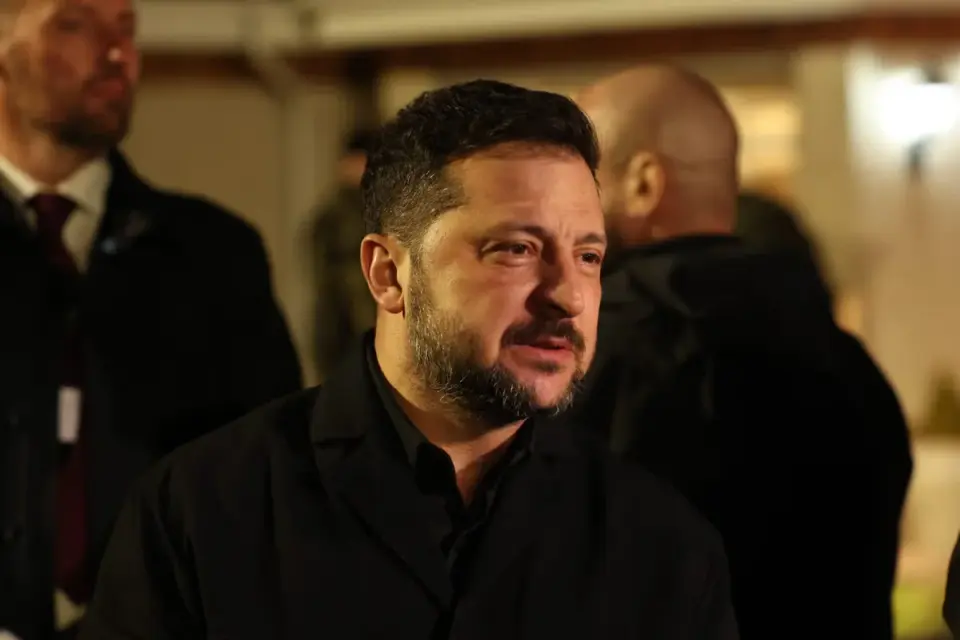
Ukrainian President Volodymyr Zelenskyy stated that US negotiators have proposed Ukraine withdraw from parts of the Donbas region in exchange for NATO membership. Zelenskyy rejected the premise of ceding territory but indicated he would submit a comprehensive security package to a national referendum if it included firm guarantees, military support, and reconstruction funding. He warned that broader European security discussions could empower Russian President Vladimir Putin to redraw borders and weaken NATO. Meanwhile, Zelenskyy criticized SpaceX for imposing speed restrictions on Starshield satellite systems in occupied territories, claiming it hampers drone interception.
Key points
- US envoys Jared Kushner and Steve Witkoff raised the question of whether Ukraine would withdraw from Donbas in exchange for NATO membership for the first time.
- Zelenskyy refused to concede territory, stating Ukraine would not recognize occupied areas as Russian and would not accept neutrality due to constitutional constraints.
- The Ukrainian president warned that discussing European security frameworks could allow Russia to challenge NATO’s presence in the Baltics and Central Europe.
- Zelenskyy accused SpaceX of limiting Starshield satellite speeds to 161 kph in Russian-occupied zones, hindering the interception of Russian jet-powered drones.
- Recent Abu Dhabi talks resulted in a prisoner exchange of approximately 1,200 to 1,300 people but failed to secure an energy ceasefire.
Background
These developments follow a period of strained relations between Kyiv and Washington, including disputes over Ukrainian strikes on Russian oil facilities and US sanctions waivers. Previous negotiations in Abu Dhabi saw the US agree to Russia’s 'all-or-nothing' strategy, while European leaders secured a seat at the table for future talks. The current diplomatic push occurs amidst ongoing Russian attacks on Ukrainian energy infrastructure and a broader push by Moscow to revise post-Cold War security architectures.
How outlets are covering it
The Independent and Financial Times emphasize the potential shift in US policy, noting that the Donbas-for-NATO proposal marks a significant change from previous US opposition to immediate membership. The BBC highlights the symbolic weight of ceding the small portion of Donbas Ukraine still controls, while Al Jazeera focuses on the lack of progress in Abu Dhabi talks beyond prisoner exchanges. On the Starshield issue, Zelenskyy and the Financial Times suggest the restrictions are politically motivated to pressure Kyiv, whereas SpaceX explicitly denied any changes, calling the claims false. European leaders, per the Financial Times, support a 'maximalist' strategy to counter Moscow’s demands, while Moscow views the inclusion of European security discussions as a victory.
Why it matters
The US proposal signals a potential pivot in Western strategy, attempting to trade territorial concessions for alliance membership to end the war. However, Zelenskyy’s refusal to cede territory and his warning that such talks could embolden Russia to challenge NATO’s integrity highlight the deep divide between Kyiv’s sovereignty concerns and Washington’s desire for a quick resolution. The dispute over Starshield restrictions also raises questions about the reliability of US military technology support and the political leverage being applied during negotiations.
What to watch
Zelenskyy expects between three and five European representatives to join future negotiations, with the EU and NATO coordinating a unified front. The next phase of talks will likely focus on whether a comprehensive security package, including Article 5-style guarantees and reconstruction funds, can be agreed upon. Zelenskyy has indicated he will consult the Ukrainian public via a referendum if a concrete proposal is confirmed by the US and its partners. Meanwhile, Ukraine continues to demand an energy ceasefire and the reopening of the Black Sea, which Moscow has so far refused.
- Zelensky stands firm over Donbas and fears US plan could benefit Putin The Independent
- US has floated Ukraine ceding Donbas for Nato membership, Zelensky says BBC
- Zelenskyy says a new European security framework floated by U.S. could benefit Putin PBS
- Three killed in Russia as Ukraine claims US floated NATO membership option Al Jazeera
- US floats Nato membership for Donbas withdrawal deal, Zelenskyy says Financial Times
Want the full story? Read the original reporting
Read on The Independent