
Israel's 1,100-Ton Blast in Southern Lebanon Triggers 4.1-Magnitude Tremor
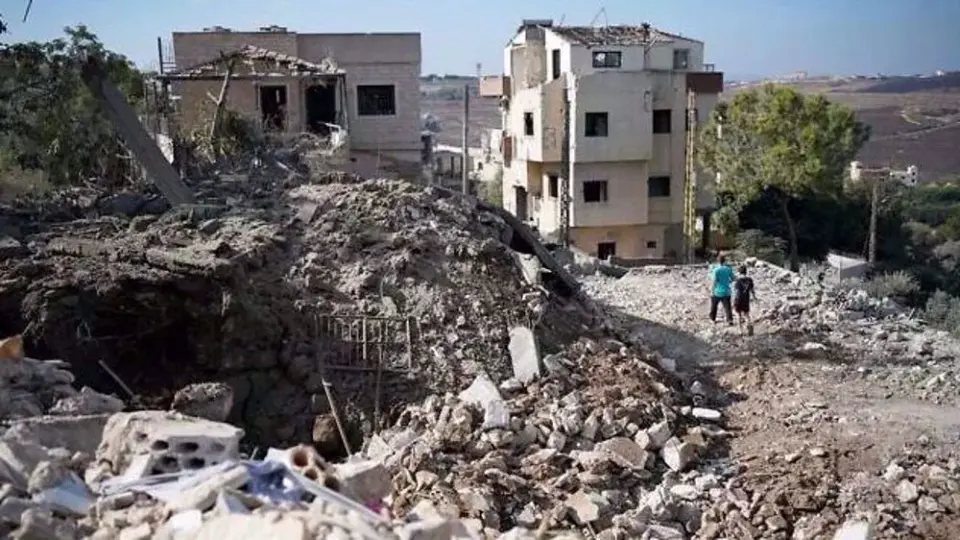
Israeli forces have intensified a campaign of systematic demolitions in southern Lebanon, culminating in a massive 1,100-ton explosion on the Ali al-Taher ridge that triggered a 4.1-magnitude seismic tremor. The blast, which Israel claims destroyed a two-kilometer Hezbollah tunnel network, is part of a broader effort to create a 'security zone' from the western coast to Mount Hermon. Since March, the campaign has destroyed tens of thousands of homes, killed over 4,300 people, and displaced civilians, with recent strikes targeting schools, water wells, and infrastructure in towns like Mansouri and Tyre.
Key points
- A 1,100-ton detonation on the Ali al-Taher ridge triggered a 4.1-magnitude tremor recorded by the US Geological Survey, felt across southern Lebanon.
- Israel claims the blast destroyed a Hezbollah tunnel network spanning over two kilometers, though Lebanese analysts dispute the claim of full operational control.
- Israeli forces have destroyed the majority of a public school and two artesian water wells in Mansouri, Tyre district, alongside scores of homes and civilian infrastructure.
- War Minister Israel Katz declared a 'security zone' extending from the western coast to the Ali al-Taher ridge and the approaches to Mount Hermon in Syria.
- Lebanese health authorities report 4,381 deaths since March, with 19 deaths recorded between Sunday and Monday, and UNICEF warns of 17 children killed or injured in the past five days.
Background
This escalation follows a series of large-scale detonations in southern Lebanon, including a 700-ton explosion near the UNESCO-listed Beaufort Castle in August 2026. The current campaign began in 2024 after a failed ground invasion and a US-sponsored ceasefire, intensifying after March 2, 2026, when Israel began destroying entire border villages. Previous archive coverage noted that Israel claimed to have seized Iranian-built weapons and a Hezbollah command center during the Ali al-Taher operation, though no immediate response was received from Hezbollah or the Lebanese government at the time.
How outlets are covering it
PressTV frames the events as a systematic 'ethnic cleansing' campaign aimed at displacing civilians, citing retired Brig. Gen. Hassan Jouni’s assertion that homes are destroyed 'solely because of where they stand' rather than for containing Hezbollah infrastructure. The outlet emphasizes the use of new methods, such as drones dropping explosive-filled barrels, and highlights the destruction of civilian infrastructure like schools and water wells. The Washington Post focuses on the military escalation, noting that Israel ramped up strikes in response to Hezbollah drone attacks, killing more than two dozen people and raising fears of a larger-scale escalation ahead of Israeli elections. AP News, while largely obscured by technical code in the provided text, references residents witnessing the destruction of their village from afar, aligning with the displacement narrative. The outlets differ in emphasis: PressTV highlights the humanitarian and demographic impact, while The Washington Post focuses on the tactical and political dimensions of the conflict.
Why it matters
The 1,100-ton blast and subsequent 4.1-magnitude tremor mark a significant escalation in the conflict, demonstrating Israel's willingness to use massive force to reshape the geography of southern Lebanon. The destruction of civilian infrastructure, including schools and water wells, and the displacement of tens of thousands of civilians raise serious humanitarian concerns. The declared 'security zone' and the high death toll of 4,381 since March indicate a prolonged and intense conflict, with potential implications for regional stability and the upcoming Israeli elections.
What to watch
Israel has vowed to 'continue the campaign' against Hezbollah, with War Minister Israel Katz declaring a 'security zone' that extends to the approaches of Mount Hermon in Syria. The destruction of infrastructure and displacement of civilians may lead to further humanitarian crises and international condemnation. The situation is likely to remain volatile, with potential for further escalations as Israel seeks to consolidate control over the region and Hezbollah responds to the loss of its infrastructure.
- Israel lays waste to south Lebanon as 1,100-ton blast triggers 4.1-magnitude tremor PressTV
- Inside an Ancient Lebanese City Engulfed by War The New York Times
- Residents of southern Lebanon gather to watch Israeli drones drop explosives on their village AP News
- Israel ramps up strikes in southern Lebanon The Washington Post
- Inside southern Lebanon's villages where Israeli occupation has upended daily life PBS
Want the full story? Read the original reporting
Read on PressTV