
Fossilized Dinosaur Droppings Reveal Ancient Bird Feathers and Extinction Clues
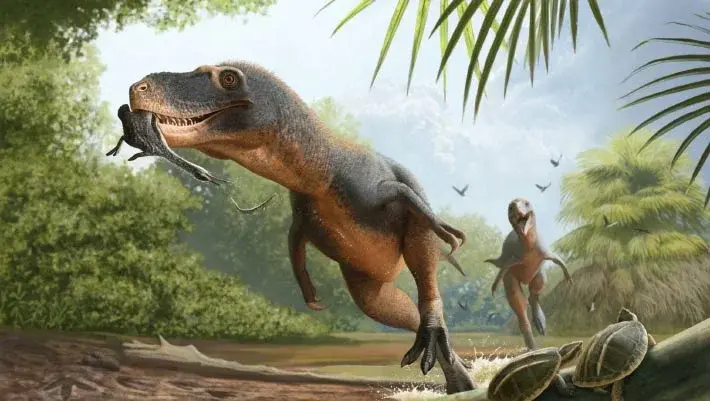
A 66-million-year-old fossilized dinosaur dropping from Montana contains exceptionally preserved feathers from an extinct aquatic bird. This discovery pushes back the timeline for modern feather structures by 10 million years and offers new insights into why certain bird lineages survived the end-Cretaceous mass extinction.
Key points
- A coprolite (fossilized dung) discovered in 2016 in Montana's Hell Creek Formation contains feathers, bones, and fish scales from a 66-million-year-old aquatic bird.
- The feathers belong to a hesperornithiform, a flightless, diving bird related to modern loons and grebes, and are the first of their kind ever identified.
- The feathers show a mix of modern, waterproof structures and primitive, fuzzy body feathers, suggesting an evolutionary middle ground.
- The discovery pushes the known timeline for modern feather features back by 10 million years, to the Late Cretaceous period.
- The primitive body feathers may have been poor insulators, making these birds vulnerable to the 'impact winter' that followed the asteroid strike, explaining their extinction while other birds survived.
Background
This discovery builds on recent paleontological findings that highlight the complex evolution of dinosaur skin and feathers, such as the 2026 discovery of skin cells in a 125-million-year-old iguanodontian. It also adds to the ongoing debate about why only certain bird lineages, specifically neornithes, survived the end-Cretaceous mass extinction, a topic explored in our August 2026 article on post-dinosaur bird dominance.
How outlets are covering it
All three sources agree on the core finding: a 66-million-year-old coprolite from Montana's Hell Creek Formation contains exceptionally preserved feathers from a hesperornithiform bird. Sci.News and New Scientist emphasize the evolutionary significance, noting that the feathers push the timeline for modern feather structures back by 10 million years. National Geographic focuses on the ecological and extinction implications, highlighting how the primitive body feathers may have made these birds vulnerable to the 'impact winter' after the asteroid strike. New Scientist provides the most detailed physical description, noting the 9.3-millimeter length of the primary feather and the presence of gar fish scales, suggesting the bird had recently eaten fish before being consumed by a dinosaur.
Why it matters
This discovery provides a rare, direct link between the anatomy of extinct birds and their fate during the end-Cretaceous mass extinction. It suggests that feather structure, particularly the quality of insulating body feathers, may have been a key factor in determining which bird lineages survived the post-asteroid 'impact winter.' This adds a new dimension to our understanding of evolutionary survival and the selective pressures of mass extinction events.
What to watch
Researchers will likely continue to analyze the coprolite using advanced imaging techniques to uncover more details about the bird's anatomy and the dinosaur's diet. This discovery may also prompt further searches for similar fossils in the Hell Creek Formation and other Late Cretaceous sites, potentially revealing more about the food web and extinction dynamics of the time.
- Exceptionally Preserved Bird Feathers Found in 66-Million-Year-Old Dinosaur Coprolite Sci.News
- A fossil feather from the age of dinosaurs may explain why only some birds survived NPR
- A Tyrannosaur Ate a Feathery Meal—and It Was Frozen in Time National Geographic
- A fossil feather preserved inside dinosaur poop could help explain why birds survived the mass extinction Phys.org
- Exquisite 66-million-year-old bird feather preserved in dinosaur dropping New Scientist
Want the full story? Read the original reporting
Read on Sci.News