Tag

Birds

All articles tagged with #birds

Bird Retina Survives on Glucose, Not Oxygen
biology13 days ago

Bird Retina Survives on Glucose, Not Oxygen

New research shows that the inner retina of birds can function without oxygen by relying on anaerobic glycolysis fueled by glucose supplied via the pecten oculi, while the outer retina uses oxygen. This arrangement supports the birds’ high-energy vision and reveals how the eye’s evolutionary tinkering may have evolved to maintain function during low-oxygen conditions, with potential implications for understanding tissue hypoxia in humans.

Bird Wings Aren’t Optimized for Maximum Flight, Study Finds
biology14 days ago

Bird Wings Aren’t Optimized for Maximum Flight, Study Finds

A Nature Communications study analyzed 1,139 images of bird wings with theoretical morphospace to test if wings are optimized for flight. Results show that for most birds, wing shapes are not tuned for maximum flight efficiency; hummingbirds and penguins come closest to the predicted optimal shapes, while flightless birds like ostriches are far from optimal. Albatross wings illustrate a constraint: their long, thin wings aid long-distance travel but hinder landing, a necessary trade‑off for breeding. The findings challenge the idea that natural selection always yields the most efficient flight and suggest wing shapes reflect diverse lifestyles and energetic demands, with potential bioinspired engineering implications.

Ivanpah Solar Plant Kills Thousands of Birds While Regulators Keep It Open
environment17 days ago

Ivanpah Solar Plant Kills Thousands of Birds While Regulators Keep It Open

A Fox News Digital investigation finds regulators have allowed the Ivanpah Solar Power Facility to operate despite ongoing wildlife deaths—thousands of birds killed annually by the plant’s concentrated solar beams—under a monitoring-and-mitigation regime that avoids fines or shutdowns. The plant, funded as part of the Obama-era clean energy push, was approved with the expectation that wildlife impacts would be managed later; enforcement is shared among multiple agencies, and penalties for incidental bird deaths have been narrowed by legal reinterpretations, keeping the facility in compliance even as bird mortality continues.

Urban Birds Flee From Women Faster Than From Men
environment25 days ago

Urban Birds Flee From Women Faster Than From Men

A European, multi-country study across 37 bird species found urban birds take flight sooner when approached by women than by men, with men able to stand closer by about a meter. The exact cues driving this sex difference—such as scent, gait, or body shape—remain unknown, and researchers call for follow-up experiments to identify the responsible signals. The 2,701 observations suggest urban birds are sensitive to subtle human cues, with implications for urban ecology and how scientists study animal behavior in cities.

Urban Birds Startle More at Women Than Men, Study Finds
science25 days ago

Urban Birds Startle More at Women Than Men, Study Finds

An international study of 37 urban bird species across five European countries found birds let male researchers approach about three feet closer before fleeing than female researchers, a robust sex-based difference in flight initiation distance across cities and species. Researchers ruled out obvious factors like hair length, body size, and height, and suggested possibilities such as subtle appearance cues or odor, but no definitive explanation yet. The finding is consistent but remains puzzling to scientists.

Birds: the ultimate survivors, per paleontologist Steve Brusatte
science26 days ago

Birds: the ultimate survivors, per paleontologist Steve Brusatte

In a Live Science interview promoting his new book The Story of Birds, paleontologist Steve Brusatte argues that birds are true dinosaurs and that their distinctive features—feathers evolved first for warmth, not flight; lightweight bones and strong flight muscles; and rapid growth—helped the avian line survive the mass extinction 66 million years ago. He explains how pterosaurs and birds coexisted for millions of years, why only modern, beaked, fast‑growing birds endured, and how seeds likely supported post‑asteroid survival. Today, birds face declines from habitat loss, pollution, and climate change, but conservation successes like bald eagles and California condors show resilience, fueling his optimism that birds may endure humanity’s impact—perhaps even longer than our species.

Feathered Beginnings: Tracing How Birds Evolved from Dinosaur Ancestors
science26 days ago

Feathered Beginnings: Tracing How Birds Evolved from Dinosaur Ancestors

Birds are modern dinosaurs: they evolved from small, feathered theropods, with feathers likely first for insulation and display rather than flight; wings grew as bodies shrank, eventually yielding true flight—Archaeopteryx is a famous early flier about 150 million years ago. Fossils and DNA now support a post‑asteroid surge in bird diversity (owls, hawks, parrots, songbirds), while many extinct birds—terror birds, moa, elephant birds, pelagornithids—show the wider ecological roles birds once filled. Ongoing discoveries and genome studies keep refining when flight started and which dinosaurs were closest to birds.

Feathered fossil seals birds' dinosaur origins
science28 days ago

Feathered fossil seals birds' dinosaur origins

Live Science highlights Steve Brusatte’s account of the moment feathered dinosaurs proved birds came from dinosaurs: the 1996 discovery of a small, feather-covered coelurosaur in China (Sinosauropteryx) photographed by Currie and Chen and shown to John Ostrom, who cried upon seeing it. This ‘fluffy fossil’ sparked a worldwide rush to find feathered dinosaurs, expanding the tally to numerous species and cementing the view that modern birds evolved from theropod dinosaurs.

Bird Skulls May Reveal the Minds of Ancient Dinosaurs
science29 days ago

Bird Skulls May Reveal the Minds of Ancient Dinosaurs

Scientists argue that bird skulls and brain evolution could shed light on the minds of extinct dinosaurs like T. rex, using modern birds as living proxies for cognitive traits such as planning or empathy; direct tests on dinosaurs aren’t possible, so researchers look for brain-related features that hint at behavior. Brusatte’s The Story of Birds charts the dinosaur-to-bird transition—from theropods to Archaeopteryx—and shows how traits like feathers evolved for reasons beyond flight, with genetics in chicken embryos revealing dinosaur-like features. The piece also underscores birds’ survival after the asteroid and their rapid diversification as a lens on dinosaur life.

Post-Human Earth: Which Animal Could Claim Dominance?
science2 months ago

Post-Human Earth: Which Animal Could Claim Dominance?

If humans disappeared, Earth would reorganize with certain species gaining advantages. Birds—especially corvids and parrots—show high problem-solving and could rise to prominence, while adaptable mammals like rats or feral cats and dogs might thrive briefly. Primates and large marine mammals face cognitive or physical constraints, and there is no single species poised to fully replace humans as the dominant force on the planet.

DinoTracker AI reads dinosaur footprints, hinting at earlier bird origins
technology2 months ago

DinoTracker AI reads dinosaur footprints, hinting at earlier bird origins

A mobile AI tool called DinoTracker analyzes photos or sketches of dinosaur footprints to estimate likely makers. Trained on about 2,000 real fossil footprints plus millions of simulated variations to account for distortion, it achieved roughly 90% agreement with human experts and is meant to speed fieldwork, assist researchers, and engage the public. Notably, the AI flagged several footprints over 200 million years old with bird-like features, fueling debate about whether birds evolved earlier than thought or if some early dinosaurs had bird-like feet, and it reexamined Scotland’s Isle of Skye tracks. The study, led by Helmholtz Center and the University of Edinburgh, was published in Proceedings of the National Academy of Sciences (PNAS).

Global Marine Migrations: Impact of Climate Change on Longest Animal Routes
nature5 months ago

Global Marine Migrations: Impact of Climate Change on Longest Animal Routes

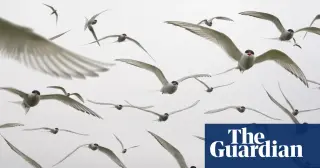
The article highlights some of the world's longest animal migrations, including the Arctic Tern's pole-to-pole journey of up to 59,000 miles annually, whale migrations between feeding and breeding grounds, and remarkable bird and insect flights across oceans and continents, illustrating the incredible endurance and adaptation of these species in connecting ecosystems worldwide.