
August 12: New Moon, Partial Eclipse, and Perseid Peak Align for Rare Stargazing Window
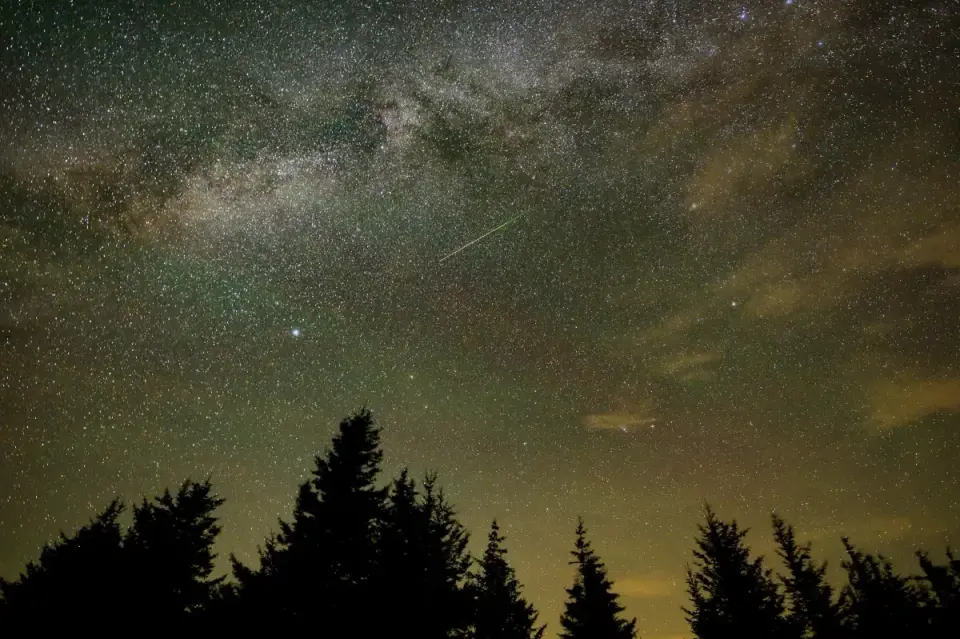
A partial solar eclipse and the peak of the Perseid meteor shower coincide on August 12-13, 2026, creating optimal viewing conditions due to a new moon. The Perseids, originating from Comet 109P/Swift-Tuttle, may produce up to 100 meteors per hour in dark skies, with a high likelihood of bright 'fireballs.'
Key points
- The Perseid meteor shower peaks on the night of August 12 into the early morning of August 13, 2026.
- A partial solar eclipse occurs on August 12, with the new moon phase ensuring dark skies for meteor viewing.
- The shower is caused by Earth passing through debris from Comet 109P/Swift-Tuttle, which is 26 kilometers across.
- Viewing rates may reach 50-100 meteors per hour in dark locations, with a higher frequency of bright fireballs compared to other showers.
- NASA is hosting a livestream watch party on August 13 at 12:00 AM ET from the Marshall Space Flight Center.
Background
August 2026 is a notable month for astronomical events, featuring a partial solar eclipse on August 12 and a partial lunar eclipse on August 27. Previous coverage highlighted the potential for viewing both the eclipse and the Perseids in the same location, with specific recommendations for dark-sky sites in North America and Europe. The Perseids are one of the most reliable annual meteor showers, with records dating back to 36 A.D.
How outlets are covering it
The New York Post emphasizes the geographic scope of the eclipse and the meteor shower, noting visibility from North Carolina to Alaska. Sky & Telescope provides historical context, including the 1971 sighting by John Denver, and technical details on viewing conditions, such as the radiant's position and the impact of light pollution. NASA focuses on the scientific aspects, such as the comet's size and the frequency of fireballs, and promotes a public livestream event. The Washingtonian offers practical advice for viewers near Washington, D.C., highlighting specific locations like Sky Meadows State Park.
Why it matters
The alignment of a partial solar eclipse and the Perseid meteor shower peak, combined with a new moon, offers a rare opportunity for optimal stargazing conditions. This event is significant for both amateur and professional astronomers, as it provides a high likelihood of observing bright fireballs and a high meteor rate. The event also highlights the importance of dark-sky locations and the impact of light pollution on astronomical observations.
What to watch
Viewers are advised to prepare for the Perseid peak on August 12-13, 2026, by finding dark-sky locations and allowing time for their eyes to adjust to the darkness. NASA's livestream watch party on August 13 will provide live views and expert commentary. Future events include a partial lunar eclipse on August 27, 2026.
- Meteor shower dubbed 'the Perseids' will follow a solar eclipse on August 12— and will light up the sky from North Carolina to Alaska New York Post
- A Perfectly Timed Perseid Meteor Shower Sky & Telescope
- Summer Star Shower: Watch the Perseids with NASA! NASA (.gov)
- Where to Watch the Perseid Meteor Shower Near DC Washingtonian
- 1 week away from the peak of the Perseid meteor shower; where to look and when | 13Weather Blog WTHR
Want the full story? Read the original reporting
Read on New York Post