Tag

Comet Swift Tuttle

All articles tagged with #comet swift tuttle

Connecticut Family Captures Perseid Fireballs During Summer Meteor Peak
science3 months ago

Connecticut Family Captures Perseid Fireballs During Summer Meteor Peak

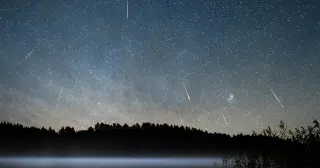
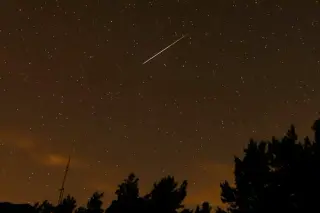
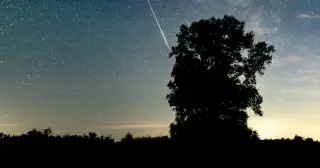
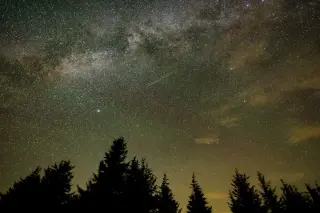
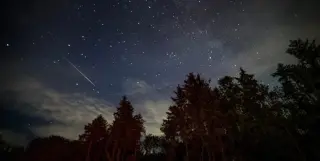
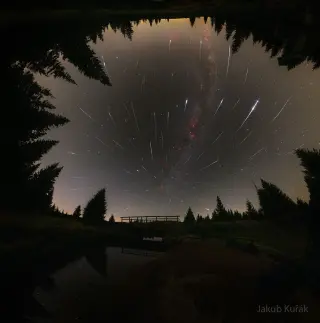
A family in Killingly, Connecticut, recorded two bright meteors streaking across the sky on August 15, 2026, during the annual Perseid meteor shower. NASA confirms the shower, caused by debris from Comet Swift-Tuttle, peaks around August 12-13 and remains active through late August. While local observers saw 'fireballs,' professional monitoring in Czechia recorded 1,706 meteors on the peak night, confirming the shower's high activity.
Spain’s ‘Mystery Meteor’ Revealed as Airplane Contrail During Perseid Peak
science3 months ago

Spain’s ‘Mystery Meteor’ Revealed as Airplane Contrail During Perseid Peak

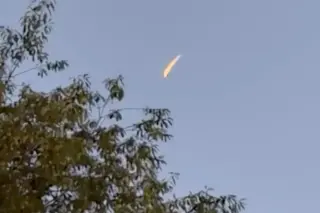
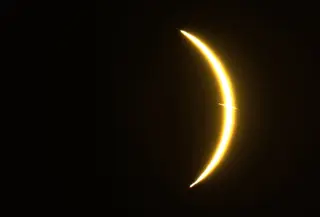
A video captured in Spain during the 2026 Perseid meteor shower peak initially appeared to show a mysterious object crossing a partially eclipsed Sun. Analysis by NASA’s Astronomy Picture of the Day (APOD) identified the object as an airplane contrail, not a meteor. The footage, recorded on August 12, 2026, coincided with the shower’s peak and a total solar eclipse. While the Perseids were exceptionally visible due to a New Moon, this specific event was a terrestrial artifact. The shower, originating from Comet 109P/Swift-Tuttle, remained active through August 24, 2026, with peak activity on August 12-13.

Perseid Meteor Shower Peaks Tonight Amid Solar Eclipse and Planetary Alignment
science3 months ago

Perseid Meteor Shower Peaks Tonight Amid Solar Eclipse and Planetary Alignment

The annual Perseid meteor shower reaches its peak activity on the night of August 12, 2026, offering optimal viewing conditions across the Northern Hemisphere. This astronomical event coincides with a total solar eclipse visible in parts of Europe and a planetary alignment in the pre-dawn sky. While the meteor shower is a global phenomenon, local weather conditions and light pollution will significantly impact visibility for observers in North America.

Perseid Meteor Shower Peaks Overnight, With Clear Skies Expected in Detroit but Clouds in Northern California
science-and-nature3 months ago

Perseid Meteor Shower Peaks Overnight, With Clear Skies Expected in Detroit but Clouds in Northern California

The Perseid meteor shower reaches its peak overnight on Wednesday, August 12, into Thursday morning, August 13, 2026. The event coincides with a new moon, providing dark skies ideal for viewing up to 100 meteors per hour under optimal conditions. While Northern California faces scattered clouds, Metro Detroit is expected to see clearing skies after midnight.

Perseid Meteor Shower Peaks Aug. 12-13 with Ideal Dark Skies
science3 months ago

Perseid Meteor Shower Peaks Aug. 12-13 with Ideal Dark Skies

The annual Perseid meteor shower peaks on August 12-13, offering up to 100 meteors per hour under ideal conditions. The event coincides with a new moon, ensuring dark skies, and features bright fireballs from comet Swift-Tuttle debris. Oregon residents can attend free watch parties at Stub Stewart and Rooster Rock State Parks, while global viewers can watch a NASA livestream.

Perseids Peak Under New Moon as Solar Eclipse Crosses Northern Hemisphere
science3 months ago

Perseids Peak Under New Moon as Solar Eclipse Crosses Northern Hemisphere

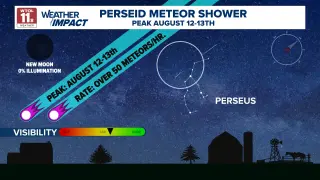
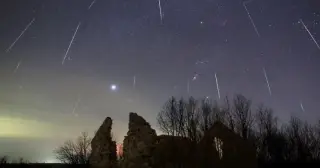
The annual Perseid meteor shower peaks on August 12-13, offering exceptional viewing conditions due to a new moon. This event coincides with a total solar eclipse visible in parts of Europe and the North Atlantic. Observers in the northern hemisphere can expect up to 100 meteors per hour, with the best visibility occurring after midnight when the constellation Perseus is high in the sky.

August 12: A Rare Double-Header of Partial Solar Eclipse and Perseid Meteor Shower Peaks
science-and-nature3 months ago

August 12: A Rare Double-Header of Partial Solar Eclipse and Perseid Meteor Shower Peaks

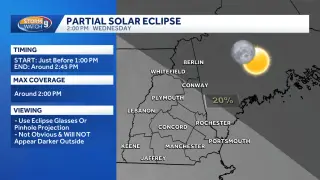
On August 12, 2026, a partial solar eclipse and the peak of the Perseid meteor shower will coincide, offering a rare astronomical double-header. The eclipse, visible as a partial event across Canada and much of the U.S., will be followed by the meteor shower, which peaks on the night of August 12-13. The new moon ensures dark skies, maximizing visibility for both events.

Perseids Peak Under New Moon for Record-Breaking Meteor Rates
science3 months ago

Perseids Peak Under New Moon for Record-Breaking Meteor Rates

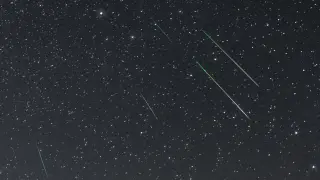
The Perseid meteor shower, the year's most active display, peaks August 12-13, 2026. Ideal conditions are expected due to a new moon, potentially yielding up to 90 meteors per hour in dark locations. The shower, caused by debris from Comet Swift-Tuttle, is active from July 17 to August 24. While some planned public events have been cancelled, observers are advised to view before dawn for the best experience.