
Waning Moon and Jupiter Conjunction Offers Dawn Viewing and Daytime Occultation
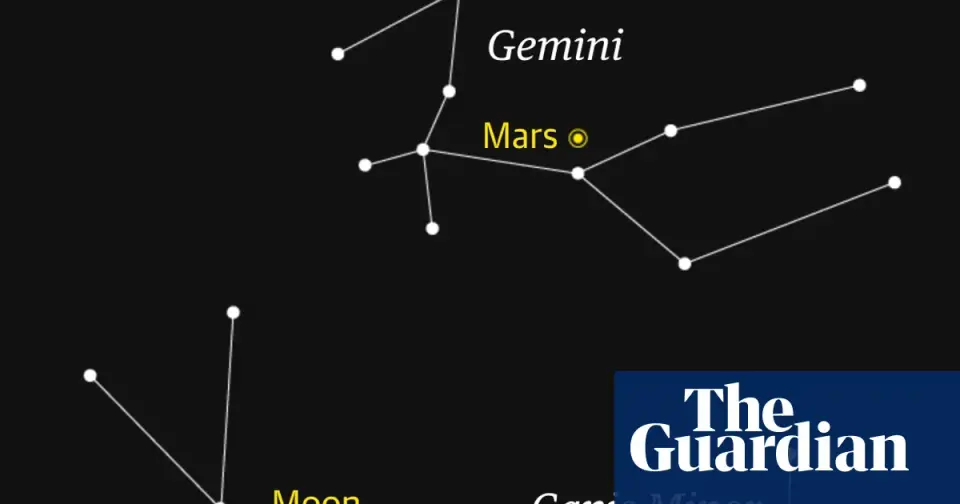
A waning crescent Moon and Jupiter are currently positioned close together in the constellation Cancer, creating a notable astronomical event for September 8, 2026. While the primary conjunction occurs during daylight hours, observers in the UK and southern hemisphere can view the pair before dawn. In North America, the Moon will fully occult Jupiter during the day, an event described as a precursor to a more spectacular show in October.
Key points
- The Moon and Jupiter are in close proximity in the constellation Cancer, with the Moon appearing as a waning crescent with approximately 5-10% illumination.
- A daytime occultation of Jupiter by the Moon is visible across much of the US, Canada, and parts of Europe, occurring in the early to mid-afternoon.
- For UK observers, the conjunction happens at 7:11 PM, after the objects have set, but a pre-dawn viewing opportunity exists on September 8 and 9.
- Mars is also visible in the nearby constellation Gemini, adding to the morning sky scene.
- This event is considered a 'warm-up' for a more spectacular lunar occultation of Jupiter scheduled for October 6, 2026.
Background
Recent astronomical coverage has highlighted various planetary and lunar events, including the impact of a SpaceX Falcon 9 upper stage on the Moon in August 2026 and the changing phases of Venus. Jupiter has been emerging in the morning sky after a period of being on the far side of the solar system. The current conjunction follows a busy summer of sky events, including eclipses and nova discoveries.
How outlets are covering it
The Guardian emphasizes the pre-dawn viewing opportunity for UK observers, noting that the actual conjunction occurs after sunset. Sky & Telescope focuses on the daytime occultation visible in North America, describing it as a 'warm-up' for a larger event in October and providing detailed viewing tips. Astronomy Magazine highlights the telescopic details of Jupiter, including its cloud bands and moons, and the visibility of the Beehive Cluster nearby. Jersey's Best provides practical advice for local observers in New Jersey, noting the rising times of Jupiter and the Moon.
Why it matters
This event offers a rare opportunity to observe a planetary occultation during daylight hours, a phenomenon that is infrequent. It also serves as a precursor to a more significant astronomical event later in the year, encouraging public interest in skywatching and providing a chance to observe Jupiter's detailed features and its relationship with the Moon.
What to watch
Observers should look for the Moon and Jupiter before dawn on September 8 and 9. In North America, the daytime occultation will occur in the afternoon. A more spectacular lunar occultation of Jupiter is scheduled for October 6, 2026, which is expected to be one of the year's most notable sky events.
- Starwatch: Waning crescent moon gets close to brilliant beacon of Jupiter The Guardian
- Tuesday's Daytime Jupiter Occultation a Warm-Up for the "Big One" Sky & Telescope
- The Sky Today on Tuesday, September 8: The Moon joins Jupiter Astronomy Magazine
- Jersey Skies: The moon and Jupiter meet at dawn Jersey's Best
- This Week's Sky at a Glance, September 4 – 13 Sky & Telescope
Want the full story? Read the original reporting
Read on The Guardian