
Ethiopian Bull and Donkey Form Reciprocal Interspecies Bond
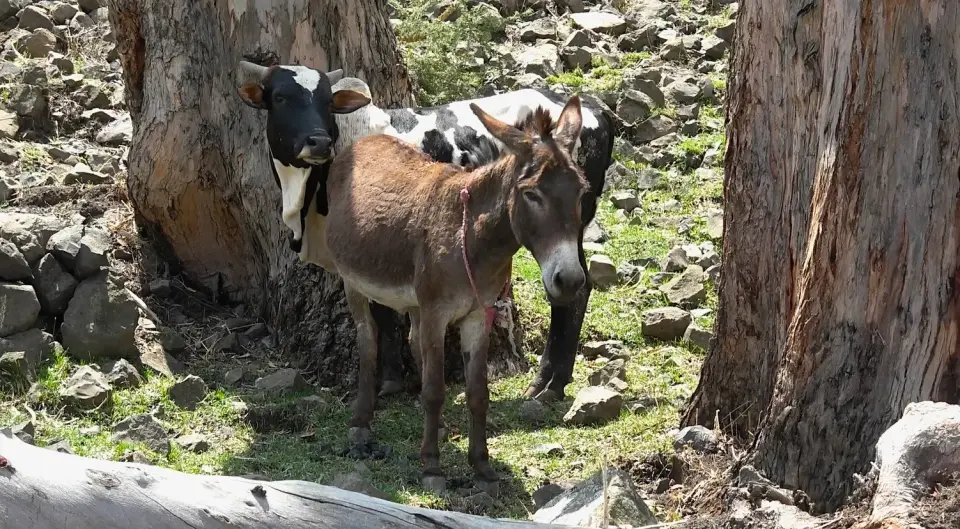
A new study in Current Biology details the persistent sexual and social bond between a domesticated bull and a male donkey in Ethiopia. Researchers observed 51 mounting attempts over four days, noting that the donkey actively reciprocated the behavior rather than resisting. The pair, named Achille and Patroclo, demonstrated selective preference for each other over other animals, challenging assumptions that interspecies sexual contact is merely accidental or driven by a lack of options.
Key points
- Elisabetta Palagi’s team at the University of Pisa documented the relationship while studying gelada monkeys in Ethiopia.
- Over a four-day observation period, the bull mounted the donkey 51 times, with 34 resulting in penetration.
- The donkey did not display avoidance or aggression, instead presenting his hindquarters and engaging in mutual licking and rubbing.
- The pair maintained close proximity despite belonging to different owners and sleeping in separate herds.
- The study suggests that same-sex interspecies behavior may be more common and complex than previously recorded in scientific literature.
Background
While same-sex behavior in animals has been documented for centuries, it was often underreported or dismissed as an evolutionary waste of energy. Recent research has begun to take this behavior more seriously, investigating its prevalence and potential social functions. This case is notable because it involves two different species, cattle and donkeys, which are distantly related, rather than closely related species that might hybridize.
How outlets are covering it
Defector highlights the local herders’ familiarity with the pair, noting that what surprised researchers was a known sight for the community. Scientific American emphasizes the reciprocity of the bond, with ecologist Vincent Savolainen cautioning that the domesticated nature of the animals limits the generalizability of the findings to wild populations. The Korean outlet Chosun Ilbo focuses on the broader implication that animal sexual behavior may serve social bonding purposes beyond reproduction, noting that the donkey’s active participation distinguishes this case from typical 'reproductive interference' errors.
Why it matters
The findings challenge the traditional view that interspecies sexual contact is always a mistake or a result of limited options. By documenting a voluntary, reciprocal, and persistent bond, the study suggests that animal social relationships are more flexible and complex than previously understood, potentially reshaping how scientists categorize and study non-reproductive sexual behaviors.
What to watch
Researchers plan to return to Ethiopia to ask herders if the two animals can be reunited after being separated due to a lack of grass on their shared plateau. They aim to determine if the pair will resume their interactions or if their interest has waned after months apart.
- The Bull And Male Donkey Who Choose Each Other Again And Again (For Sex) Defector
- This bull and male donkey formed an unusually deep social—and sexual—bond Scientific American
- Scientists amazed by bull and donkey’s same-sex relationship The Times
- Male Cow, Donkey Exhibit Cross-Species Affection 조선일보
- An unusual sexual bond between a bull and a male donkey Phys.org
Want the full story? Read the original reporting
Read on Defector