Tag

Current Biology

All articles tagged with #current biology

Ethiopian researchers document 51 interspecies sexual encounters between a bull and male donkey
science1 hour ago

Ethiopian researchers document 51 interspecies sexual encounters between a bull and male donkey

A team of biologists in the Ethiopian Highlands documented a persistent sexual and social bond between a domesticated bull and a male donkey. While studying gelada baboons, researchers observed the pair, named Achille and Patroclo, engage in 51 mounting attempts over four days, with 34 resulting in penetration. The animals, who lived on separate farms, consistently preferred each other over other available partners, including members of their own species. Although the pair was later separated by their owners due to grazing constraints, researchers are attempting to reunite them to determine if the bond persists.

Ethiopian Bull and Donkey Form Reciprocal Interspecies Bond
science7 days ago

Ethiopian Bull and Donkey Form Reciprocal Interspecies Bond

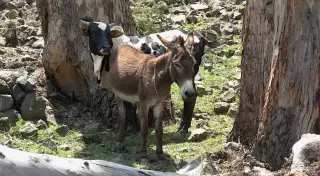
A new study in Current Biology details the persistent sexual and social bond between a domesticated bull and a male donkey in Ethiopia. Researchers observed 51 mounting attempts over four days, noting that the donkey actively reciprocated the behavior rather than resisting. The pair, named Achille and Patroclo, demonstrated selective preference for each other over other animals, challenging assumptions that interspecies sexual contact is merely accidental or driven by a lack of options.

Study warns permanent daylight saving time could double child pedestrian crash risks
health-and-safety11 days ago

Study warns permanent daylight saving time could double child pedestrian crash risks

A new study published in Current Biology warns that making daylight saving time (DST) permanent would significantly increase safety risks for children commuting to school. Researchers from the University of Washington estimate that permanent DST would result in over 2 billion additional pre-sunrise school commutes nationwide annually. The study links dark morning travel to a 77% higher likelihood of pedestrian involvement in fatal crashes, with risks for children aged 5 to 18 more than doubling. While the U.S. House passed the Sunshine Protection Act in July to make DST permanent, the bill remains stalled in the Senate. Experts argue that permanent standard time is safer and better aligned with circadian rhythms, though the current twice-yearly clock change system will continue for now.

Dwarf reed snakes defy physics by cartwheeling at four times their slithering speed
science21 days ago

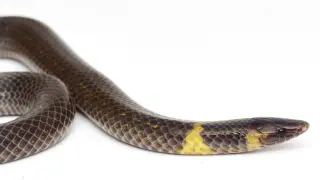
Dwarf reed snakes defy physics by cartwheeling at four times their slithering speed

A new study in Current Biology reveals that dwarf reed snakes in Southeast Asia escape predators by rolling like wheels rather than slithering. Researchers from Toho University used high-speed cameras to analyze the movement, finding the snakes achieve speeds up to four times faster than normal slithering. The technique involves a complex 'stroke' where the snake alternates sides to maintain momentum while keeping its head stable and facing forward, a feat that surprised even experienced herpetologists.

New Archaeon with 189 Genes Challenges Biological Definitions of Life
science26 days ago

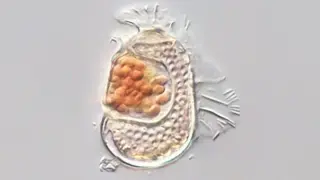
New Archaeon with 189 Genes Challenges Biological Definitions of Life

Researchers have identified a new microbe, Candidatus Sukunaarchaeum mirabile, possessing the smallest genome ever recorded for an archaeon. Discovered within marine plankton off Japan, this organism contains only 238,000 base pairs and 189 protein-coding genes. It retains the machinery for DNA replication and protein synthesis but lacks nearly all metabolic genes, suggesting it is a parasite. This finding challenges the minimum genetic requirements for cellular life.

Genetic Mystery Solved: 5kb Deletion Causes Orange Cat Fur
science1 month ago

Genetic Mystery Solved: 5kb Deletion Causes Orange Cat Fur

After 60 years of research, scientists have identified the specific genetic cause for orange cat fur. Two independent teams discovered that a 5 kilobase deletion in the non-coding region of the Arhgap36 gene on the X chromosome leads to overexpression of this gene in melanocytes. This overexpression shifts pigment production from dark eumelanin to reddish pheomelanin. The X-linked nature of the mutation explains why most orange cats are male, while females often display calico or tortoiseshell patterns due to random X-chromosome inactivation.

Leopardus tilcayo: The first new wild cat species in a century
science-and-nature1 month ago

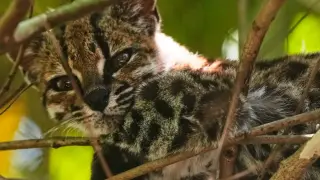
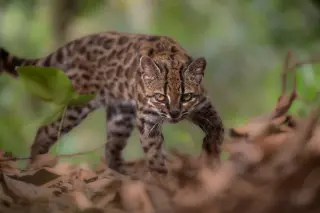
Leopardus tilcayo: The first new wild cat species in a century

Scientists have officially described a new wild cat species, Leopardus tilcayo, found in Bolivia’s cloud forests. This marks the first new feline species identified in over 100 years. The animal, smaller than a house cat, was confirmed through genetic testing after being mistaken for a domestic kitten. Its discovery highlights the urgent need for conservation in the region’s rapidly disappearing habitats.

DNA Analysis Reclassifies Extinct 'American Cheetah' as Puma Relative
science2 months ago

DNA Analysis Reclassifies Extinct 'American Cheetah' as Puma Relative

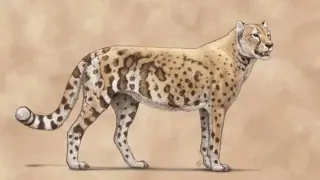
A new study in Current Biology confirms that Miracinonyx trumani, historically known as the 'American cheetah,' is genetically closer to the modern puma than the African cheetah. The research, led by UC Santa Cruz, utilized DNA and isotopic analysis from fossils in Wyoming and the Yukon. Findings reveal the species had a massive range, adapting to fish-based diets in the Arctic and herbivore hunting in the south, before declining due to climate shifts.