
Fire Amoeba Shatters Heat Record for Complex Life in California Volcanic Springs
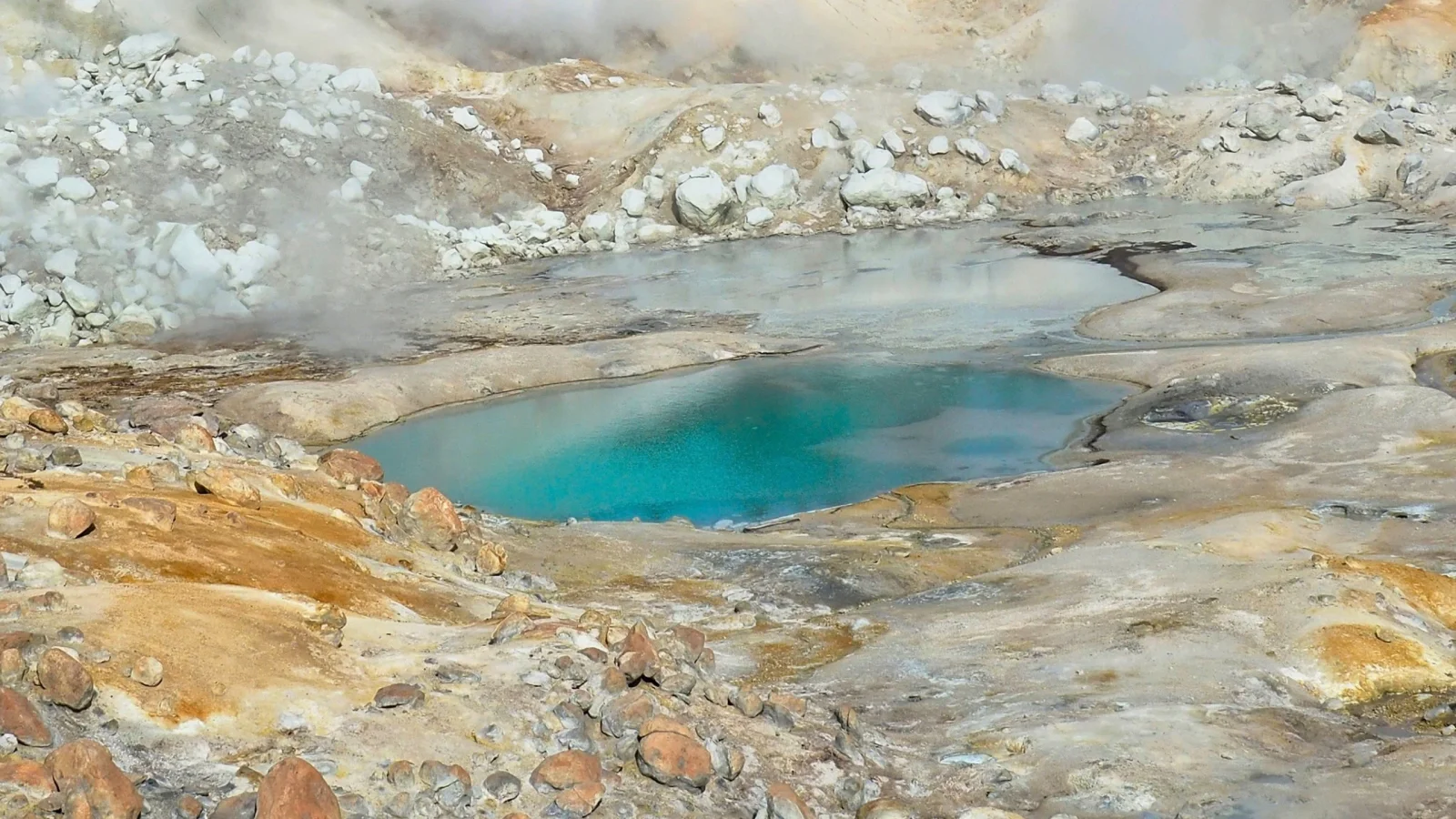
A newly identified amoeba, Incendimentoeba cascadensis, has broken the previous temperature limit for eukaryotic life by surviving and reproducing at 63°C (145°F). Discovered in geothermal streams at California’s Lassen Volcanic National Park, this organism challenges previous assumptions about the thermal stability of complex cell membranes and offers new insights into the potential for life in extreme environments.
Key points
- Incendimentoeba cascadensis, dubbed the 'fire amoeba,' was identified in geothermal springs at Lassen Volcanic National Park in California.
- The organism can undergo mitosis (asexual reproduction) at 63°C (145°F), surpassing the previous eukaryotic record of 60°C (140°F) held by certain fungi and algae.
- While it stops growing above 63°C, the amoeba remains mobile at 64°C (147°F) and can recover from exposure to 70°C (158°F) after returning to cooler temperatures.
- The amoeba employs survival strategies similar to heat-loving bacteria, including proteins with high positive surface charges and the formation of cyst-like dormant states at extreme heat.
- The discovery, published in the journal Cell, suggests that eukaryotic life may be more heat-tolerant than previously thought, with potential implications for astrobiology and biotechnology.
Background
This discovery follows a series of extreme heat events in the United States earlier in 2026, including record-breaking temperatures in Southern California and Florida, and a fatal heat-related collapse in Iowa. These events highlighted the increasing frequency of extreme thermal conditions, making the discovery of organisms capable of thriving in such environments particularly relevant to discussions on climate resilience.
How outlets are covering it
ScienceAlert and The New York Times emphasize the record-breaking nature of the discovery, highlighting that the amoeba surpasses the previous eukaryotic limit of 60°C. NASA Science frames the finding within the context of astrobiology, noting that understanding the limits of complex life on Earth helps guide the search for life on other planets like Mars. Live Science focuses on the biological mechanisms, such as protein stability and cyst formation, that allow the amoeba to survive. All sources agree on the core facts but differ in emphasis: ScienceAlert and NYT focus on the 'record' aspect, NASA on the 'astrobiology' implications, and Live Science on the 'mechanisms' of survival.
Why it matters
The discovery of Incendimentoeba cascadensis expands the known boundaries of life, challenging previous assumptions about the thermal limits of complex organisms. This has implications for understanding life's potential in extreme environments on Earth and other planets, as well as for biotechnology, where heat-stable proteins could be utilized in industrial and medical applications. Additionally, it provides insights into how life may adapt to rising global temperatures.
What to watch
Researchers plan to continue searching for other high-temperature eukaryotes, particularly in geothermal sites like New Zealand and Yellowstone National Park, where similar genetic material has been found. The discovery may also lead to further studies on the specific genes and proteins that enable heat tolerance, potentially leading to new biotechnological applications.
- Volcanic Springs Amoeba Survives 63 °C, Setting a New Heat Record For Complex Life ScienceAlert
- At 145 Degrees, This Amoeba Manages to Keep Its Cool nytimes.com
- NASA-Funded Research Finds Complex Life Defying Record Heat NASA Science (.gov)
- This 'fire amoeba' pushes the limit of what's possible for complex life NPR
- Newfound 'fire amoeba from the Cascades' sets record for the hottest temperature complex life can survive at Live Science
Want the full story? Read the original reporting
Read on ScienceAlert