
NASA X-59 Completes 25 Flights, Preparing for Critical Acoustic Tests
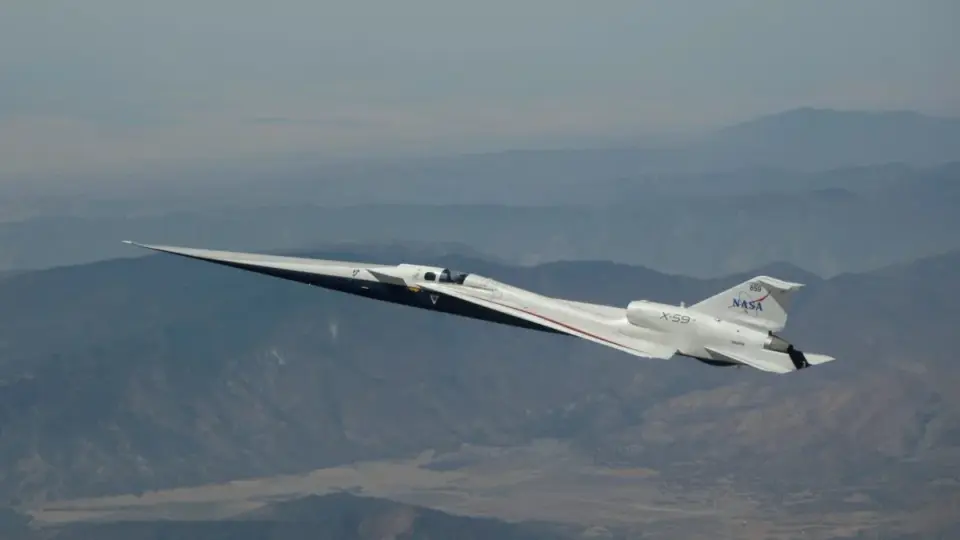
NASA's experimental X-59 aircraft has completed its 25th test flight, reaching Mach 1.2 and 49,000 feet. The aircraft is now preparing for a crucial acoustic validation phase later this year to confirm it produces a quiet 'thump' rather than a loud sonic boom, potentially paving the way for commercial supersonic travel over land.
Key points
- The X-59 completed its 25th flight on August 21 from Edwards, California, lasting 72 minutes.
- The aircraft reached a speed of Mach 1.2 and an altitude of approximately 49,000 feet.
- NASA is preparing for an acoustic validation phase to measure the aircraft's noise levels.
- The X-59 is designed to produce a quiet 'thump' instead of a traditional sonic boom.
- The aircraft has successfully matched computer simulations and wind tunnel predictions in flight.
Background
The X-59 is part of NASA's Quesst mission, which aims to enable commercial supersonic flight over land by reducing the noise associated with breaking the sound barrier. Previous tests have focused on proving the aircraft's stability and performance, with the current phase shifting toward acoustic validation.
How outlets are covering it
NASA and Gizmodo emphasize the successful completion of 25 flights and the upcoming acoustic validation phase. NASA highlights the use of a 'real-time digital twin' to compare flight data with simulations, while Gizmodo focuses on the aircraft's design and the potential for commercial supersonic travel. Aerospace Testing International and The Daily Galaxy provide similar details but emphasize the methodical expansion of the flight envelope and the significance of the acoustic tests for future regulations.
Why it matters
The X-59's success in producing a quiet 'thump' instead of a sonic boom could lead to new regulations and enable commercial supersonic flight over land, which has been restricted due to noise concerns. This could revolutionize air travel by making supersonic speeds more accessible and environmentally friendly.
What to watch
NASA will conduct an acoustic validation phase later this year, using ground- and air-based tools to measure and characterize the X-59's sonic thumps. The results will help determine if the aircraft meets its design goals and could inform future regulations for supersonic commercial aviation.
- NASA Readies Its Quiet Supersonic Jet for a Noise Test Later This Year Gizmodo
- NASA’s X-59 Aircraft Builds Momentum Through 25th Flight NASA (.gov)
- NASA’s X-59 completes 25 flights ahead of acoustic supersonic testing Aerospace Testing International
- NASA’s X-59 Is Closing In on the Test That Could Change Supersonic Flight The Daily Galaxy
- NASA's Quiet Supersonic Plane Builds Momentum Through 25th Flight RTTNews
Want the full story? Read the original reporting
Read on Gizmodo