
Central Florida and Midwest Residents Capture Near-Total Lunar Eclipse
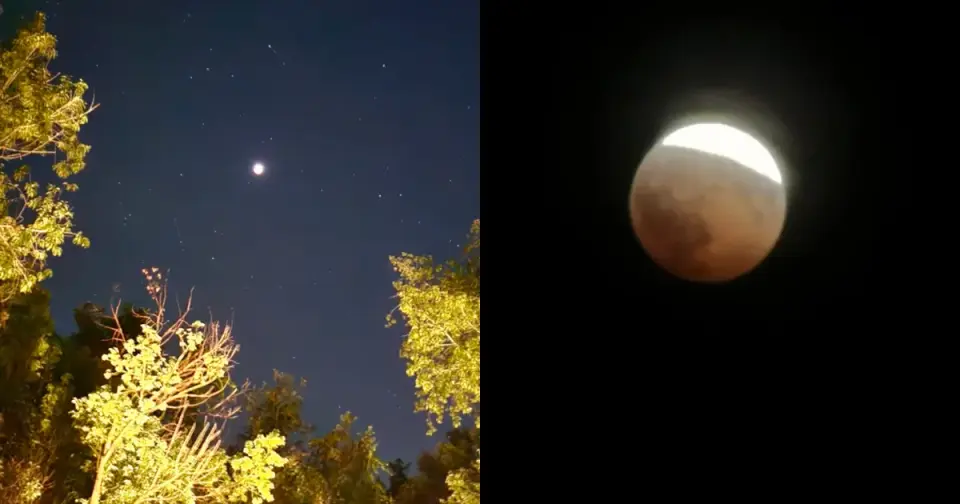
A partial lunar eclipse occurred on the night of August 27, 2026, with Earth's shadow covering approximately 96% of the moon's surface. The event, often referred to as a 'blood moon' due to its reddish hue, was visible across the Americas. Local outlets in Florida and Minnesota reported clear viewing conditions and high public interest, while NASA data indicates the next partial eclipse will not occur until January 2028.
Key points
- The eclipse reached near-totality, with 96.2% of the lunar surface obscured by Earth's shadow.
- Viewers in Central Florida and Minnesota reported clear skies and comfortable temperatures for observation.
- The event is the last close-to-full lunar eclipse visible in the region until June 2029.
- No special equipment or eye protection was required to view the phenomenon.
- The next partial lunar eclipse is scheduled for January 12, 2028.
Background
This event follows a series of global observations of the August 2026 'sturgeon moon' eclipse, which was widely documented across the Americas and Europe. Previous coverage noted that the reddish coloration results from sunlight filtering through Earth's atmosphere, a phenomenon that occurs when the Earth is positioned directly between the sun and the moon.
How outlets are covering it
FOX 35 Orlando emphasized the visual impact of the event in Central Florida, highlighting viewer-submitted photos and the specific 96.2% coverage figure. MPR News focused on the practical viewing conditions in Minnesota, noting that the weather was ideal and that this would be the last such event visible locally until 2029. While both outlets confirmed the 'blood moon' appearance, MPR News specifically noted that the moon might appear more like a 'copper penny' rather than a deep red, whereas FOX 35 focused on the near-totality aspect.
Why it matters
The event provided a rare astronomical spectacle for residents in the Americas, as the next partial lunar eclipse will not be visible in the region until 2028. It also serves as a reminder of the cyclical nature of lunar eclipses and the importance of clear weather conditions for public observation.
What to watch
According to NASA, the next partial lunar eclipse will occur on January 12, 2028, visible in the Americas, Europe, and Africa. Prior to that, three penumbral eclipses are scheduled for 2027, with two visible in the Americas. The next total lunar eclipse is expected in December 2028.
- Photos: Partial lunar eclipse in Central Florida FOX 35 Orlando
- Your best photos of Thursday night’s lunar eclipse Colorado Public Radio
- FOX 11 viewers Chime In with photos, video of 'blood moon' eclipse WLUK
- Perfect conditions Thursday night to see lunar eclipse in Minnesota MPR News
- PHOTOS: Moon appears orange due to partial lunar eclipse WYFF
Want the full story? Read the original reporting
Read on FOX 35 Orlando