
Perseid Meteor Shower Peaks Tonight Amid Solar Eclipse and Planetary Alignment
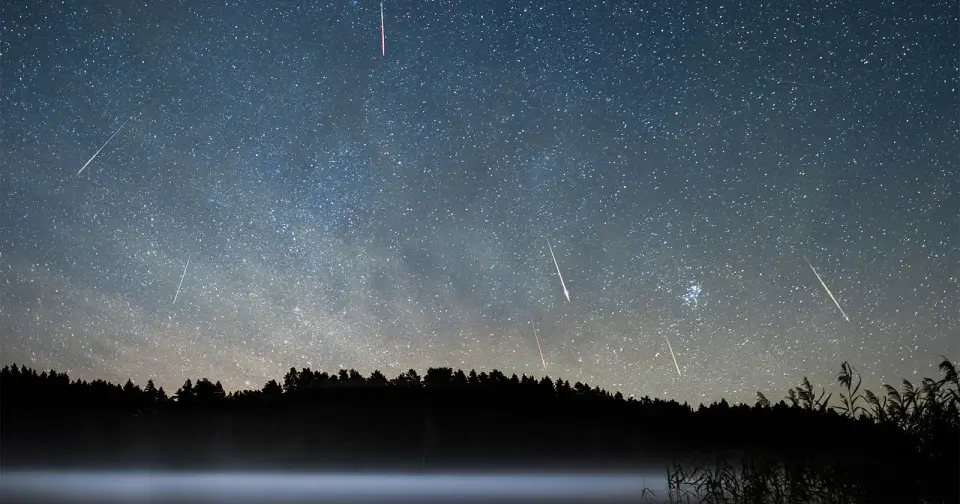
The annual Perseid meteor shower reaches its peak activity on the night of August 12, 2026, offering optimal viewing conditions across the Northern Hemisphere. This astronomical event coincides with a total solar eclipse visible in parts of Europe and a planetary alignment in the pre-dawn sky. While the meteor shower is a global phenomenon, local weather conditions and light pollution will significantly impact visibility for observers in North America.
Key points
- The Perseid meteor shower peaks on the night of August 12, 2026, with activity continuing into the early morning hours of August 13.
- Under dark skies, observers can expect up to 100 meteors per hour, though suburban locations may see only 12 to 25 per hour.
- The event coincides with a total solar eclipse visible in parts of Spain and Iceland, as well as a planetary alignment featuring Mercury, Jupiter, Mars, and Saturn.
- The meteors are caused by Earth passing through debris left behind by Comet Swift-Tuttle, traveling at approximately 37 miles per second.
- The shower remains active until August 24, providing additional opportunities for viewing if weather conditions are poor on the peak night.
Background
The Perseid meteor shower is an annual event that typically peaks in mid-August. Previous coverage noted that the 2026 peak aligns with a new moon, which minimizes moonlight and enhances visibility. The shower is known for its reliability and high meteor count, making it a popular target for both casual stargazers and astrophotographers. The debris originates from Comet Swift-Tuttle, which enters Earth's atmosphere and burns up, creating the visible streaks of light.
How outlets are covering it
PetaPixel emphasizes the photographic opportunities, noting that the Perseids are highly photogenic and recommending wide-angle lenses and time-lapse techniques. They highlight the importance of dark skies and sturdy tripods for capturing the event. Space.com focuses on the general viewing experience, noting the peak occurs under 'perfect skies' and providing general advice for observers. ABC7 New York highlights the 'trifecta' of celestial events, including the solar eclipse and planetary alignment, and notes that the partial eclipse in the New York area may be difficult to notice. KCRA focuses on local viewing conditions in Northern California, noting that scattered clouds may obscure the view on the peak night, with better conditions expected on Thursday night. They also provide specific local stargazing spots, such as the Community Observatory in Placerville.
Why it matters
The Perseid meteor shower is one of the most popular and reliable astronomical events of the year, offering a unique opportunity for both casual observers and photographers to witness a natural phenomenon. The coincidence with a solar eclipse and planetary alignment makes this year's event particularly significant, providing a rare chance to observe multiple celestial events in a single night. For photographers, the event offers a chance to capture stunning images of the night sky, while for casual observers, it provides a reminder of the beauty and wonder of the universe.
What to watch
The Perseid meteor shower will remain active until August 24, 2026, providing additional opportunities for viewing. Observers are encouraged to check local weather forecasts and light pollution maps to find the best viewing locations. For photographers, it is recommended to set up early and capture multiple images to increase the chances of capturing a meteor. For casual observers, finding a dark, open location and allowing eyes to adjust to the darkness for 20 minutes will enhance the viewing experience.
- Heads Up, Photographers, the Perseids Meteor Shower Peaks Tonight PetaPixel
- Perseid meteor shower peaks under perfect skies tonight — here's what to expect Space
- The Perseids, Summer’s Strongest Meteor Shower, Will Peak Tonight The New York Times
- Solar eclipse, Perseid meteor shower, planet parade: What NYC will see Wednesday ABC7 New York
- The Perseid meteor shower peaks overnight on Wednesday. Where to watch in Northern California KCRA
Want the full story? Read the original reporting
Read on PetaPixel