
Perseid meteor shower peaks Wednesday with ideal new moon conditions
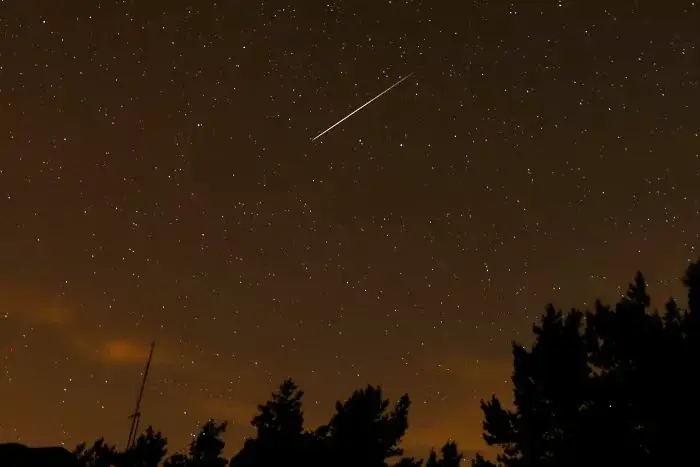
The annual Perseid meteor shower reaches its peak on Wednesday night, offering optimal viewing conditions due to a new moon. Observers in dark rural areas may see up to 24 meteors per hour, while suburban viewers might spot around 12. The best viewing window is between 2 and 4 a.m. when the radiant is highest.
Key points
- Peak activity occurs Wednesday night into early Thursday morning, coinciding with a new moon for minimal light interference.
- Visibility rates vary by location: approximately 12 meteors per hour in suburbs, half that in cities, and up to 24 in dark rural areas.
- The shower is caused by Earth passing through debris from Comet Swift-Tuttle, a large comet roughly 16 miles across.
- Meteors appear as glowing air shockwaves at 60 miles altitude, traveling at 37 miles per second; none reach the ground.
- Viewers should allow 20 minutes for eyes to adjust to darkness and look toward the darkest part of the sky, not just the radiant.
Background
The Perseids are the most prominent meteor shower of the year, with records dating back to 36 A.D. in China. Named after the constellation Perseus, the shower was formally identified in 1836 by Adolphe Quetelet. In 1862, Lewis Swift and Horace Tuttle linked the meteors to Comet Swift-Tuttle. Previous coverage noted the shower runs from July 17 to August 24, with potential rates exceeding 50 meteors per hour under ideal conditions, though earlier phases were hindered by the 'Buck Moon' in late July.
How outlets are covering it
KPRC emphasizes the favorable new moon conditions and provides specific viewing rates for Houston-area observers, noting clear skies. CNN’s source content was inaccessible due to a technical error, preventing comparison of its specific reporting or emphasis on the event.
Why it matters
The Perseids offer the highest visibility of any meteor shower, providing a rare opportunity for public stargazing without specialized equipment. The alignment with a new moon maximizes the contrast between meteors and the night sky, making it a significant annual astronomical event for enthusiasts and casual observers alike.
What to watch
Viewers should monitor local weather forecasts for cloud cover in the coming nights. As the radiant climbs higher in the pre-dawn hours, meteor rates are expected to increase, with the peak activity occurring just before dawn on Thursday.
- Look up! The Perseids are coming Wednesday night Click2Houston
- Sky-gazers can look forward to a stunning meteor shower peak this week. How and when to see it CNN
- How to see the year's best meteor shower tonight : Short Wave NPR
- The Perseids, Summer’s Strongest Meteor Shower, Will Peak Tonight The New York Times
- Perseid meteor shower peaks overnight Wednesday with dark skies for WA skywatchers KING5.com
Want the full story? Read the original reporting
Read on Click2Houston