
LRO Identifies Record-Breaking Lunar Crater from 2024 Impact
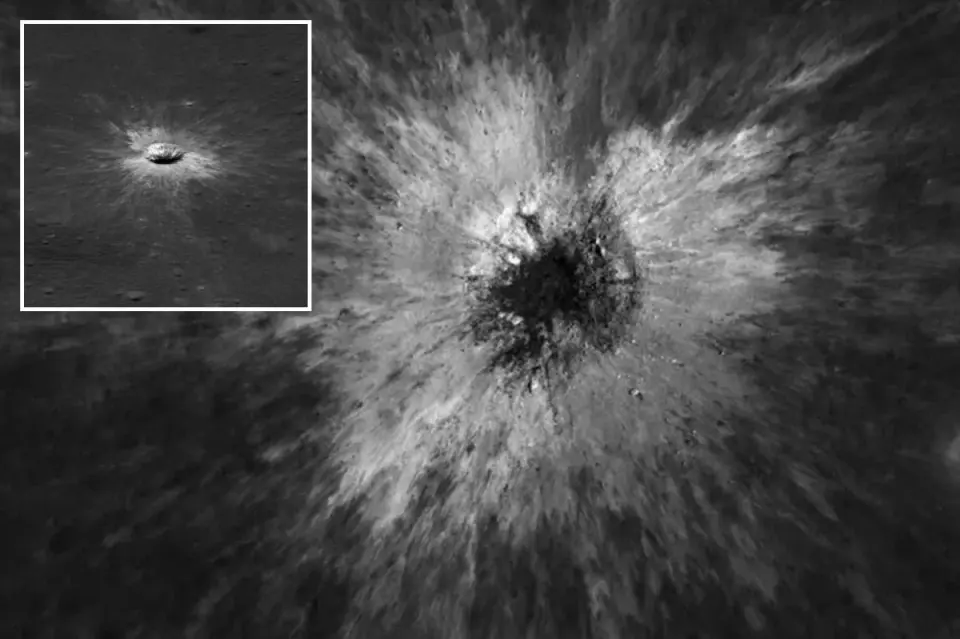
NASA’s Lunar Reconnaissance Orbiter confirmed a massive new crater on the Moon, formed in 2024 by an asteroid or comet fragment. Measuring 728 feet wide and 141 feet deep, it is the largest recent impact crater known. The discovery, published in Science Advances, highlights the dynamic nature of the lunar surface and provides critical data for planning future human habitats.
Key points
- The crater, named McGetchin, is 728 feet wide and 141 feet deep, making it three times larger than the previous record-holder found by the LRO.
- The impact occurred between April 11 and May 22, 2024, but was not detected until October 2025 when scientists compared global map images.
- Researchers estimate such large impacts occur only once every 132 years, making this a statistically rare event.
- A separate study found a 4-mile-wide 'cold spot' around the crater, indicating the impact loosened the lunar regolith, reducing its ability to retain heat.
- The discovery will help NASA engineers assess risks to future lunar bases, as ejected material from such impacts could damage structures.
Background
This discovery follows recent lunar events, including a 2026 impact by a SpaceX Falcon 9 upper stage that created a smaller, 60-foot crater. It also aligns with NASA’s broader Artemis program goals, which include establishing a sustained human presence on the Moon. Previous coverage noted that the LRO has identified over 1,000 new craters since its 2009 launch, but this is the largest recent one.
How outlets are covering it
All sources agree on the crater’s dimensions and the rarity of the event. The New York Post and CBS News emphasize the comparison to the Roman Colosseum and the 'once-in-a-lifetime' nature of the observation. NASA Science provides more technical detail, noting that the impactor was likely the size of a three- to six-story building and that the 'cold spot' is 16 degrees Fahrenheit cooler than surrounding areas. AP News focuses on the discovery process, highlighting how Robert Wagner spotted the anomaly during a routine data-quality check. There is no disagreement on the facts, but the emphasis varies between the scientific implications (NASA) and the public-facing scale (Post/CBS).
Why it matters
The McGetchin crater provides a rare opportunity to study a large-scale impact in real-time. This data is crucial for understanding how the lunar surface changes over time and for assessing the risk of ejecta damaging future lunar infrastructure. It also challenges the notion that lunar features are static, showing that the top layer of soil is overturned every 80,000 years, meaning Apollo footprints will not last forever.
What to watch
NASA plans to use the data to calculate the risk of ejected material striking future lunar bases. Engineers will use this information to harden structures against potential impacts. Further studies are expected to detail the size and force of the impactor that created the crater.
- NASA spacecraft discovers huge new crater on the moon New York Post
- NASA spacecraft discovers a huge new crater on the moon AP News
- NASA’s Moon Orbiter Spots New, ‘Once-in-Century’ Moon Crater NASA Science (.gov)
- NASA spacecraft discovers moon crater bigger than Roman Colosseum CBS News
- Asteroid the size of six-storey building crashed into moon in 'once-in-a-lifetime' moment, says NASA Sky News
Want the full story? Read the original reporting
Read on New York Post