
Venus’s Greenhouse Blanket, Not Solar Proximity, Drives Its Extreme Heat
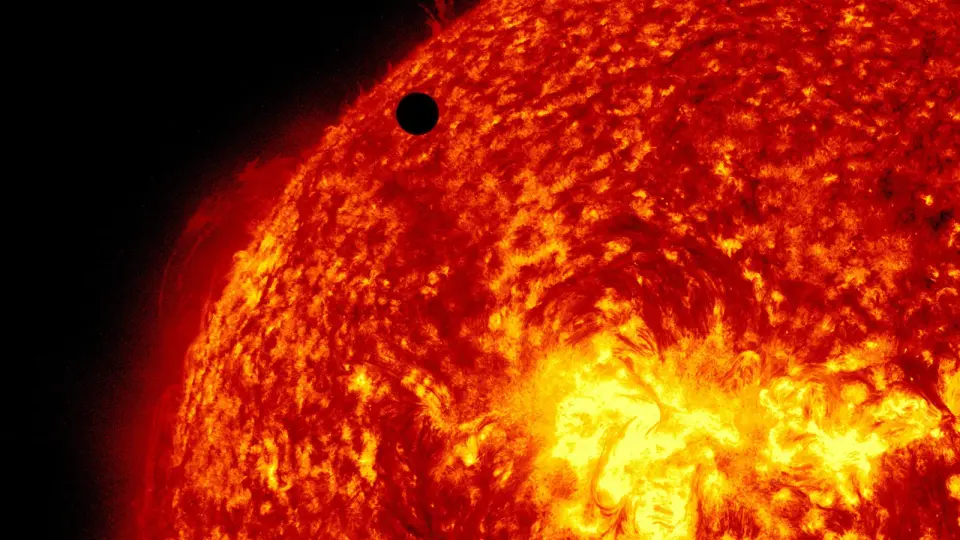
Venus is hotter than Mercury despite being farther from the Sun due to its dense carbon dioxide atmosphere, which traps infrared radiation and creates a self-sustaining greenhouse effect, while Mercury’s lack of atmosphere allows rapid heat loss at night.
Key points
- Venus reaches 900°F (480°C), exceeding Mercury’s 800°F (430°C) despite orbiting 31 million miles farther from the Sun.
- Mercury’s negligible atmosphere causes extreme temperature swings, dropping to -290°F (-180°C) at night, as heat radiates directly into space.
- Venus’s atmosphere is 90 times denser than Earth’s and composed mostly of carbon dioxide, which absorbs and re-emits infrared radiation repeatedly.
- Only 3% of incoming sunlight reaches Venus’s surface due to thick sulfuric acid clouds reflecting 75% of solar energy back into space.
- Venus is in a 'post-runaway greenhouse' state, where heat retention is self-sustaining regardless of current volcanic activity.
Background
Recent studies highlight Mercury’s hotter interior and lower silicon dioxide content, suggesting deeper mantle melting, while orbital simulations confirm Mercury is Earth’s average nearest neighbor. These findings underscore that planetary proximity does not dictate thermal conditions, aligning with the broader understanding that atmospheric composition is the primary driver of surface temperature in the solar system.
Why it matters
Understanding Venus’s heat retention mechanism provides critical insights into planetary climate stability and the long-term effects of greenhouse gases, offering a cautionary model for Earth’s climate trajectory and informing the design of future space probes capable of withstanding extreme thermal environments.
What to watch
The BepiColombo mission, set to enter Mercury’s orbit in November 2026, will provide direct data to validate recent thermal and compositional models, while ongoing research continues to investigate the geological origins of Venus’s dense atmosphere and its role in sustaining runaway greenhouse conditions.
Want the full story? Read the original reporting
Read on livescience.com