Tag

Atmospheric Physics

All articles tagged with #atmospheric physics

Mars’s 1,000-Mile Cloud Explained by Never-Seen Physics
science1 month ago

Mars’s 1,000-Mile Cloud Explained by Never-Seen Physics

A new study in Nature Geoscience explains the recurring 1,000-mile cloud on Mars, known as the Arsia Mons Elongated Cloud (AMEC), through a theoretical process called homogeneous nucleation. This mechanism, where water vapor freezes directly into ice without dust particles, was previously thought impossible in planetary atmospheres. The cloud forms daily near the Arsia Mons volcano during Martian spring and summer, stretching over 1,000 miles before dissipating. The discovery suggests Mars’s atmosphere can reach extreme humidity levels, challenging existing models of cloud formation.
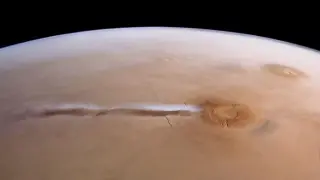
Mars's Daily 1,800 km Cloud Formed via Never-Seen 'Homogeneous Nucleation'
science1 month ago

Mars's Daily 1,800 km Cloud Formed via Never-Seen 'Homogeneous Nucleation'

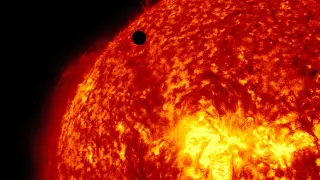
A recurring 1,800 km-long water ice cloud on Mars, known as the Arsia Mons Elongated Cloud (AMEC), forms daily via 'homogeneous nucleation,' a process previously only theoretical. Published in Nature Geoscience on Oct. 7, the study shows this exotic physics explains the cloud's rapid formation and evaporation, challenging standard models of cloud formation in planetary atmospheres.

Raindrops Act as Dipole Antennas in Weather Radar Systems
science2 months ago

Raindrops Act as Dipole Antennas in Weather Radar Systems

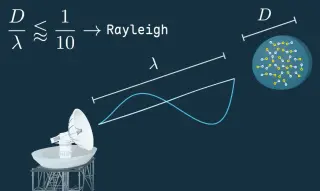
Raindrops function as dipole antennas when exposed to electromagnetic radiation, a principle critical for weather radar operation. This interaction, governed by the Rayleigh regime, allows radar systems to detect moisture and precipitation by measuring backscatter signals. The effectiveness of this detection depends on the volume and permittivity of the water droplets.

Kyoto University uses 1,200 Starlink satellites to map Earth's thermosphere via tomography
science3 months ago

Kyoto University uses 1,200 Starlink satellites to map Earth's thermosphere via tomography

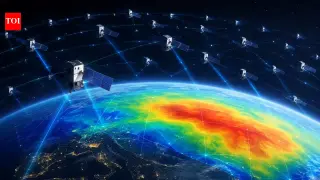
Researchers at Kyoto University have utilized publicly available orbital data from approximately 1,200 Starlink satellites to create the first two-dimensional map of Earth's thermosphere at an altitude of roughly 482 kilometers. By applying tomographic techniques similar to medical CT scans, the team analyzed orbital drag to estimate atmospheric density variations across different latitudes and longitudes. This method offers a cost-effective alternative to dedicated monitoring satellites and aligns with existing data from the European Space Agency's Swarm mission, potentially improving collision avoidance in increasingly crowded low Earth orbit.

Amateur Researchers Replicate Rocket Lightning Triggering Technique
science3 months ago

Amateur Researchers Replicate Rocket Lightning Triggering Technique

A hobbyist known as Electron Impressions successfully replicated the scientific method of triggering lightning using a rocket trailing a wire. The project involved building a custom 3D-printed rocket and a field mill to measure atmospheric electric fields. After multiple attempts, the rocket triggered a controlled strike, creating a plasma channel that fractured the ground but did not form a fulgurite. The experiment highlights the ongoing difficulty in studying lightning and the accessibility of advanced atmospheric research to non-professionals.

Mars Microphone Reveals High-Pitched Sounds Travel Faster Than Bass
science3 months ago

Mars Microphone Reveals High-Pitched Sounds Travel Faster Than Bass

NASA’s Perseverance rover recorded the first sounds on Mars in 2021, revealing that the planet’s thin carbon dioxide atmosphere causes high-frequency sounds to travel approximately 10 meters per second faster than low-frequency ones. This phenomenon, occurring above 240 hertz, means high-pitched components of a sound can arrive before the bass, fundamentally altering how audio propagates on the Martian surface.

Lunar exosphere is a dynamic, ultra-thin gas layer vulnerable to human contamination
science3 months ago

Lunar exosphere is a dynamic, ultra-thin gas layer vulnerable to human contamination

The Moon possesses an extremely sparse exosphere composed mainly of helium, neon, and argon, with densities roughly one quadrillionth of Earth's. This thin layer is continuously replenished by solar wind, meteoroid impacts, and radioactive decay, but it is easily disrupted by spacecraft exhaust and human activity, posing significant challenges for future scientific measurements.

New Research Reveals Cosmic Rays Trigger Lightning on Earth
science1 year ago

New Research Reveals Cosmic Rays Trigger Lightning on Earth

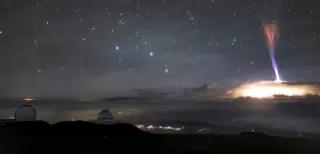
Scientists led by Victor Pasko have uncovered the precise atmospheric chain reaction that triggers lightning, revealing how electric fields in thunderclouds accelerate electrons, produce X-rays, and initiate lightning through a cascade of high-energy photons and electrons, explaining phenomena like terrestrial gamma-ray flashes and their often dim optical and radio signatures.