
Japan Launches Historic MMX Mission to Return Phobos Samples by 2031
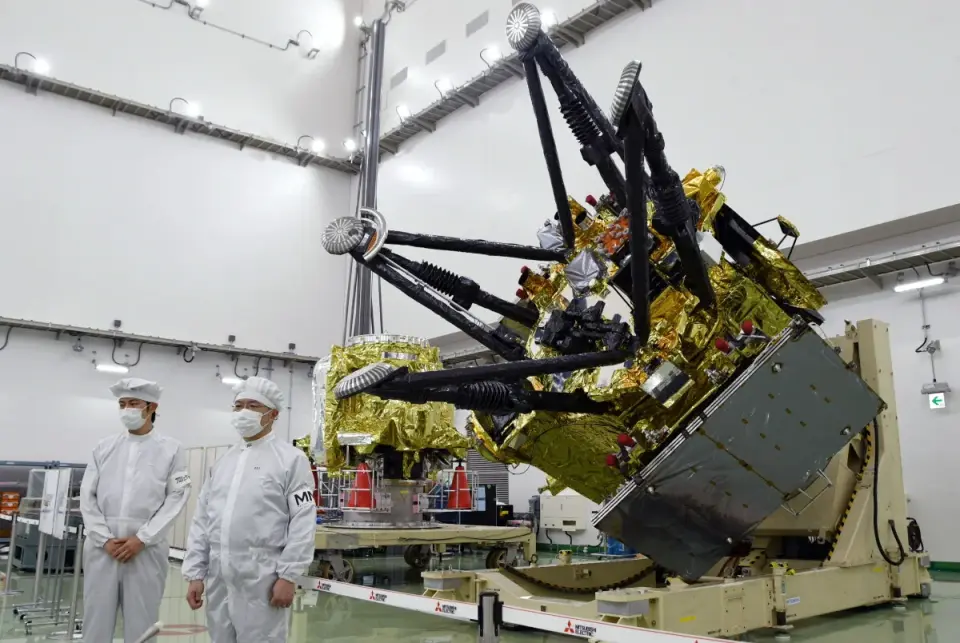
Japan has launched the Martian Moons eXploration (MMX) mission, the first attempt to retrieve and return samples from Mars' moon Phobos. The spacecraft, launched on an H3 rocket from Tanegashima, will arrive at Mars in August 2027. It will spend three years mapping the moon and collecting at least 10 grams of soil before returning to Earth in 2031.
Key points
- The MMX mission is designed to resolve scientific debates on whether Phobos and Deimos are captured asteroids or debris from a collision with Mars.
- The spacecraft carries 13 instruments, including a French-German rover named Idefix, which will land in 2029 to identify a safe site for sample collection.
- JAXA aims to collect samples using both NASA’s pressurized gas method and its own coring technique, targeting surface and subsurface material.
- The mission includes a radiation monitor to assess risks for future human missions to Mars, and the return capsule is designed to land in Australia.
- The total flight distance is estimated at 500-600 million kilometers, with the return module expected to land in 2031.
Background
Previous coverage confirmed the launch of the MMX mission from Tanegashima on October 19, 2026. Earlier studies have highlighted the long-term health risks of deep-space radiation for astronauts, which the MMX mission aims to mitigate through its radiation monitoring instruments. Additionally, NASA’s upcoming SkyFall mission in 2028 will deploy helicopters to Mars, complementing the broader international effort to explore the Martian system.
How outlets are covering it
The Guardian emphasizes the mission's potential to shed light on the origins of life in the solar system and the formation of the Martian moons. Space.com highlights the technical challenges of landing on Phobos, noting its low gravity and irregular surface. AP News provides a general overview of the mission's timeline and objectives. Japan Today’s content was inaccessible due to a bot challenge, so no specific perspective could be extracted from that source.
Why it matters
The MMX mission represents a significant step in understanding the Martian moons and could provide crucial data for future human exploration of Mars. By returning samples, it may resolve long-standing scientific debates and offer insights into the potential for past microbial life on Mars.
What to watch
The spacecraft will arrive at Mars in August 2027. The Idefix rover is scheduled to land in 2029 to assist in selecting a sampling site. Sample collection will occur in 2030, and the return capsule is expected to land in Australia in 2031.
- Japan to launch spacecraft on a mission to get samples from a Martian moon AP News
- Returning samples from a Mars moon: Inside the science of Japan's bold MMX mission Space
- Japan to launch world-first mission to collect samples from Martian moon The Guardian
- Japan to launch historic round-trip mission to Mars moon Japan Today
- Japan to launch Martian moon mission on Tuesday | NHK WORLD-JAPAN News NHKニュース
Want the full story? Read the original reporting
Read on AP News