Tag

Mmx Mission

All articles tagged with #mmx mission

Japan's MMX readies Phobos sample return to Earth by 2031
space3 days ago

Japan's MMX readies Phobos sample return to Earth by 2031

Japan unveiled the Martian Moons eXploration (MMX) spacecraft at Tanegashima Space Center, lining up an Oct. 19 launch window to grab about 10 grams of material from Phobos, deploy a 25-kilogram rover (Idefix) for surface study, and return the samples to Earth by 2031 after a roughly year-long journey to Mars; the mission will also study Deimos and aim to determine how Mars’ moons formed, marking the first successful Mars-system sample return.

A single asteroid may have carved Mars' moon Deimos
science5 days ago

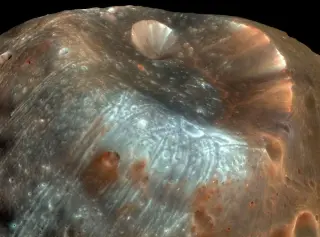
A single asteroid may have carved Mars' moon Deimos

A new study using Hera flyby data and impact simulations suggests Deimos’ smooth, dusty surface and its 6.2‑mile southern crater were produced by one asteroid about 320 meters across at a ~45° angle, redistributing surface material globally without shattering the moon. This supports Deimos as a porous rubble-pile object and helps explain its origin, while Japan’s MMX mission (launching soon) will study both Deimos and Phobos to test the model and uncover the moons’ history.

Phobos: Crater Clues May Decode a Martian Moon's Birth
space2 months ago

Phobos: Crater Clues May Decode a Martian Moon's Birth

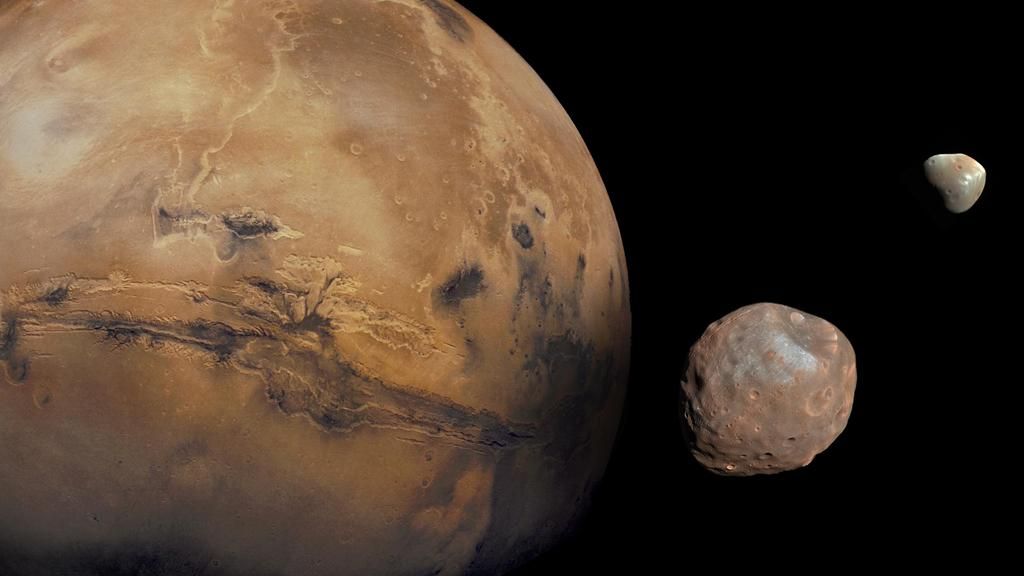
Researchers at the EGU meeting modeled how small changes in Phobos’ geophysical signals around the 9‑km Stickney crater could help determine its interior and origin, weighing whether Phobos formed from debris after a giant Mars impact (~4.2 billion years ago) or was captured as an asteroid (~2.6 billion years ago). Current data suggest a porous interior with possible water ice and a localized denser mass near the equator, making gravity mapping and libration measurements key tests. The upcoming Japanese MMX mission (late 2026 launch) aims to orbit Phobos, collect surface samples with a core sampler and a NASA-provided pneumatic sampler, and return them to Earth by mid‑2031, which should help constrain Phobos’ formation scenario by linking interior structure, gravity, and composition.

Lost Photos Hint Phobos Could Be a Captured Comet
space-exploration2 years ago

Lost Photos Hint Phobos Could Be a Captured Comet

New research based on previously unpublished photos suggests that Mars' moon Phobos may be a captured comet, or part of one, rather than an asteroid or a fragment from a giant impact. The study, which analyzed photometric properties of Phobos, found similarities with Jupiter-family comets, indicating that Phobos and its twin moon Deimos might have once been a single bilobed comet. The Japan Aerospace Exploration Agency's upcoming MMX mission aims to further investigate these findings by sampling Phobos directly.

"Japan's Mars Moon Sample-Return Mission to Include Rover Companion"
space2 years ago

"Japan's Mars Moon Sample-Return Mission to Include Rover Companion"

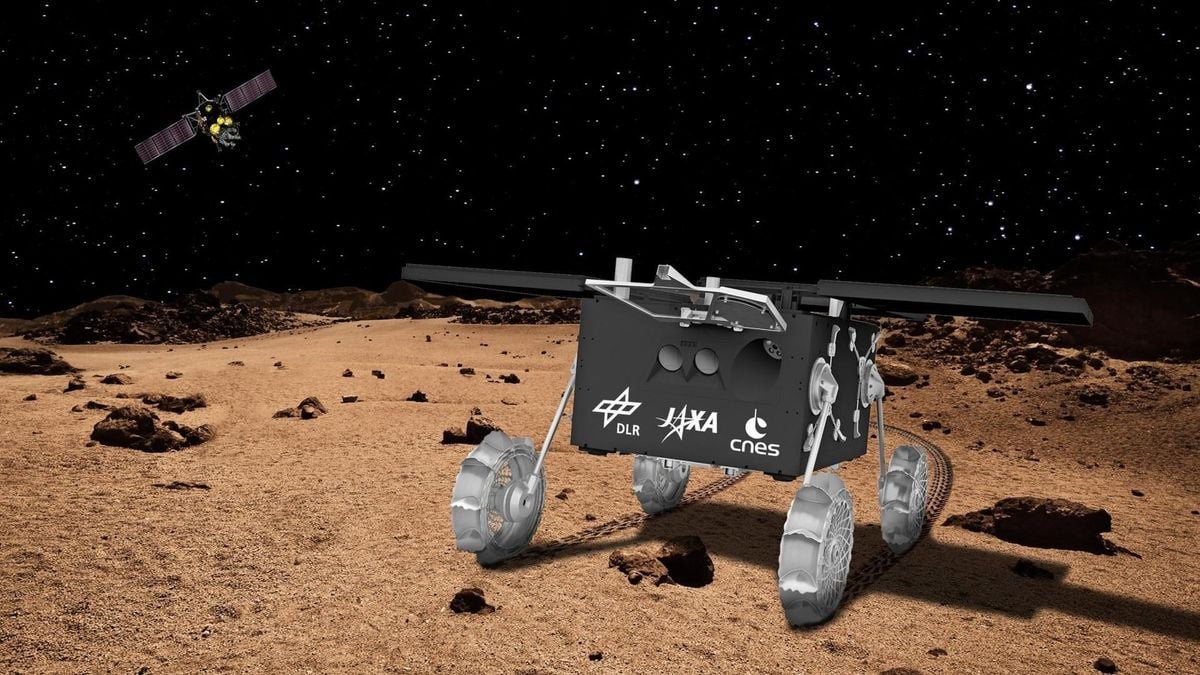
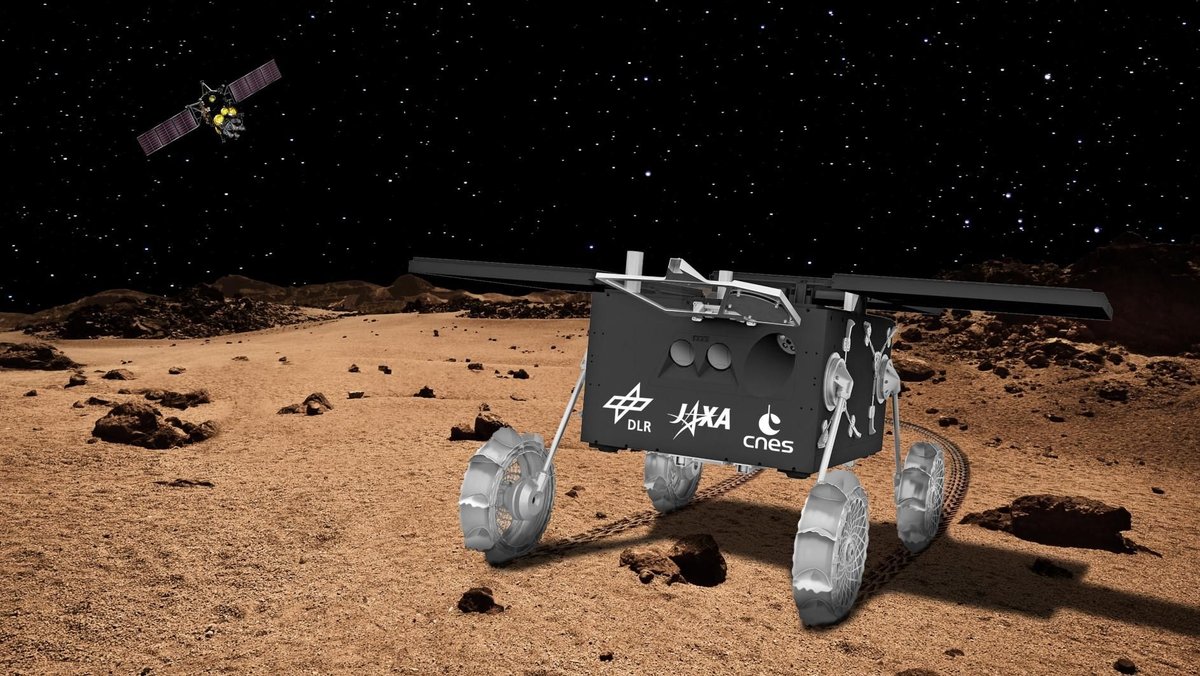
A small European-built rover named IDEFIX has arrived in Japan to be part of the Japan Aerospace Exploration Agency's (JAXA) Martian Moon Exploration (MMX) probe, which aims to collect samples of Mars' moon, Phobos. The rover, developed by the German Aerospace Center and the French space agency, will play a crucial role in gathering information and preparing for the landing of the main spacecraft, which is scheduled to grab Phobos' material in 2029 and send it towards Earth for arrival in 2031. The mission was originally set to launch in 2024 but has been delayed to the next Mars launch window in 2026 due to concerns over the readiness of the new Japanese H3 rocket.

"Japan Receives IDEFIX Phobos Rover for Mars Mission"
space-exploration2 years ago

"Japan Receives IDEFIX Phobos Rover for Mars Mission"

The IDEFIX rover, named after the dog from "The Adventures of Asterix," is set to accompany the Martian Moons eXploration (MMX) mission to survey and explore Mars' moons, Phobos and Deimos. Weighing 25 kilograms and designed to explore up to 100 meters of Phobos' surface, IDEFIX will be released from the MMX spacecraft at a low altitude and utilize Phobos' low gravity to touch down, roll, and raise itself for a three-month mission. Equipped with instruments to study Phobos' origin and sediment details, IDEFIX aims to uncover the moon's history and contribute to a better understanding of the Mars system.