
Crew-13 Launches After In-Situ Valve Repair, Setting ISS Transit Record
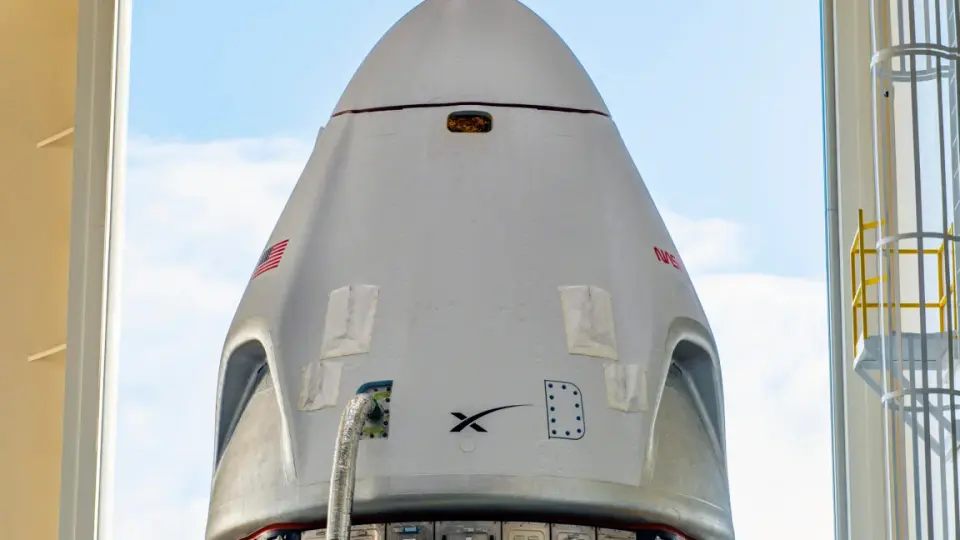
SpaceX launched the Crew-13 mission to the International Space Station (ISS) on October 1, 2026, from Cape Canaveral. The four-person crew, led by Jessica Watkins, completed a record-breaking transit to the station in 7 hours and 55 minutes. The launch followed a delay caused by a faulty valve in the Dragon spacecraft, which required an unprecedented in-situ repair while the vehicle was loaded with propellant. This mission marks the 13th crew rotation under SpaceX's NASA contract and brings the total ISS crew count to 11.
Key points
- Launch occurred at 11:10 a.m. EDT on October 1, 2026, from Space Launch Complex-40 at Cape Canaveral Space Force Station.
- The crew consists of commander Jessica Watkins, pilot Luke Delaney, Canadian astronaut Joshua Kutryk, and Russian cosmonaut Sergey Teteryatnikov.
- Jessica Watkins became the first Black woman to command a spacecraft on this mission.
- The launch was delayed from mid-September to address a faulty valve in the Dragon's propulsion system, which required cutting into the propellant line to replace the component without draining the oxidizer.
- The spacecraft reached the ISS in 7 hours and 55 minutes, setting a new record for the fastest US launch-to-docking transit.
- The ISS crew count increased to 11 following the arrival of Crew-13, with Crew-12 preparing for departure in mid-October.
Background
This mission follows a September 2026 contract extension between NASA and SpaceX, adding three more ISS flights to the existing agreement for a total value of $5.92 billion. The extension was approved as SpaceX prepares to retire the Crew Dragon and Falcon 9 vehicles around 2030, shifting focus to Starship and Starlink. Prior to this launch, SpaceX had completed 12 crew rotations under its commercial contract, restoring US capability to launch astronauts after the 2011 Shuttle retirement.
How outlets are covering it
Ars Technica emphasized the technical challenge of the valve repair, noting that SpaceX performed the fix in a hazardous processing facility with the oxidizer tank full, a first for the company. NASA focused on the operational success, highlighting the record transit time and the smooth handover of command from Jessica Meir to Pyotr Dubrov. collectSPACE highlighted the cultural aspect of the mission, noting the 'Lucky 13' theme and the zero-gravity indicator, a golden dragon doll, which paid homage to the Apollo 13 mission. Space.com framed the event as a milestone for the 'unlucky' number 13 in US spaceflight history since Apollo 13.
Why it matters
The successful launch and record transit demonstrate the reliability of SpaceX's Crew Dragon program despite the upcoming fleet retirement. The in-situ valve repair showcases the technical adaptability of the spacecraft and ground teams, ensuring mission continuity. The arrival of Crew-13 maintains the continuous human presence on the ISS, which is planned to operate through at least 2030, while the transition to new vehicles like Boeing's Starliner and SpaceX's Starship becomes increasingly critical for future space exploration.
What to watch
Crew-13 will spend the next few days unpacking the Dragon spacecraft and familiarizing themselves with station systems. Crew-12 is scheduled to depart the ISS in mid-October, with weather permitting, to return to Earth. The handover of command from Jessica Meir to Pyotr Dubrov occurred on October 4, 2026. SpaceX is preparing for Crew-14, expected to launch next spring, as it winds down the Crew Dragon program in favor of Starship.
- SpaceX describes surgical intervention before launch of latest crew mission Ars Technica
- SpaceX launches 13th long-duration astronaut crew to International Space Station Reuters
- Station Crew Expands as NASA’s SpaceX Crew-12 Prepares to Depart NASA (.gov)
- SpaceX just launched the 1st US astronaut mission to embrace the 'unlucky' number 13 since the Apollo era Space
- Houston, we have a golden dragon: Crew-13's 'Lucky' zero-g indicator collectSPACE.com
Want the full story? Read the original reporting
Read on Ars Technica