
ESA’s Juice completes third Earth flyby, gaining speed for 2031 Jupiter arrival
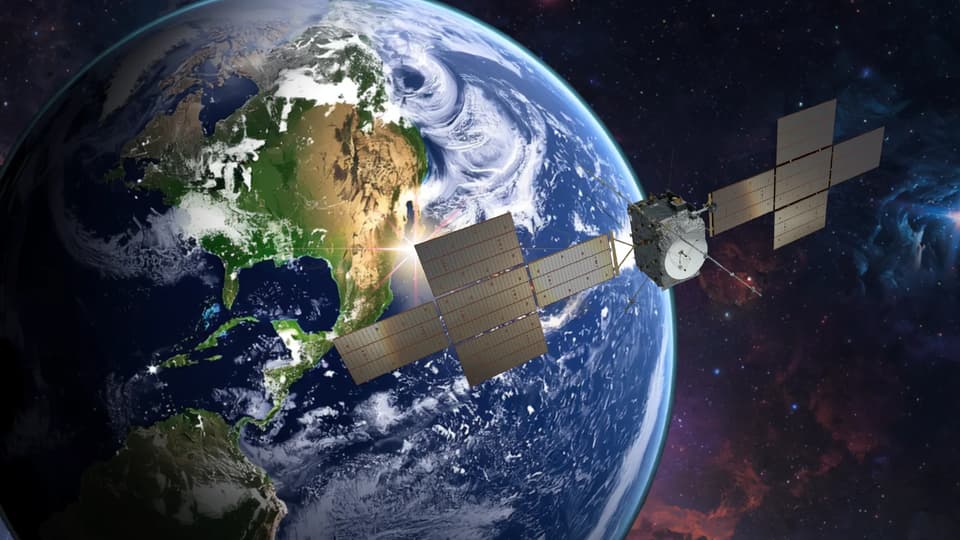
The European Space Agency’s Jupiter Icy Moons Explorer (JUICE) successfully completed its third gravity-assist flyby of Earth on September 28, 2026. The maneuver increased the spacecraft’s velocity by 3.5 kilometers per second and deflected its trajectory by 20 degrees, using minimal fuel. This boost is critical for JUICE’s journey to Jupiter, where it will study the icy moons Ganymede, Callisto, and Europa for signs of life. The spacecraft will make a final Earth pass in 2029 before arriving at Jupiter in 2031.
Key points
- JUICE passed within 8,640 kilometers of Earth, using gravity to alter its path without significant fuel consumption.
- The flyby increased the spacecraft’s speed by approximately 7,830 miles per hour (3.5 km/s).
- The maneuver deflected JUICE’s trajectory by 20 degrees, setting up for a final Earth flyby in January 2029.
- JUICE will arrive at Jupiter in 2031 to conduct 35 flybys of its large moons, focusing on potential habitats for life.
- The flyby provided a third opportunity to calibrate JUICE’s science instruments using Earth and the Moon as test targets.
Background
JUICE launched in April 2023 on an Ariane 5 rocket from Kourou, France. It has previously used gravity assists from the Moon and Earth in 2024 and Venus in 2025 to accelerate its journey. The mission is designed to study Jupiter’s magnetic environment and its three large ocean-bearing moons, which are considered promising locations for extraterrestrial life. The spacecraft is a collaboration between ESA, NASA, JAXA, and the Israel Space Agency.
How outlets are covering it
Space.com and Scientific American emphasized the speed gain and the successful navigation of the flyby, noting that JUICE was traveling at about 24,600 miles per hour during the pass. The Washington Post highlighted the scientific goal of the mission, focusing on the search for life on Europa and Ganymede. ESA provided detailed technical insights, noting that only one small propellant nudge was required to achieve the precise trajectory, preserving fuel for future observations. All sources agreed on the success of the maneuver and its importance for the mission’s timeline.
Why it matters
The successful Earth flyby ensures JUICE remains on schedule to reach Jupiter in 2031. The gravity assist conserves fuel, allowing the spacecraft to perform more detailed observations of Jupiter’s moons. The calibration of instruments during the flyby will improve the quality of data collected during the mission’s primary phase, potentially revealing evidence of past or present life in the solar system.
What to watch
JUICE will continue its journey toward Jupiter, with a final Earth flyby planned for January 2029. Upon arrival at Jupiter in 2031, the spacecraft will begin 35 flybys of Ganymede, Callisto, and Europa, collecting data on their magnetic fields, surfaces, and potential subsurface oceans. Images and spectra from the Earth flyby are expected to be released in the coming weeks.
- Jupiter-bound JUICE spacecraft just got an 8,000 mph speed boost from Earth: 'This is great news for science' Space
- Why a spacecraft exploring moons where life may thrive is zipping by Earth The Washington Post
- Successful Earth flyby improves Juice’s course to Jupiter European Space Agency
- Why A Jupiter-Bound Spacecraft Is Flying Past Earth 3 Years Later Forbes
- Jupiter-bound spacecraft Juice to fly by Earth Monday scientificamerican.com
Want the full story? Read the original reporting
Read on Space