Tag

Gravity Assist

All articles tagged with #gravity assist

Psyche’s Mars flyby primes its long-awaited asteroid rendezvous
space6 days ago

Psyche’s Mars flyby primes its long-awaited asteroid rendezvous

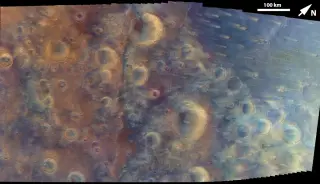
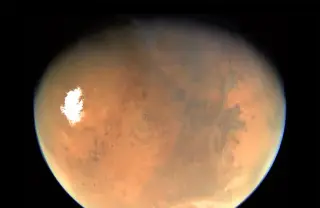
NASA’s Psyche spacecraft used a Mars flyby as a gravity assist to gain speed and adjust its orbit on the way to the metal-rich asteroid Psyche in 2029, while testing its science suite (a dual-camera multispectral imager, gamma-ray/neutron spectrometer, and magnetometer). The Mars encounter yielded rare imagery from a high phase angle, including a crescent view and a southern polar to Valles Marineris panorama, helping calibrate instruments ahead of the asteroid mission. The gravity assist boosted speed by about 1,000 mph and nudged the orbit by roughly 1 degree; Psyche launched in Oct 2023 and will complete a 2.2-billion-mile journey.

Psyche's Mars flyby yields stunning images en route to a metal-rich asteroid
space6 days ago

Psyche's Mars flyby yields stunning images en route to a metal-rich asteroid

NASA’s Psyche spacecraft used Mars as a gravity assist on its way to the metal-rich asteroid 16 Psyche, flying within about 2,864 miles of the planet and capturing thousands of images with its multispectral imager. The Mars flyby provided roughly a 1,000 mph speed boost and nudged the trajectory by about a degree, keeping the 2029 arrival on track and showcasing early image processing and deep-space communications testing (DSOC).

Psyche Mission Uses Mars Flyby to Target Metal-Rich Asteroid
space6 days ago

Psyche Mission Uses Mars Flyby to Target Metal-Rich Asteroid

NASA’s Psyche spacecraft completed a Mars flyby on May 15, 2026, coming within 2,864 miles (4,609 km) of the planet to perform a gravity assist that boosted its speed by about 1,000 mph and nudged its orbital plane by roughly 1 degree, setting it on a course to the metal-rich asteroid Psyche in 2029. The encounter also served as a calibration run for the spacecraft’s cameras and instruments and yielded high-resolution views of Mars, including the south polar ice cap. After Mars, Psyche will resume its solar-electric propulsion-powered voyage to the main asteroid belt, where it will map and study Psyche to test whether it represents the exposed core of an early planetesimal and could reveal insights into rocky planets like Earth.

Mars Gravity Boost Propels Psyche Toward Metal-Rich Asteroid Psyche
space6 days ago

Mars Gravity Boost Propels Psyche Toward Metal-Rich Asteroid Psyche

NASA’s Psyche spacecraft completed a Mars flyby to gain a gravity assist, receiving a ~1,000 mph speed boost and a slight shift in its orbit as it heads toward the metal-rich asteroid Psyche. The Mars encounter served as a calibration opportunity for its instruments, including cameras and spectrometers, before arriving at Psyche in mid-2029 to map and study the asteroid’s interior, potentially revealing clues about planetary cores.

Psyche uses Mars as a gravity boost on its way to a metal-rich asteroid
space10 days ago

Psyche uses Mars as a gravity boost on its way to a metal-rich asteroid

NASA's Psyche spacecraft flew by Mars on May 15, 2026 to perform a gravity assist, gaining speed and reshaping its path toward the metal-rich asteroid 16 Psyche. The flyby occurred about 2,800 miles from Mars at roughly 12,333 mph and saves propellant by using the planet's gravity, helping the mission stay on track to reach 16 Psyche in July 2029, while continuing to rely on solar-electric propulsion for gradual thrust.

Mars Flyby Boosts NASA’s Psyche Mission Toward a Metal-R-rich World
space16 days ago

Mars Flyby Boosts NASA’s Psyche Mission Toward a Metal-R-rich World

NASA’s Psyche spacecraft will perform a Mars gravity assist on May 15, passing about 2,800 miles above the planet at roughly 12,333 mph to boost its trajectory toward the metal-rich asteroid 16 Psyche. Launched Oct 13, 2023, the mission uses solar-electric propulsion with xenon propellant, and the gravity assist helps save propellant while also calibrating science instruments for the upcoming encounter.

Watch NASA's Lucy Spacecraft Slingshot Past Earth Tonight
science1 year ago

Watch NASA's Lucy Spacecraft Slingshot Past Earth Tonight

NASA's Lucy spacecraft will perform its second gravity assist around Earth tonight to gain speed for its 12-year mission to study the Trojan asteroids, which could provide insights into the solar system's origins. The flyby will occur at 11:15 p.m. Eastern Time, with Lucy traveling at over 33,000 mph. Observers in western Africa or eastern South America may catch a glimpse of the spacecraft, while a live feed will be available online. This maneuver will increase Lucy's speed by over 16,000 mph, setting it on course for its next encounter with the asteroid Donaldjohanson in 2025.

Exploring Jupiter's Icy Moon: Europa Clipper's Mission for Life
science-and-technology1 year ago

Exploring Jupiter's Icy Moon: Europa Clipper's Mission for Life

NASA's Europa Clipper spacecraft, launched on October 14, is on its way to Jupiter's moon Europa, currently 13 million miles from Earth. The spacecraft, which will reach Mars in three months for a gravity assist, has successfully deployed key instruments, including solar arrays and antennas. The mission aims to explore Europa's potential to harbor life by studying its icy shell, ocean, and geology. The spacecraft will perform a series of flybys starting in 2031, using its instruments to gather crucial data.

"Lucy Probe Successfully Fires Main Engines in Space, Heads Back to Earth"
space2 years ago

"Lucy Probe Successfully Fires Main Engines in Space, Heads Back to Earth"

NASA's Lucy spacecraft, on a mission to investigate asteroids from the solar system's formation, has successfully completed a crucial engine burn to redirect its trajectory back toward Earth for a gravity assist in December 2024. This maneuver will propel Lucy toward the Trojan asteroids, making it the first spacecraft to visit these objects. With over half of its fuel expended, Lucy will receive a boost from Earth to reach the Trojans, following which it will continue to explore several asteroids, including double systems and moonlets, before concluding its prime mission in 2033.

"JUICE Probe Harnesses Earth and Moon's Gravity to Reach Jupiter"
science-and-astronomy2 years ago

"JUICE Probe Harnesses Earth and Moon's Gravity to Reach Jupiter"

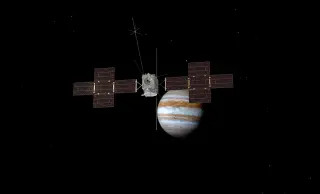
The European Space Agency's Jupiter Icy Moons Explorer (JUICE) spacecraft performed a 43-minute burn to position itself for an upcoming Earth-moon flyby, which will be the first-ever double gravity assist of the two celestial bodies. This maneuver used up 10% of the spacecraft's fuel, and it is part of a series of gravity assists that will slingshot JUICE towards Jupiter to study the planet and its icy moons. The burn was challenging as some aspects couldn't be tested in advance, but if successful, JUICE may not need to use its main engine again until it enters orbit around Jupiter in 2031.