
James Webb Space Telescope Makes Groundbreaking Discovery: Water Found in Planet-Forming Disk
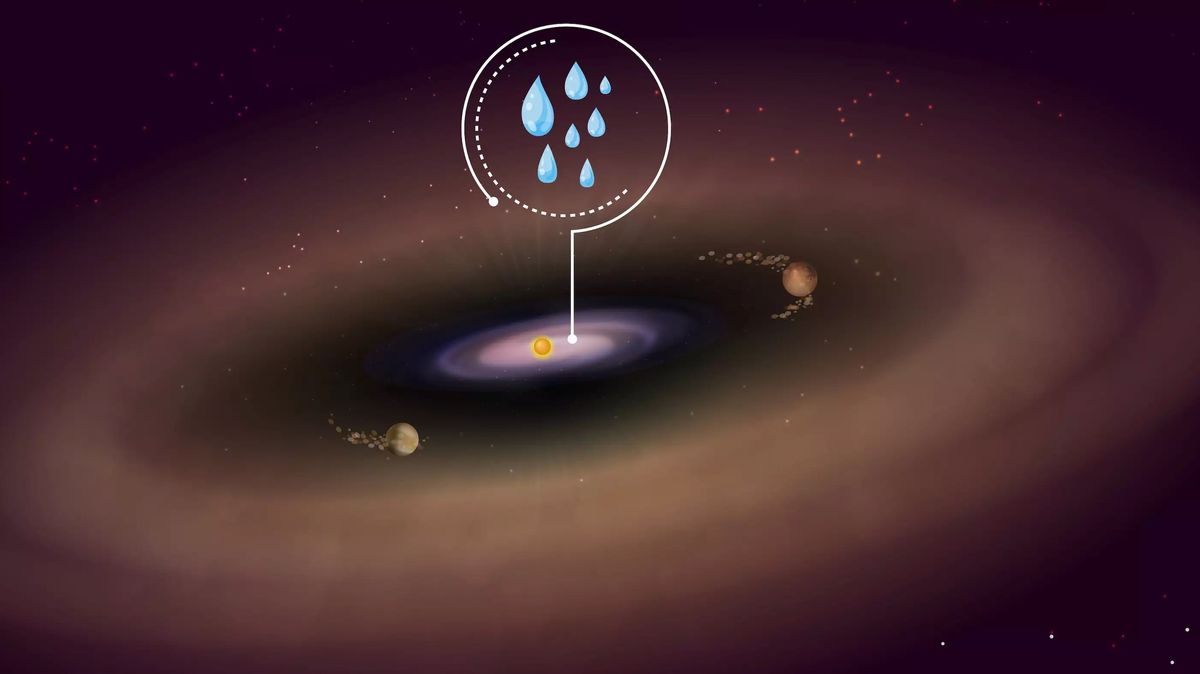
The James Webb Space Telescope has detected water near the center of a planet-forming disk surrounding the young star PDS 70, suggesting that rocky planets could possess large amounts of water from the moment they form. This challenges previous theories that water was delivered to newborn planets through asteroid bombardment. The presence of water in the central zone of the disk improves the chances of habitability for any rocky planets that may form there. The discovery was made using the mid-infrared instrument (MIRI) on the James Webb Space Telescope, and further research will be conducted to determine if PDS 70 is an unusual exception or if other planet-forming disks also contain water.
- James Webb Space Telescope spies water near center of planet-forming disk in cosmic 1st Space.com
- Water Detected in Planet-Forming Disk Around Baby Star ScienceAlert
- Webb Detects Water Vapor in Rocky Planet-forming Zone WebbTelescope.org
- James Webb Space Telescope discovers water in planet-forming disk VideoFromSpace
- JWST observations find water for the first time in the inner disk around a young star with giant planets Phys.org
Reading Insights
0
10
3 min
vs 4 min read
84%
684 → 112 words
Want the full story? Read the original article
Read on Space.com