Tag

Pds 70

All articles tagged with #pds 70

ALMA Unveils Domino Effect in Planetary Birthplaces
science1 year ago

ALMA Unveils Domino Effect in Planetary Birthplaces

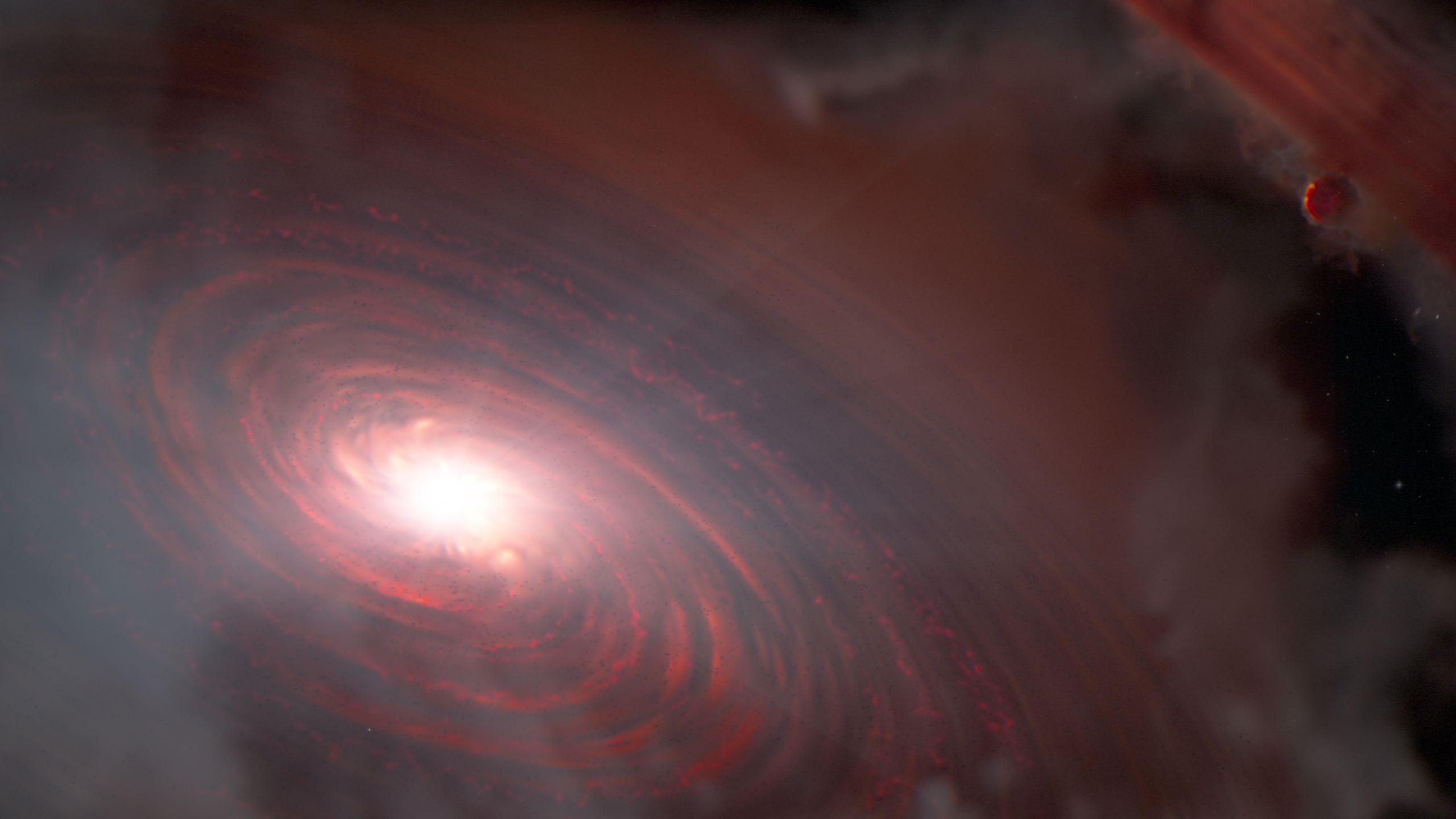
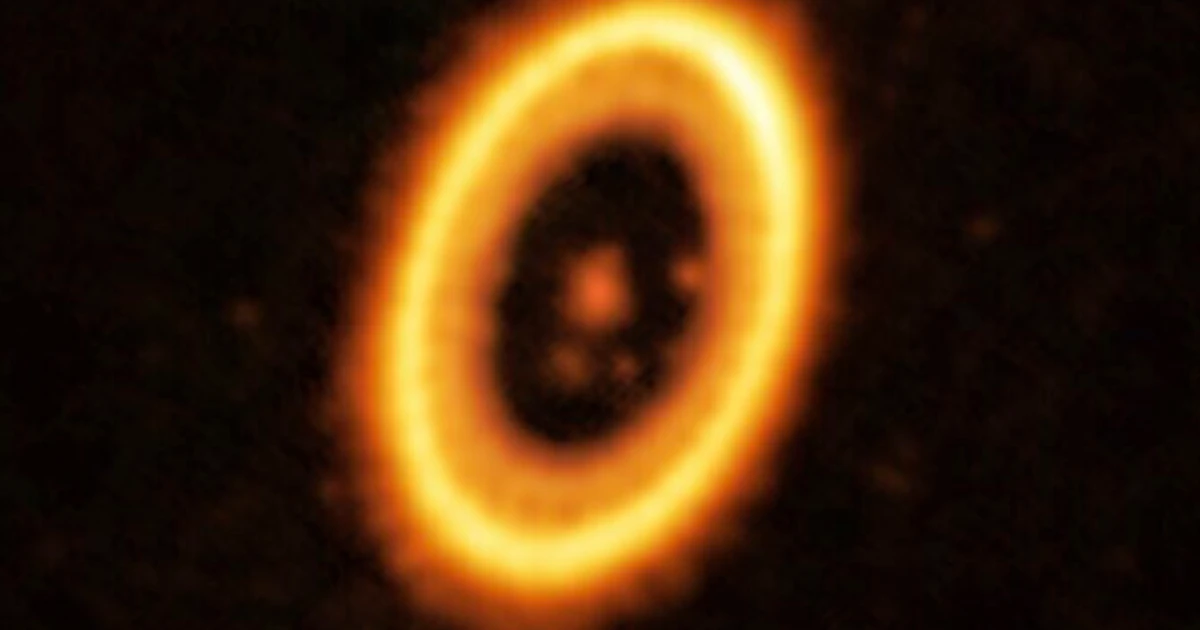
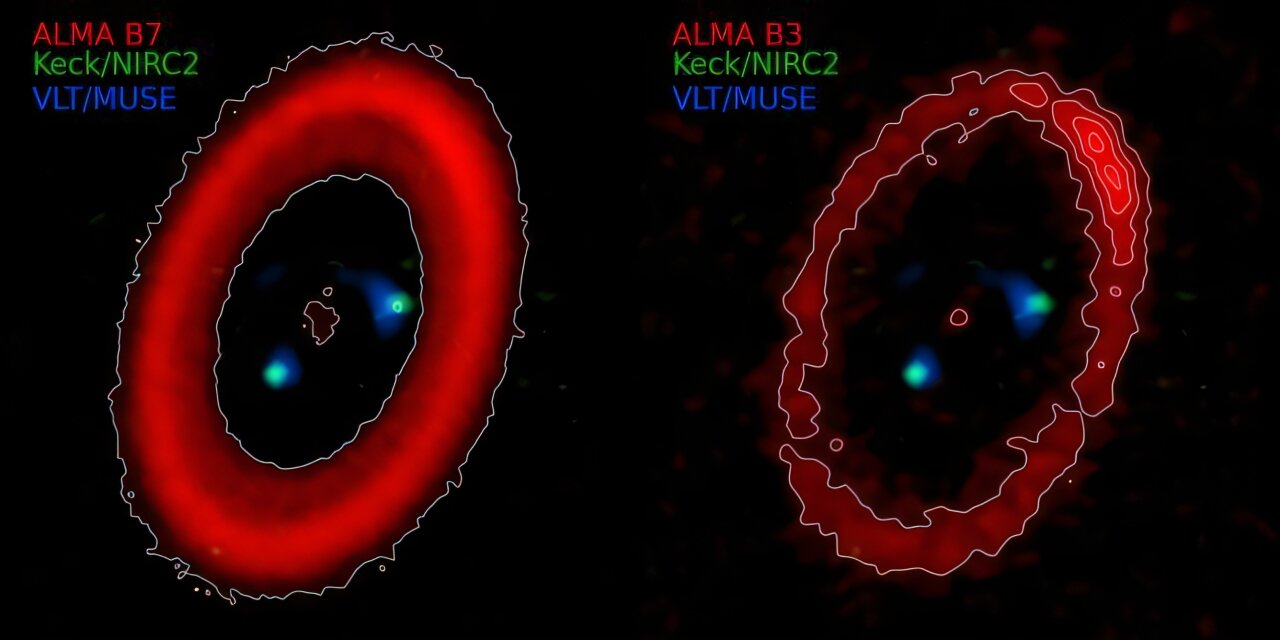
The Atacama Large Millimeter/submillimeter Array (ALMA) has observed a protoplanetary disk around the young star PDS 70, revealing a high concentration of dust grains outside the orbits of two known planets. This suggests that already-formed planets can accumulate material for new planet formation, providing insights into the development of planetary systems. The study, led by Kiyoaki Doi, highlights the importance of multi-wavelength observations in understanding the interactions between planets and their surrounding disks.
"Discovery of Third Planet at PDS 70 by Webb Telescope"
astronomy2 years ago

"Discovery of Third Planet at PDS 70 by Webb Telescope"

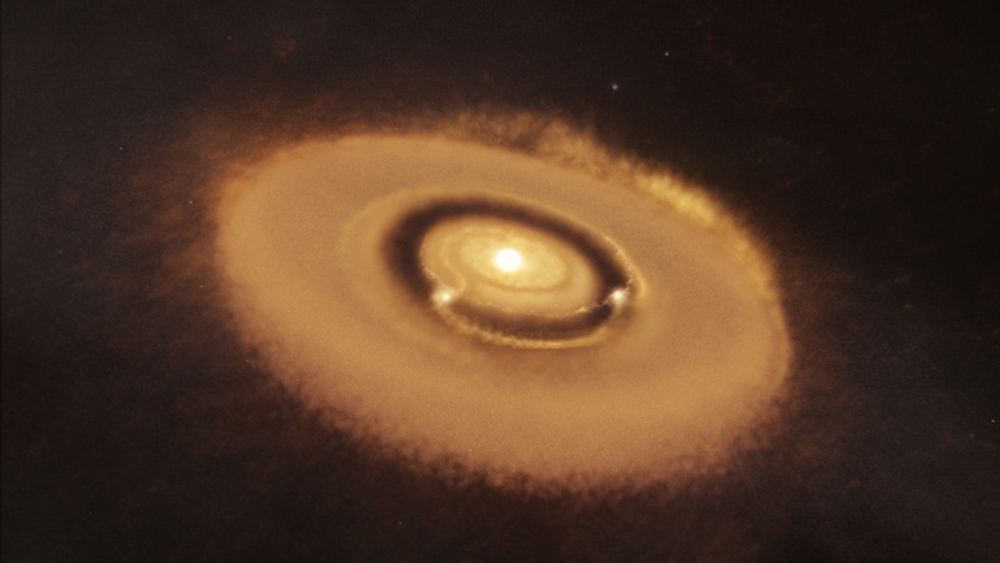
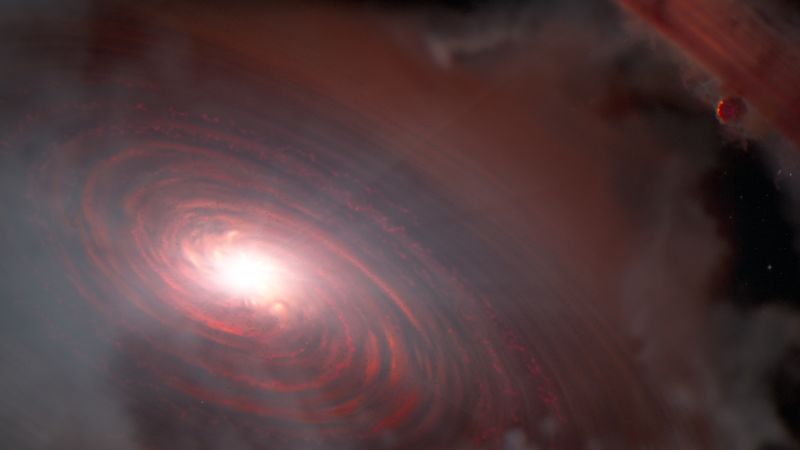
The James Webb Space Telescope has detected evidence of a possible third protoplanet orbiting the young variable star PDS 70, located 370 light-years away. This discovery, made by the MIRI mid-INfrared Disk Survey (MINDS) team, could advance our understanding of planetary systems in the process of formation. Using Webb's advanced infrared imaging suite, astronomers observed a bright signal consistent with a protoplanet candidate enshrouded in dust, potentially in resonance with two confirmed protoplanets in the system. These findings not only showcase Webb's capabilities but also provide insights into how planetary systems form and evolve, shedding light on the migration of planets and the diversity of planetary systems found to date.

"Water Discovered in Proximity: Webb Telescope's Remarkable Findings"
science3 years ago

"Water Discovered in Proximity: Webb Telescope's Remarkable Findings"

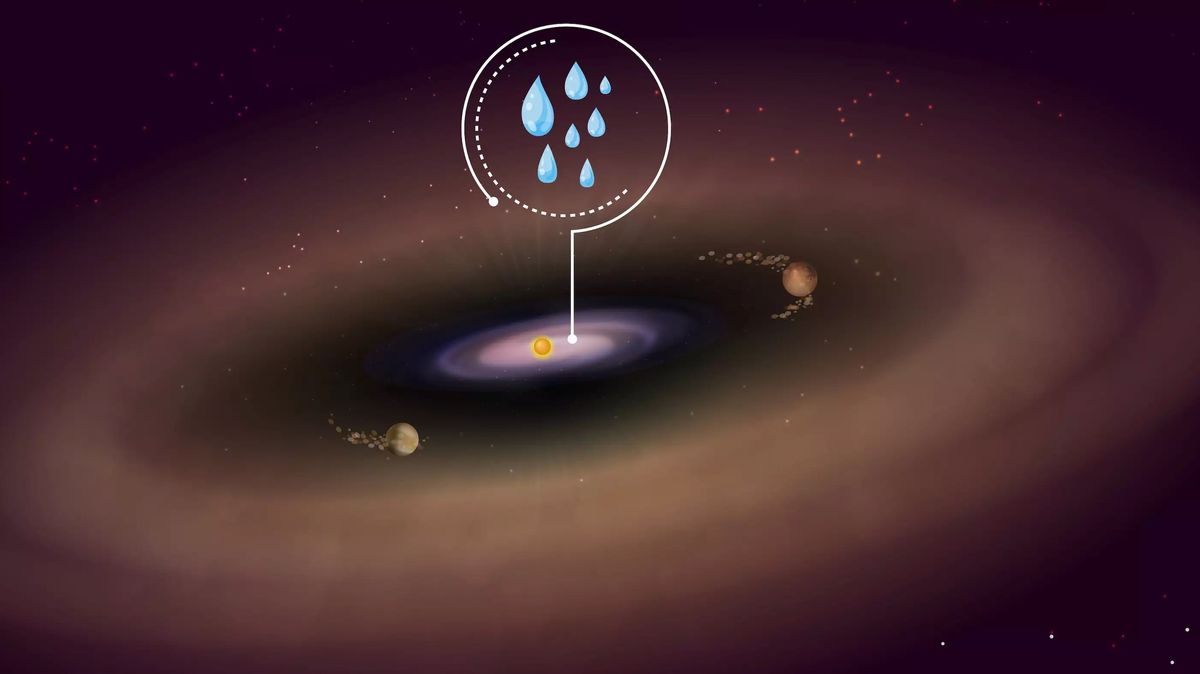
The James Webb Space Telescope has detected water vapor in the inner disk of the PDS 70 planetary system, located 370 light-years away. This discovery suggests that the planets forming around the star may have the potential to support life. The presence of water vapor in a planet-forming disk of this age is surprising, as it was previously believed that water couldn't survive stellar radiation for such long periods. The origin of the water vapor is still uncertain, but it could be formed by the combination of hydrogen and oxygen atoms or by the movement of icy dust particles. Further observations with the Webb telescope are planned to uncover more secrets about this evolving planetary system.

"JWST Discovers Water-Filled Planets in Formation"
space-science3 years ago

"JWST Discovers Water-Filled Planets in Formation"

The James Webb Space Telescope (JWST) has detected water vapor surrounding newly forming planets in the PDS 70 system, providing insights into the origin of Earth's water. This is the first time water vapor has been observed in a system where planets are currently assembling. Although actual planets have not been detected yet, evidence of protoplanets suggests the presence of rocky worlds. The discovery implies that if rocky planets are forming in the inner disk, they will have water available from the start. The researchers propose that the water may be formed by hydrogen and oxygen atoms meeting in the region or migrating from the cool outer disk. Further observations using JWST's instruments are planned to study the PDS 70 system in more detail.

James Webb Space Telescope Makes Groundbreaking Discovery: Water Found in Planet-Forming Disk
space3 years ago

James Webb Space Telescope Makes Groundbreaking Discovery: Water Found in Planet-Forming Disk

The James Webb Space Telescope has detected water near the center of a planet-forming disk surrounding the young star PDS 70, suggesting that rocky planets could possess large amounts of water from the moment they form. This challenges previous theories that water was delivered to newborn planets through asteroid bombardment. The presence of water in the central zone of the disk improves the chances of habitability for any rocky planets that may form there. The discovery was made using the mid-infrared instrument (MIRI) on the James Webb Space Telescope, and further research will be conducted to determine if PDS 70 is an unusual exception or if other planet-forming disks also contain water.

Water Found in Planet-Forming Disk Around Young Star
astronomy3 years ago

Water Found in Planet-Forming Disk Around Young Star

The James Webb Space Telescope has detected water vapor in the protoplanetary disk surrounding the star PDS 70, where Earth-like worlds are expected to form. This discovery could provide insights into the origins of Earth's water and the formation of habitable planets in the galaxy. The presence of water suggests that it may be an initial ingredient in the birth of rocky planets. The source of the water in the disk is still unclear, but it could have formed with the star or accumulated from the outer regions of the disk. Further research is needed to determine the exact mechanism responsible for sustaining the water reservoir in the PDS 70 system.

Unprecedented Planetary Behavior Unveiled by Scientists
science3 years ago

Unprecedented Planetary Behavior Unveiled by Scientists

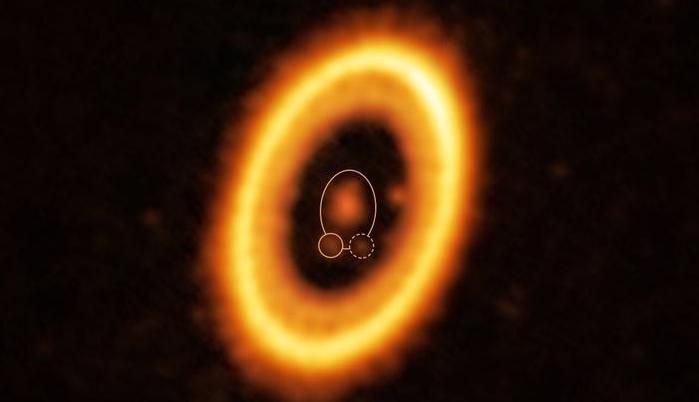
Scientists may have discovered evidence of a Trojan planet system, where two planets share the same orbit, in the PDS 70 system located 370 light-years away. If confirmed, this would be the first-ever observation of such a phenomenon. The system consists of a gas giant planet, PDS 70b, and a debris cloud, which could be a new planet forming or the remains of a destroyed planet. Trojan planets have long been hypothesized but never observed, making this potential discovery significant in the field of astronomy. Confirmation of the findings is expected by 2026.

"Groundbreaking Discovery: Two Planets Coexisting in Perfect Orbital Harmony"
astronomy3 years ago

"Groundbreaking Discovery: Two Planets Coexisting in Perfect Orbital Harmony"

Astronomers have discovered what could be two planets sharing the same orbit around their star, providing the strongest evidence yet of this phenomenon. Using a telescope in Chile, the Spanish-led team observed a cloud of debris in the same orbit as a confirmed planet in the constellation Centaurus. The objects are either a planet in formation or remnants of a planet that once existed. This discovery challenges previous assumptions and could shed light on the existence of double worlds in the universe.

Astronomers Uncover Rare Evidence of Planets Sharing Same Orbit
astronomy3 years ago

Astronomers Uncover Rare Evidence of Planets Sharing Same Orbit

Astronomers have discovered the first evidence of Trojan planets, two sibling planets locked in the same orbit around a star. The planets, consisting of a Jupiter-size planet and a debris cloud, were found around the young star PDS 70. If confirmed, this would be the first-ever detection of Trojan planets. The researchers used the Atacama Large Millimeter/submillimeter Array (ALMA) to observe a faint signal indicating the presence of a debris cloud moving alongside one of the planets. Confirmation of the finding is expected in 2026, and future advancements in ALMA capabilities could further characterize Trojan planets in other stars.