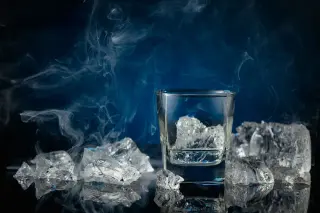
Scientists have identified a new, metastable form of ice, designated ice XXI, which forms under extreme pressure at room temperature. This discovery reveals complex freezing pathways that bypass traditional routes, offering new insights into water behavior in high-pressure environments.
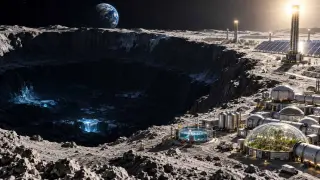
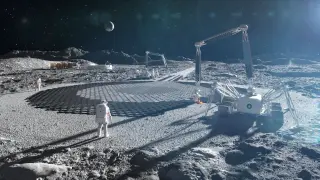
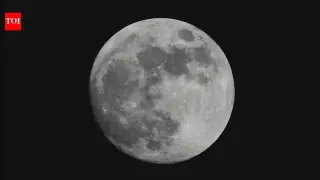
A new study in Frontiers in Space Technology concludes that lunar water reserves are insufficient to support large-scale human settlements. While solar power is abundant, water is the critical bottleneck. Even with 98% recycling efficiency, a city of one million people would exhaust the Moon's estimated water supply in just over a century, or in less than two years without recycling. Smaller settlements of 10,000 to 100,000 people could sustain themselves for centuries. The findings challenge the ambitions of space billionaires like Elon Musk and Jeff Bezos to build large lunar cities, suggesting that without discovering new water deposits or importing water, large-scale habitation is unlikely.
A new study in Frontiers in Space Technologies argues that lunar water reserves are insufficient to support large-scale cities. Researchers Martin Elvis and Jonathan McDowell calculate that even with optimistic estimates of a billion tons of ice, a million-person settlement would run dry within 100 years. While small 'moon villages' of 1,000 people are sustainable, large metropolises face severe power and water constraints, challenging recent bold claims by SpaceX and NASA.
Scientists trapped ultra-thin water between lipid layers made from phytantriol and cooled the sample to suppress crystallization, revealing a liquid-to-glass transition over a wider temperature range than expected (-63 to -20°C dynamic changes; -74 to -64°C static transition). Using SAXS/WAXS at a Australian synchrotron and neutron spectroscopy at ANSTO, they mapped water’s slowed dynamics across six orders of magnitude in time, suggesting practical relevance for cryopreservation and deep-freezing in food, with findings published in Nature Communications (2026).
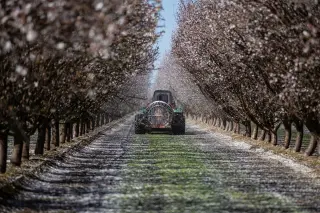
CalMatters’ fact-check finds Sam Altman’s claim that 38,000 ChatGPT queries equal the water used to grow a single almond can’t be verified with public data. Public data on data-center water use is sparse and highly variable, but broader estimates show data centers using more water over time (about 17 billion gallons in 2023, with projections up to 150 billion gallons from 2025–2030) and peak-demand during heat waves can strain local supplies. California is weighing bills to require transparency on data-center water sources and usage, despite opposition from the tech industry.
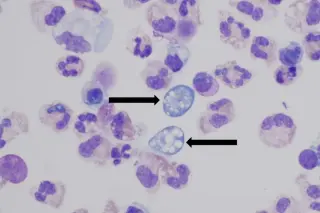
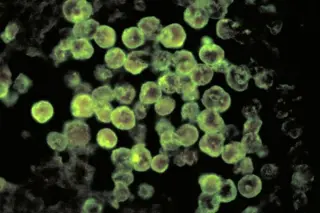
A North Carolina teenager died after contracting Naegleria fowleri, a rare brain-eating amoeba found in warm freshwater. With a 97% fatality rate, infections typically progress quickly—often death within five days—and health officials say rising summer heat may be increasing cases, urging people to avoid warm water and nasal exposure to prevent infection.
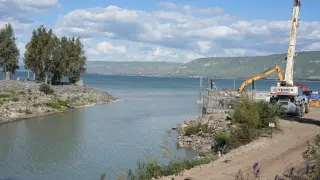
Israel faces crop losses and food-security risk as most desalination facilities were shut down due to turbid seawater. Authorities are boosting pumping from wells and the Sea of Galilee and have approved two additional desalination plants to keep household water flowing, while the Agriculture Ministry coordinates aid for at-risk farms in the South. The Israel Farmers Federation is demanding immediate government compensation and action as areas like Nitzana could lose tens of thousands of dunams of crops ahead of the High Holy Days. The situation echoes prior State Comptroller warnings about desalination management and cybersecurity readiness, and separate Bedouin-water outages are being addressed with tankers.
A North Carolina teenager is critically ill after being infected with Naegleria fowleri, a rare brain‑eating amoeba found in warm freshwater. Fewer than 10 US cases are diagnosed each year and the infection is usually fatal; authorities say the source is under investigation and urge precautions like avoiding warm freshwater and nose-dipping, especially during hot months and heat waves.
A Ceres study finds data centers in seven states withdraw about 3.4 trillion gallons of freshwater annually for electricity, equating to roughly 12 times the combined annual water use of Los Angeles, Phoenix, and Washington, DC, and signaling serious water-stress risks as data-center growth continues. The report emphasizes withdrawals (the total water drawn, much of which is returned) versus consumption (water permanently lost), with local impacts depending on conditions. Some researchers, however, argue that nationwide indirect consumptive use is far smaller, around 650,000 acre-feet, so relying on withdrawals alone can misstate risk. The findings raise concerns for arid regions like Texas and Arizona amid expanding AI-driven data-center development.
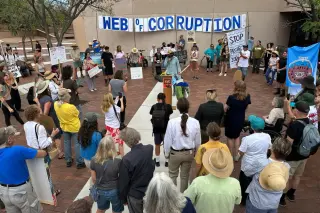
Across Nebraska and New Mexico, communities weigh the economics of data-center development against environmental and resource concerns. Nebraska’s Cass County approved a 12-month moratorium that could stall Tenaska’s potential energy/data-center project and nearby CyrusOne plans, while labor groups tout local jobs. In New Mexico, Oracle’s Project Jupiter faces a court challenge over water withdrawals, raising fears drought-stricken regions could lose farms and services. Republicans and Democrats alike frame data centers as either economic boosters or environmental risks, leading to pauses and stricter oversight of grid impacts and water use.
Iran-backed hackers reportedly found vulnerabilities in U.S. and U.K. critical infrastructure, including water facilities in 12 states and a UK power plant, signaling Tehran’s intent to maximize disruption; experts warn the attacks expose lax defenses around water and energy networks and could presage further intrusions, following a U.S. advisory about Iran-linked groups targeting water systems.
Transplant hepatologist Dr. Brian T. Lee says liver health is shaped by daily food choices. He minimizes sugar-sweetened beverages due to their link to liver fat and weight gain, favors a liver-friendly Mediterranean-style diet rich in produce, whole grains and unsaturated fats, and swaps in water, unsweetened tea, and black coffee. He also cautions against ultra-processed foods and refined carbohydrates and notes moderation of alcohol for liver health.
Green volcanic-glass beads collected by Apollo 15 in 1971 later yielded hydrogen, providing the first clear evidence that water existed inside the Moon when those beads formed and challenging the long-held view of a completely dry Moon. Follow-up work, including Brown University research in 2008 and further analyses by 2011, found water concentrations in the beads comparable to some terrestrial basalts, implying the lunar mantle contains significant water and prompting revisions to theories about the Moon’s formation and volatile retention. NASA now recognizes water in multiple forms on the Moon, from permanently shadowed regions to sunlit areas, with the beads serving as an early key clue to the Moon’s hidden interior.
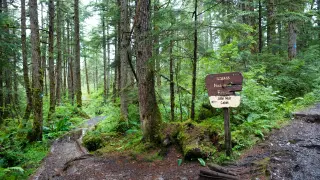
Proposed rollback of the 2001 Roadless Rule would open nearly 59 million acres of inventoried roadless national forest to road construction and logging, risking wildlife habitat, watershed health, and drinking water for millions of Americans, including areas like Alaska’s Tongass; a 30-day public comment period is required and lawmakers are considering amendments to permanently remove protections, sparking debate between conservationists and industry.
An international team compressed liquid water at room temperature inside a dynamic diamond‑anvil cell, uncovering five freezing/melting pathways that can bypass the simple ice VI route and revealing a new metastable crystal, ice XXI, containing 152 water molecules per repeating unit. The work refines our understanding of water under extreme pressure and could improve models for high‑pressure environments in icy worlds and water‑rich materials.