
Rescue Craft LINK Tumbles as It Nears Failing Swift Observatory
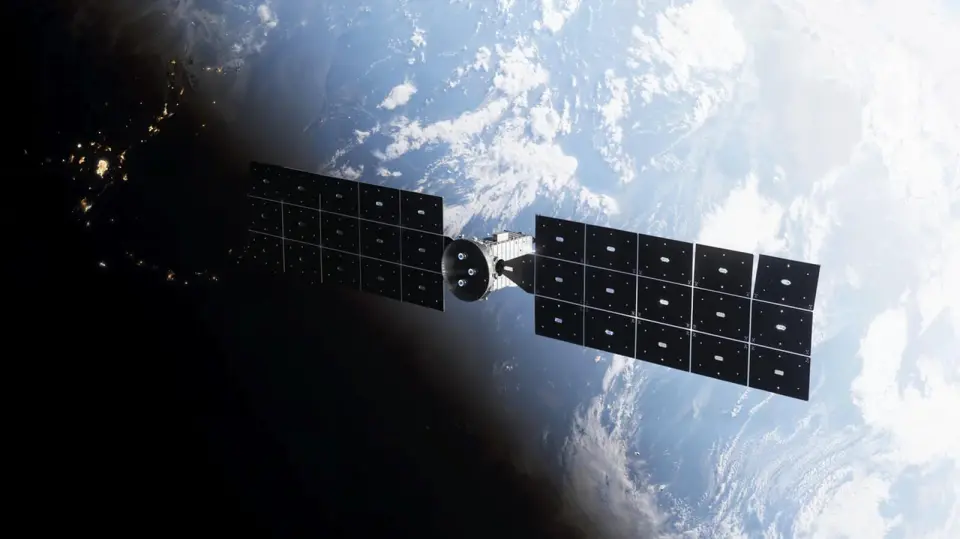
The LINK spacecraft, launched in early July to rescue the decaying Neil Gehrels Swift Observatory, is now experiencing critical attitude control issues. Two of its three reaction wheels have failed, causing the craft to spin and resulting in sporadic communications. Engineers are attempting to stabilize LINK using electric propulsion before assessing if it can still capture and boost Swift to a higher orbit.
Key points
- LINK, built by Katalyst Space Technologies, suffered attitude control failures last weekend, causing it to spin and interrupt communications.
- Preliminary analysis shows two of LINK's three reaction wheels are inoperable, with some loss of functionality in its cold gas thruster system.
- The ground team is using LINK's electric propulsion thrusters to stop the spin and reestablish guidance and navigation.
- Swift Observatory is decaying faster than anticipated due to increased solar activity, with a potential reentry this year if not boosted.
- Katalyst Space Technologies states the mission remains active and believes LINK has a viable path to rendezvous with Swift despite the setbacks.
Background
The Neil Gehrels Swift Observatory, launched in 2004 at a cost of $250 million, has been experiencing orbital decay for years. Increased solar activity has accelerated this decay, prompting NASA to launch the LINK servicing spacecraft on July 3, 2026, aboard a Pegasus XL rocket. The $30 million mission aimed to use robotic arms to capture Swift and boost its orbit by approximately 150 miles to extend its scientific life. Previous archive coverage noted that Swift had a 50% chance of uncontrolled reentry by mid-2026, and NASA had paused on-board science to buy time for the rescue operation.
How outlets are covering it
Engadget and NASA Science both confirm the technical details of LINK's malfunction, specifically the failure of two reaction wheels and the loss of cold gas thruster functionality. The New York Times emphasizes the severity of the situation, quoting Katalyst CEO Ghonhee Lee as describing the tumble as a 'very serious situation' that put the mission in jeopardy. Yahoo highlights the irony of the failure, noting that Swift itself experienced reaction wheel issues in 2022. While all sources agree on the technical problems, Katalyst Space Technologies maintains an optimistic stance, asserting that the mission remains active and that LINK can still achieve its goal of rendezvousing with Swift.
Why it matters
The failure of LINK threatens the survival of the Neil Gehrels Swift Observatory, a critical instrument for detecting gamma-ray bursts and high-energy astrophysics phenomena. If LINK cannot stabilize and boost Swift, the observatory may reenter Earth's atmosphere this year, ending its 22-year scientific mission. The outcome of this rescue attempt will also serve as a test case for private companies capturing and servicing government satellites, potentially setting precedents for future orbital maintenance operations.
What to watch
Engineers will continue efforts to stop LINK's spin using electric propulsion over the coming days. Once stable, the team will reestablish guidance and navigation to account for the spacecraft's new configuration. Katalyst and NASA will then evaluate revised plans to approach and capture Swift, depending on the safety of the approach and LINK's overall health. If the rescue fails, NASA will need to reassess the fate of the Swift Observatory.
- The Spacecraft NASA Sent To Rescue The Falling Swift Observatory Is In Trouble Engadget
- Commissioning Update for Spacecraft to Boost NASA’s Swift NASA Science (.gov)
- Mission to Save Falling NASA Space Telescope Suffers Setback The New York Times
- NASA launched this spacecraft to save a satellite. Now, it needs saving too Yahoo
- Rescue mission to save NASA’s Swift space telescope is imperiled in orbit Scientific American
Want the full story? Read the original reporting
Read on Engadget