
Sicilian Divers Uncover 2,100-Year-Old Roman Wreck Loaded with 500 Wine Amphorae
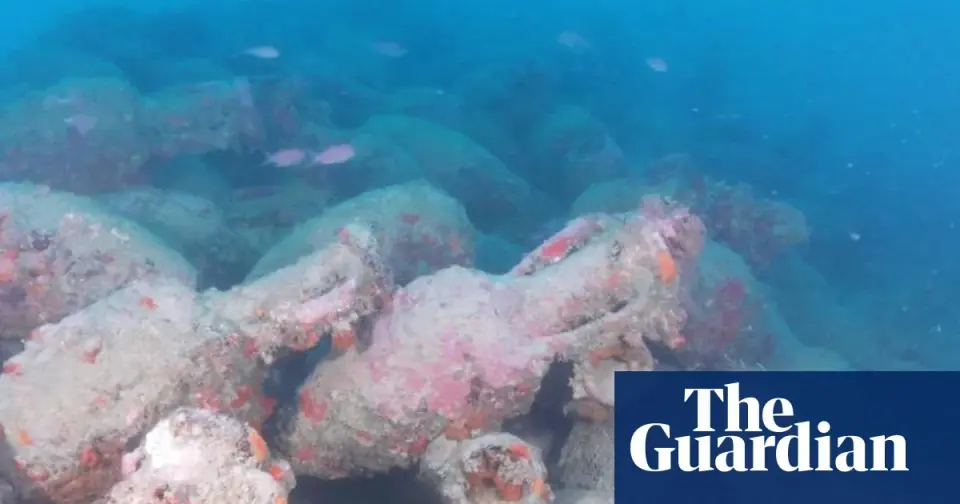
Italian authorities have confirmed the discovery of a 2,100-year-old Roman shipwreck approximately 3 miles off the coast of Mazara del Vallo, Sicily. The vessel, located at a depth of 46 meters, contains roughly 500 amphorae, primarily of the Dressel 1A type used for transporting wine. Culture Minister Alessandro Giuli described the find as a major archaeological discovery that illuminates ancient Mediterranean trade routes. The wreck was initially spotted by fisher Giacomo De Mola, who reported it to the Carabinieri, leading to a joint investigation by the Sicilian Sea Superintendency. Future research aims to determine the exact date, origin, and destination of the cargo, while implementing protective measures for the site.
Key points
- The shipwreck is located 3 miles off Mazara del Vallo at a depth of 46 meters (151 feet).
- The vessel measures approximately 21 meters long and 6 meters wide, carrying about 500 amphorae.
- Most of the cargo consists of Dressel 1A amphorae, widely used for wine transport in the 2nd and 1st centuries BC.
- The discovery was made by fisher Giacomo De Mola, who reported the find after mistaking the amphorae for a large rock on his sonar scanner.
- Italian Culture Minister Alessandro Giuli called the wreck one of the most important underwater archaeological finds in recent years.
- The Carabinieri Cultural Heritage Protection Unit and the Sicilian Sea Superintendency are leading the investigation and protection efforts.
Background
This discovery follows a pattern of significant Roman maritime finds in Italian waters. In 2021, a second-century BC vessel was found off Palermo, and in 2013, an almost intact second-century BC ship was discovered off Liguria. The waters around Sicily are considered particularly rich for underwater archaeology due to the island's strategic position on ancient trade routes connecting Greece, the Middle East, North Africa, and Europe. The recent find of a submerged volcano off Panarea also highlights the active geological and archaeological interest in the region.
How outlets are covering it
The Guardian and BBC both emphasize the emotional impact on the divers, particularly Giacomo De Mola, who described the discovery as the most incredible of his life. USA Today focuses on the physical dimensions of the amphora pile, noting it is over 6 feet tall. Euronews provides additional detail on the involvement of multiple Carabinieri units and mentions the recent discovery of a submerged volcano off Panarea. All sources agree on the significance of the find and the role of the Carabinieri and Sicilian authorities in the investigation. There are no significant disagreements among the outlets, but the emphasis varies between the human element, the physical scale, and the broader archaeological context.
Why it matters
This discovery provides valuable insights into ancient Roman trade networks and the movement of goods like wine across the Mediterranean. The Dressel 1A amphorae are particularly useful for reconstructing commercial networks between Italy and other Mediterranean regions during the 2nd and 1st centuries BC. The find also underscores the importance of underwater archaeology in understanding historical trade routes and the cultural exchanges that shaped the ancient world.
What to watch
The Sicilian Sea Superintendency will conduct further scientific documentation and research at the site. Archaeologists aim to determine the precise date of the wreck, the origin and destination of the cargo, and the condition of the surviving material. Protective measures will be implemented to safeguard the site, which is considered of exceptional archaeological significance. The findings will likely be shared with the public as part of ongoing research and educational initiatives.
- Roman shipwreck with 500 amphorae found off coast of Sicily The Guardian
- Ancient Roman shipwreck discovered off Sicily coast BBC
- Shipwreck, jars more than 2,000 years old found off Italian coast USA Today
- Police video shows ancient Roman shipwreck with hundreds of amphorae discovered off Sicily Yahoo
- Roman shipwreck with hundreds of amphorae found off Sicily euronews.com
Want the full story? Read the original reporting
Read on The Guardian