
New Burials at Göbekli Tepe Challenge 'Skull Cult' Theory, Suggesting Permanent Settlement
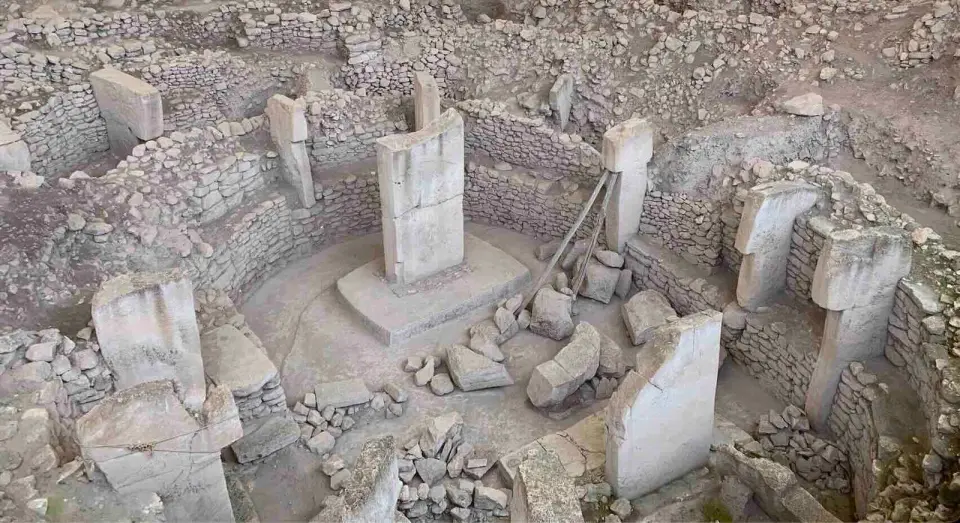
Archaeologists have discovered the first intact human burials at Göbekli Tepe, the 11,600-year-old site in southeastern Turkey previously known as the world's first temple. Published in PLOS One on September 22, 2026, the study by Lee Clare and Julia Gresky reveals two graves dating to 8,700–8,000 BCE. One grave contained an adult woman, a young man, and an adolescent girl; the other held a single middle-aged woman. These findings suggest the site was a permanent residential settlement rather than solely a ceremonial gathering place, offering a new explanation for the hundreds of scattered bone fragments found in earlier excavations.
Key points
- The study confirms the first intact burials at Göbekli Tepe, dated to the Pre-Pottery Neolithic B period (8,700–8,000 BCE).
- One burial pit contained three individuals: a woman aged at least 35, a man aged 20-30, and a girl aged 11-14.
- The second burial contained a single young adult woman, likely aged 20-30, buried in a flexed position.
- The bones in these new burials show similar fragmentation and calcium deposits as the scattered remains found in monumental structures.
- Researchers propose that erosion and landslides moved bones from original graves into the large stone structures, explaining the previous 'skull cult' hypothesis.
Background
Göbekli Tepe, excavated by Klaus Schmidt in the 1990s, has long been viewed as a ritual site for nomadic hunter-gatherers. Recent discoveries, including grain storage areas, have hinted at permanent habitation. This new finding adds to the growing body of evidence that the site functioned as a village. Nearby Karahan Tepe has also yielded unique Neolithic artifacts, reinforcing the complexity of early Anatolian settlements.
How outlets are covering it
The Debrief and Archaeology News Online emphasize the shift from a 'ceremonial only' view to a 'residential' model, noting that the new burials explain the scattered bones as the result of natural erosion. Gizmodo highlights the correction of the 'skull cult' narrative, stating that while some ritual modifications existed, they were not unique outliers. Bioarchaeologist Scott Haddow, cited by Gizmodo, notes that skull focus was common in the Neolithic but varied by region. All sources agree that the new burials provide 'indisputable evidence' of continuous settlement, contradicting the idea that people only visited for annual rituals.
Why it matters
This discovery redefines our understanding of one of the world's oldest monumental sites. It suggests that early Neolithic societies in Turkey were more sedentary and complex than previously thought, blending domestic life with ritual practices. The findings also resolve a long-standing mystery regarding the distribution of human remains at the site, attributing them to geological processes rather than a single, bizarre ritual practice.
What to watch
Researchers will continue to analyze the bones for direct dating and further evidence of ritual modifications. Future excavations may uncover more intact burials, helping to map the residential layout of the settlement. The study also calls for more investigation into the 'considerable diversity of burial rituals' in Neolithic Anatolia to distinguish between local practices and broader regional trends.
- Göbekli Tepe Remains an 11,600-Year-Old Enigma—and a New Discovery is Challenging Past Views on Its Mysterious Purpose thedebrief.org
- 12,000-year-old Göbeklitepe burials explain the mystery of hundreds of scattered human bones Archaeology News Online Magazine
- Archaeologists Thought This 10,000-Year-Old Temple Belonged to a ‘Skull Cult.’ They Were Wrong Gizmodo
- Ancient Remains Attributed to ‘Skull Cult’ Might Have Simpler Origin Than Archeologists Originally Thought People.com
- Two ancient burial sites may explain mystery of Göbeklitepe's scattered human bones Phys.org
Want the full story? Read the original reporting
Read on thedebrief.org