
Forecasters Warn 2026 El Niño Could Shatter Historical Records by Unprecedented Margin
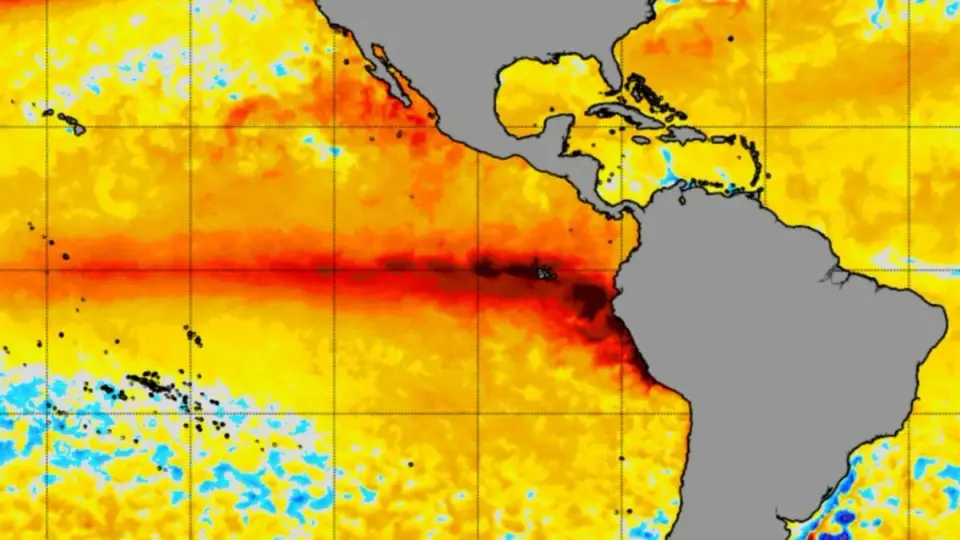
Climate scientist Zeke Hausfather reports that current forecast models predict the 2026 El Niño event will surpass the 2015-2016 record by a significant margin. Tropical Pacific sea surface temperatures are projected to rise 3.6 degrees Celsius above average, exceeding the previous peak by 0.8 degrees Celsius. This unprecedented strength could drive global average temperatures to 1.7 degrees Celsius above pre-industrial levels in 2027, potentially breaching Paris Agreement thresholds. Economists estimate this event could cause $10 trillion in losses by 2032 due to intensified extreme weather, though experts caution that models have never verified such extreme anomalies before.
Key points
- NOAA officially declared El Niño in June 2026, marking the warm phase of the ENSO cycle.
- Analysis of 667 ensemble members across 14 seasonal models shows peak tropical Pacific temperatures could reach 3.6 degrees Celsius above average.
- This projected peak exceeds the 2015-2016 record by 0.8 degrees Celsius, a gap larger than the difference between the strongest and fifth-strongest El Niño events in the last 150 years.
- Global average temperatures could reach 1.7 degrees Celsius above pre-industrial levels in 2027, exceeding the 1.5-degree Celsius Paris Agreement threshold temporarily.
- Dartmouth College researcher Justin Mankin estimates the event could result in $10 trillion in economic losses by 2032 due to heatwaves, droughts, and flooding.
- Experts warn that seasonal forecast models have never been verified for an anomaly of this magnitude, requiring caution in interpreting projections.
Background
Previous coverage in July 2026 noted that forecasters were already warning of an unprecedented El Niño strength, with potential peaks around 3.9 degrees Celsius in December. The current development confirms these early warnings with more detailed model analysis, showing the event is on track to exceed even those high projections. The 2024 record for the hottest year on record serves as a baseline for the potential 2026 and 2027 temperature breaches.
Why it matters
The potential for a record-breaking El Niño signals a critical juncture for global climate policy and economic stability. If forecasts are accurate, the resulting temperature spikes and extreme weather events could strain infrastructure, disrupt supply chains, and exacerbate humanitarian crises. The projected economic losses of $10 trillion highlight the tangible financial risks associated with climate variability, underscoring the urgency for adaptive measures and long-term mitigation strategies. Additionally, the unprecedented nature of this event challenges existing climate models, highlighting gaps in our understanding of extreme climate responses.
What to watch
Scientists will closely monitor the El Niño event as it ramps up over the next several months, with peak sea surface temperatures expected between November and February. Updated forecasts will be released as new data becomes available, potentially refining the projections for 2027 global temperatures. Policymakers and economists will assess the actual economic impacts and extreme weather events to evaluate the accuracy of current models and adjust adaptation strategies accordingly.
- This El Niño Is on Track to Become the Strongest on Record by a ‘Mind-Blowing Margin’ Gizmodo
- Hawaii is entering a dangerous stretch as a powerful El Niño builds San Francisco Chronicle
- 'Mind-blowing' El Niño stuns scientists. Why are they so concerned? Yahoo
- El Niño May Push Global Warming to 2C or Higher in the Short Term Bloomberg
- Emerging markets stare at inflation risks as powerful El Niño looms Reuters
Want the full story? Read the original reporting
Read on Gizmodo