
August 2026 Sets New Global Heat and Humidity Records Amid Record El Niño
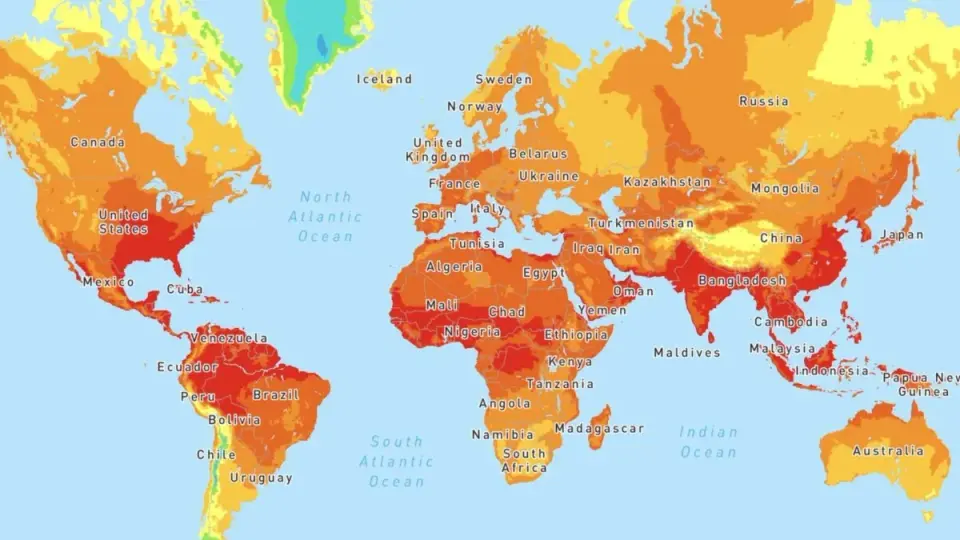
August 2026 marked the warmest and most humid month in recorded history, with global temperatures reaching 1.65°C above pre-industrial levels. This milestone, driven by fossil fuel emissions and a strengthening El Niño, led to unprecedented atmospheric moisture and extreme weather events worldwide.
Key points
- Global average temperatures in August 2026 reached 1.65°C above pre-industrial levels, tying July 2023 as the hottest month on record according to the EU’s Copernicus service.
- The month also recorded the highest atmospheric moisture levels ever measured, with precipitable water reaching 1.08 inches, surpassing previous records from 2024.
- The contiguous United States experienced its hottest summer on record, surpassing the 1936 Dust Bowl era, with August averaging 75.58°F.
- A strengthening El Niño, forecast to peak in December with sea surface temperatures 4°C above average, is expected to drive further temperature and humidity records into 2027.
- Scientists attribute the extreme conditions primarily to human-caused climate change, with El Niño acting as a temporary amplifier of the underlying warming trend.
Background
Recent months have seen a surge in extreme weather events, including record-breaking heat waves in Southern California and a deadly flash flood in the Grand Canyon. Earlier reports indicated that the developing El Niño could become the strongest on record, potentially pushing 2027 to the hottest-year record. The current data confirms these forecasts, showing that atmospheric moisture and temperatures are rising at an accelerated pace due to the 'expanding atmospheric sponge' effect, where warming increases the atmosphere's capacity to hold water vapor.
How outlets are covering it
While all outlets agree on the record-breaking nature of August 2026, they differ slightly in their framing of the temperature record. The Guardian and The New York Times emphasize that August tied July 2023 for the hottest month ever, citing the EU’s Copernicus data. In contrast, Gizmodo, citing climatologist Zeke Hausfather, notes that August 2026 slightly surpassed August 2024 in the ERA5 dataset. The Associated Press highlights the unprecedented humidity levels, noting that 17% of the planet experienced top 10% precipitation levels in August, the largest area recorded since 1940. All sources agree that fossil fuel emissions are the primary driver, with El Niño amplifying the effects.
Why it matters
The record-breaking heat and humidity of August 2026 signal a shift toward more frequent and intense extreme weather events. The increased atmospheric moisture is likely to lead to more severe flooding and storms, particularly in the United States, Europe, and Asia. As temperatures continue to rise, the risk of crossing critical climate tipping points, such as the collapse of Arctic ice or the Amazon rainforest, increases. The economic and social impacts of these events, including damage to infrastructure, health systems, and food supplies, are expected to grow in the coming years.
What to watch
Scientists predict that the current El Niño will peak in December, potentially becoming the strongest on record. This is expected to drive global temperatures and humidity levels to new highs in 2027, with a 75% chance that 2026 will become the warmest year on record. The increased atmospheric moisture is likely to lead to more extreme rainfall events, particularly in the United States, Europe, and Asia. Governments are urged to accelerate the transition to clean energy and build climate resilience to mitigate the impacts of these changes.
- August Just Set a Global Heat and Humidity Record—and It Wasn’t Close Gizmodo
- August was joint-hottest month ever recorded globally The Guardian
- August Ties the Record for Earth’s Hottest Month on the Books The New York Times
- Global heat stuck on high. Scientists say August was Earth's hottest month they've measured. WKMG
- A Surge of Marine Heat Waves Threatens to Scramble Ocean Life Yale E360
Want the full story? Read the original reporting
Read on Gizmodo