
"Polar Bear Survival: Insights from Collar Camera Footage"
TL;DR Summary
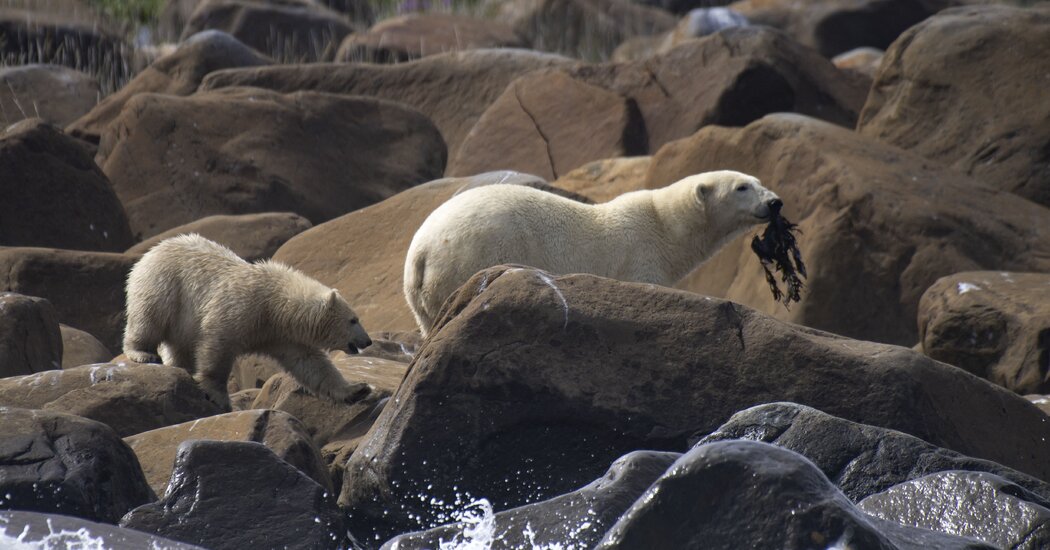
Scientists have used collars with cameras to track 20 polar bears in Manitoba and found that the bears' foraging for alternative food on land during ice-free months did not provide enough calories to maintain their body mass, as they spent more energy finding the food than they gained from it. With the ice-free period in western Hudson Bay now three weeks longer than in the 1970s, and polar bears spending about 130 days on land each year, the study highlights the challenges these animals face in a warming world, with potential implications for their survival.
- Is That Polar Bear Getting Enough to Eat? Try a Collar With a Camera. The New York Times
- Watch: Rare footage shows the lives of polar bears through their own eyes Vox.com
- Climate change and loss of sea ice putting polar bears at risk of starvation, collar cameras show ABC News
- As the Ice Melts, Polar Bears Are Failing to Find Enough Food on Land TIME
- How do polar bears eat when there's no sea ice? Not well, study finds CBC News
Reading Insights
Total Reads
0
Unique Readers
26
Time Saved
2 min
vs 3 min read
Condensed
78%
427 → 95 words
Want the full story? Read the original article
Read on The New York Times