
Zavodovski Island loses world’s largest penguin colony status amid 63% chinstrap crash
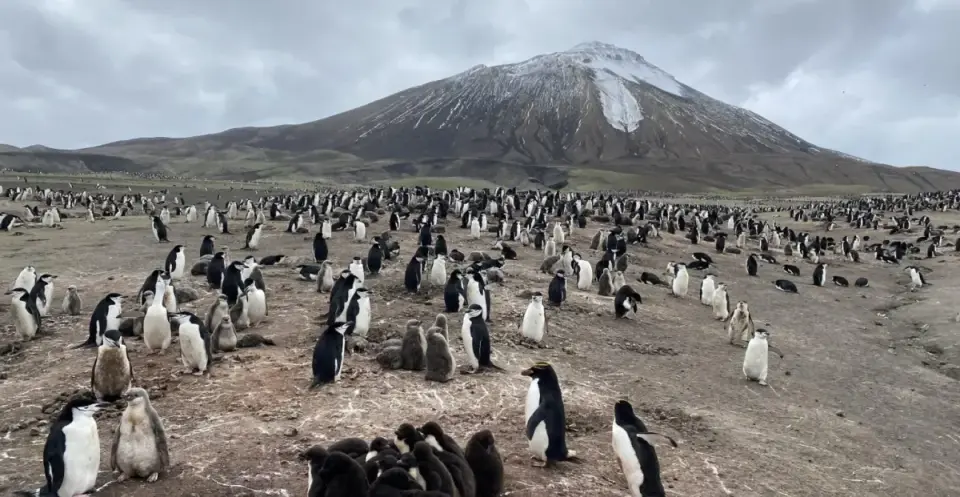
A new study reveals that the chinstrap penguin population on Zavodovski Island, previously the world’s largest colony, has plummeted by 63% since 2011. This collapse, attributed to climate-driven warming and shifting krill food sources, has caused the island to lose its title to Cape Adare. While macaroni penguins have thrived due to dietary flexibility, scientists warn that the rapid decline of chinstraps threatens broader Antarctic ecosystem stability and may warrant endangered species status.
Key points
- Chinstrap penguin numbers on Zavodovski Island dropped by 63% between 2011 and 2025, equating to a loss of approximately 500,000 breeding individuals.
- The decline is attributed to warming oceans pushing krill, the penguins' primary food source, southward into the Weddell Sea, beyond the reach of cold-adapted chinstraps.
- Macaroni penguins on the same island increased by 30% due to their more varied diet and ability to forage in warmer waters, highlighting a shift in community composition.
- Zavodovski Island has lost its status as the world’s largest penguin colony to Cape Adare in the Ross Sea, located over 5,000 km away.
- Scientists ruled out the 2016 volcanic eruption and human competition as causes, noting the decline began before the eruption and shows a steady linear trend.
- The rapid collapse may lead to the chinstrap penguin being reclassified as an endangered species by the International Union for Conservation of Nature.
Background
In 2020, The Guardian reported declining chinstrap populations on Low Island in the South Shetland Islands, raising early concerns about ecosystem instability. A 2020 study also noted nearly 50% drops in some Antarctic colonies compared to the 1980s, but Zavodovski was previously believed to be resilient. This new 2026 study confirms that even remote, uninhabited areas are not immune to climate impacts.
How outlets are covering it
The Guardian and Vox emphasize the 'enormous' nature of the crash and the potential for wider ecosystem collapse, likening it to a 'Jenga' set. The BBC highlights the logistical challenges of the research, noting the 15-day journey and use of drones, while also detailing the 'smelliest places in the world' due to volcanic fumes and guano. CNN focuses on the loss of the 'world’s largest' title and the specific mechanism of krill displacement, noting that chinstraps cannot follow the food due to sea ice barriers. All sources agree on the 63% decline figure and the climate change attribution, but differ in emphasis: The Guardian and Vox stress the urgency for endangered species classification, while the BBC and CNN provide more detail on the fieldwork and the contrasting success of macaroni penguins.
Why it matters
This collapse signals a tipping point in Antarctic ecosystems, where climate change is altering food webs and species distributions. The loss of a key species like the chinstrap penguin could trigger cascading effects, threatening the stability of the entire Southern Ocean ecosystem. It also underscores that even remote, uninhabited areas are experiencing rapid environmental changes, challenging the notion of 'pristine' wilderness.
What to watch
Scientists are calling for the chinstrap penguin to be reclassified as an endangered species by the IUCN. Continued monitoring of Zavodovski and other Antarctic colonies will be crucial to understand the long-term impacts of climate change on biodiversity. Conservation efforts may need to focus on protecting krill populations and their habitats to support chinstrap recovery.
- Antarctica’s penguins are sending us a distress signal Vox
- Iconic penguin colony sees "population collapse" driven by climate change, study finds CBS News
- World’s largest penguin colony suffers ‘enormous population crash’ The Guardian
- World's largest penguin colony hit by 'alarming' decline in numbers BBC
- This island was home to the planet’s largest penguin colony. Here’s why it just lost that title CNN
Want the full story? Read the original reporting
Read on Vox