
Niger junta survives mutiny as Russian forces intervene in Niamey
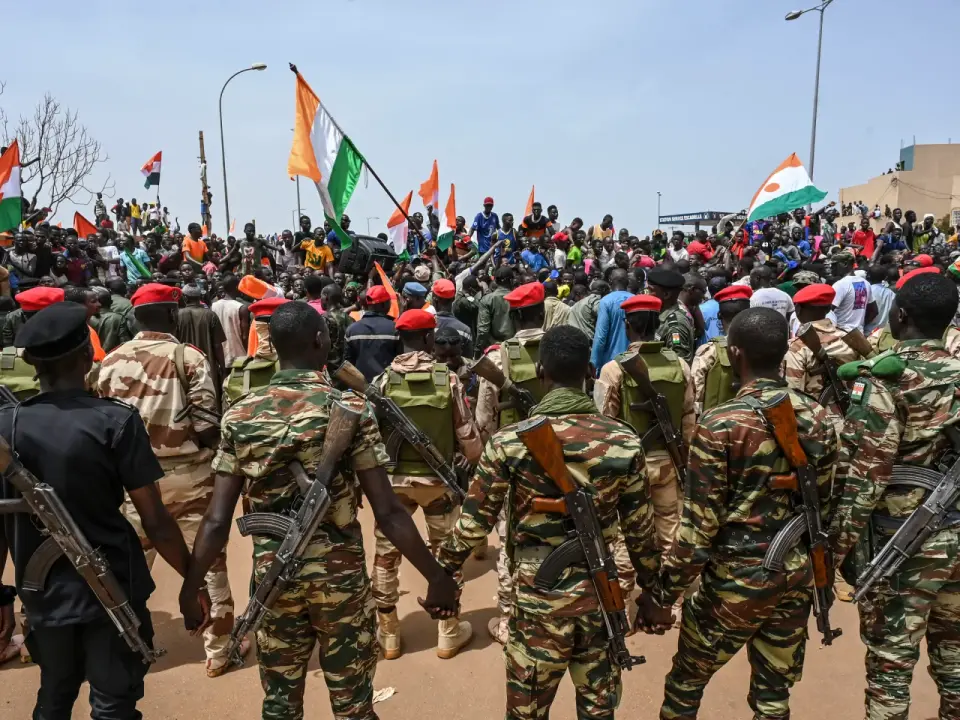
Niger’s military government contained a weekend mutiny in Niamey, but the uprising exposed deep tensions within the army and highlighted the expanding role of Russian forces in the country. The unrest, which began at a key airbase and spread to the presidential palace, was quelled with the assistance of Russia’s Africa Corps, marking a significant shift in Niger’s security partnerships away from Western allies.
Key points
- Mutiny began at Base 101, a military installation at Diori Hamani International Airport in Niamey, before spreading to the presidential palace and state broadcaster.
- Russia’s Africa Corps, which has 200-300 personnel in Niger, provided ground and aerial support to government forces to neutralize the mutineers.
- The mutiny was the most serious internal challenge to General Abdourahamane Tiani’s rule since he seized power in a July 2023 coup.
- Niger’s army has been fighting al-Qaeda and ISIL-affiliated groups, suffering heavy losses, including 18 soldiers killed in an ISIL attack earlier this month.
- Algeria also provided military assistance, sending four fighter jets, a transport aircraft, and a refuelling tanker to support Niger’s government.
Background
Niger’s military government, led by General Abdourahamane Tiani, seized power in July 2023, accusing the elected government of failing to contain armed groups. Since then, Niger has pushed out French and US forces, joined the Alliance of Sahel States with Mali and Burkina Faso, and deepened ties with Russia. The country has faced persistent jihadist attacks, including on its main airport in January and June 2026, and has struggled to restore security despite the military takeover.
How outlets are covering it
Al Jazeera and The New York Times emphasize the mutiny as a test of Russia’s expanding role in the Sahel and a sign of internal discontent within Niger’s military. The BBC highlights Russia’s official statement that its Africa Corps helped repel the attack, while AP News focuses on the 24-hour duration of the mutiny and the intervention by Russian forces. All sources agree that the mutiny exposed tensions within Niger’s army and the changing nature of its security partnerships, but they differ in emphasis: Al Jazeera and AP News focus on the broader security crisis and the limits of Russian support, while The New York Times and BBC highlight the immediate impact on the junta and the role of foreign allies.
Why it matters
The mutiny underscores the fragility of Niger’s military government and the limits of its security partnerships. While Russia’s intervention helped contain the immediate threat, it does not resolve the underlying security crisis or the pressures facing Niger’s military. The episode highlights the shifting balance of power in the Sahel, with Western influence waning and Russian influence growing, even as jihadist violence persists.
What to watch
Niger’s government will likely continue to rely on Russian and Algerian support to maintain security, while also facing ongoing challenges from armed groups and internal discontent within the military. The mutiny may lead to further reforms or crackdowns within the army, and could influence the broader dynamics of the Alliance of Sahel States and its relationships with Western and Russian partners.
- Niger mutiny puts Russia’s expanding role in the Sahel to the test Al Jazeera
- Soldiers in Niger Attack Presidential Palace and Airport, Shaking Junta The New York Times
- Russia says it helped to repel Niger attempted coup BBC
- Inside the 24-hour mutiny that threatened Niger’s ruling junta and how Russian forces intervened AP News
- Niger says it regains control of airbase after soldiers mutiny Reuters
Want the full story? Read the original reporting
Read on Al Jazeera