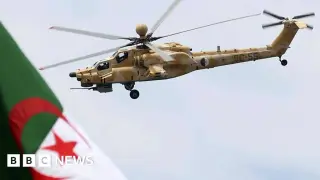
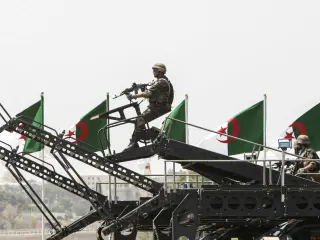
Algeria has authorized its first overseas military deployment since 1973, sending troops to Niger to protect energy infrastructure. The move follows a diplomatic thaw between the two nations and aims to secure a planned gas pipeline and oil exploration sites in northern Niger, where armed groups linked to al-Qaeda and Islamic State pose a threat.
Algerian parliament approved the first overseas military deployment since 1973, sending troops to Niger to protect energy assets and stabilize the Sahel. The move marks a significant shift in Algiers' noninterventionist doctrine, driven by security concerns and the strategic importance of the Trans-Saharan Gas Pipeline.
A failed military mutiny in Niger revealed that Russia’s Africa Corps can protect the junta but not solve the jihadist insurgency. While Moscow secured the capital, Algeria’s sudden military support signaled a shift in regional power dynamics.
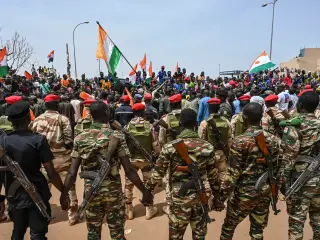
On August 29, 2026, mutinous soldiers in Niger attacked the presidential palace and Base 101 in Niamey, threatening the rule of President Abdourahmane Tchiani. The rebellion was quickly contained with the assistance of Russia’s Africa Corps, a paramilitary force that has become a key security partner for Sahel juntas. While the coup attempt was thwarted, it exposed deep internal fractures within Niger’s military and highlighted the regime’s growing dependence on Moscow to maintain stability against both internal dissent and external jihadist threats.
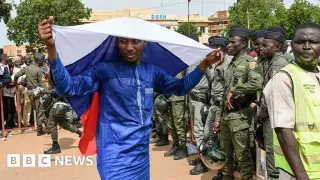
Niger’s military government contained a weekend mutiny in Niamey, but the uprising exposed deep tensions within the army and highlighted the expanding role of Russian forces in the country. The unrest, which began at a key airbase and spread to the presidential palace, was quelled with the assistance of Russia’s Africa Corps, marking a significant shift in Niger’s security partnerships away from Western allies.
Niger’s military government successfully repelled an attempted coup in Niamey, with Moscow claiming its Africa Corps provided crucial assistance. The mutiny, led by young officers frustrated by battlefield losses against jihadist groups, exposed deep internal rifts within the regime. While Russia and Algeria projected military support, the incident highlights the fragility of the current military-led order in the Sahel.
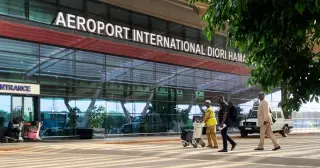
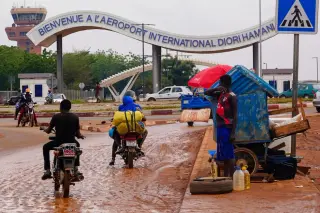
Mutinous soldiers attacked the Diori Hamani International Airport and the presidential palace in Niamey, Niger, early on Saturday, August 29, 2026. The assault triggered hours of gunfire and explosions, briefly disrupting state broadcasts. While loyalist forces claimed to have secured the presidential palace by morning, the airport remained contested into the afternoon. The unrest highlights growing frustration within the military over heavy casualties against jihadist groups and raises concerns about internal stability under General Abdourahamane Tiani’s rule.
On August 29, 2026, mutinous soldiers in Niger launched an attempted coup in the capital Niamey, attacking the presidential palace and seizing the national broadcaster. The government of General Abdourahamane Tchiani declared the insurrection failed after security forces regained control of key sites. Analysts attribute the unrest to deep frustration among young officers over worsening battlefield losses against jihadist groups and geopolitical tensions, marking the most serious internal challenge for the military regime in years.
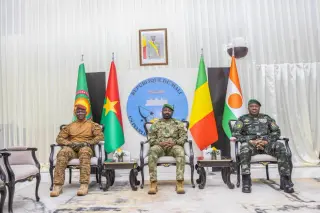
Niger’s military government faces its most severe internal challenge since seizing power in 2023, as mutinous soldiers attacked the capital’s airport and presidential palace. The unrest, driven by frustration over heavy casualties from jihadist attacks, threatens the stability of General Abdourahamane Tiani’s regime and the broader Alliance of Sahel States.
Sustained gunfire and explosions struck multiple sites in Niger's capital, Niamey, early on August 29, 2026. Attacks targeted the Diori Hamani international airport and Base 101, a major military installation, with heavy fire also reported near the presidential palace. Security sources described the perpetrators as 'terrorists' attempting to breach security perimeters. Officials stated that defense forces regained control and neutralized some attackers, while others fled. The cause of the attack was not immediately clear, and Reuters could not independently verify all claims. Niamey remains under military rule since a 2023 coup, with the government having shifted toward Russia and joined the Alliance of Sahel States.
American missionary Kevin Rideout has been released after more than nine months of captivity in Niger and is preparing to return to the United States. President Donald Trump announced on Sunday that Rideout has been reunited with his wife, Krista, and is in good health. SIM International, the organization Rideout serves as a pilot for, confirmed his release to US officials. The abduction occurred on October 21, 2025, near Rideout’s home in Niamey, just 150 feet from the presidential palace. Trump characterized the kidnapping as the work of 'Jihadi terrorists' and noted this is the 110th captive American liberated during his second term. While the specific group holding Rideout remains unidentified, analysts link the incident to rising Islamist militant activity in the region following a 2023 military coup in Niger.
American missionary Kevin Rideout has been released after nine months of captivity in Niger, according to his employer SIM International. He was kidnapped in October 2025 in Niamey and is now in the care of US officials. President Trump claimed credit for the release, though details regarding the captors and the rescue operation remain unclear.
Kevin Rideout, a 50-year-old American missionary, has been released after nine months of captivity in Niger. SIM International confirmed his release to US officials, stating he is in good health. President Trump claimed credit for the rescue, while details regarding the specific captors and release mechanics remain unclear.
Gunmen attacked Niger's Niamey international airport, triggering a firefight and temporary disruption of operations; authorities have not immediately disclosed casualties or claimed responsibility.
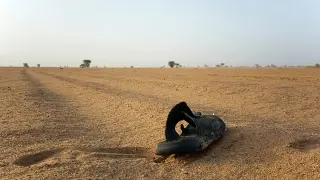
In northern Niger, a truck carrying people home from a religious festival in Mali broke down in the Sahara near Assamaka, leaving 49 dead from thirst after days without water; two survivors walked over 50 km to reach a water source and alert authorities, and the deceased were buried in mass graves at the scene as investigators assess the breakdown's cause.