
Russian 'Double-Tap' Strike on Komyshuvakha Aid Hub Kills 26 Amid Peace Talk Resumption
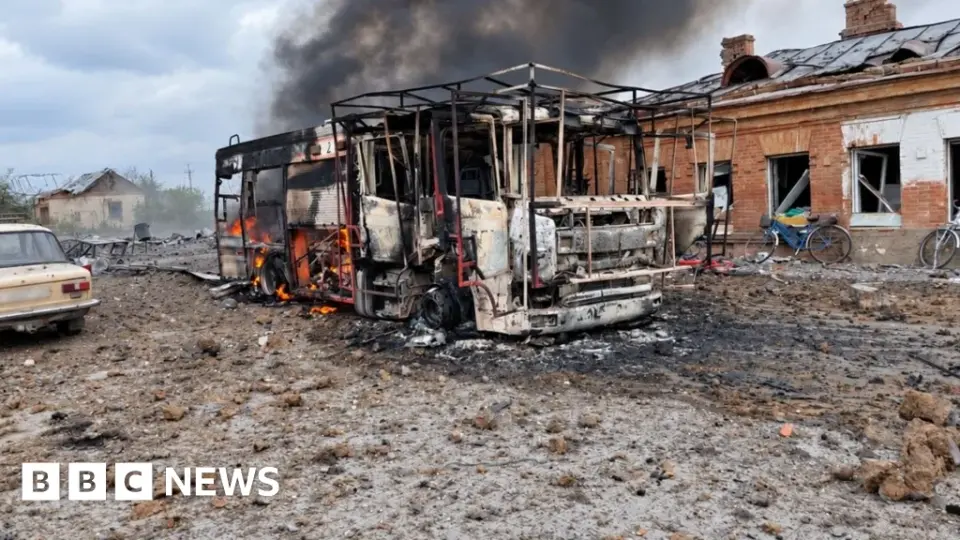
Russian aerial bombs struck a school serving as a humanitarian aid center in the village of Komyshuvakha, killing at least 26 people. President Zelensky condemned the attack as a deliberate act to sabotage de-escalation efforts following a recent ceasefire in Oleshky. Rescue operations were hindered by subsequent drone strikes, while US-led peace talks are scheduled to resume in Abu Dhabi on November 10 and 11.
Key points
- At least 26 people were killed and five injured when Russian bombs hit a school used for aid distribution in Komyshuvakha, Zaporizhzhia region.
- The attack involved a 'double-tap' strategy, with a second strike targeting the shelter where residents were seeking refuge after the initial blast.
- Rescue efforts were repeatedly halted by Russian drone attacks, leaving 27 people missing and others trapped under rubble.
- US special envoy Steve Witkoff confirmed that three-way peace talks between the US, Russia, and Ukraine will resume in Abu Dhabi on November 10 and 11.
- Zelensky stated that the strike proves Russia rejects de-escalation, contrasting it with the recent successful evacuation in Oleshky brokered by Melania Trump.
Background
This incident follows a brief, localized ceasefire in the Russian-occupied city of Oleshky, which began on October 27 to facilitate humanitarian aid and civilian evacuation. That truce, brokered by US First Lady Melania Trump, was the longest pause in fighting since the full-scale invasion began in 2022. Prior to this, tensions had risen after US envoy Steve Witkoff praised Russian President Vladimir Putin as a 'humanitarian' in late October, a comment Zelensky mocked following Russian strikes on Kyiv. The current attack occurs as the Kherson region ceasefire expired, and as both Ukrainian and Russian emergency alert apps were hacked with false nuclear warnings, highlighting the fragile security environment.
How outlets are covering it
BBC and The Guardian emphasize the deliberate nature of the strike, noting that residents gathered weekly for aid, making the target predictable. Al Jazeera adds that Zelensky warned of a broader 'massive attack' on energy networks timed to coincide with US midterm elections, suggesting a strategic distraction. AP News focuses on the cyber dimension, reporting that fake nuclear alerts were sent via hacked apps in both Ukraine and Russia, though it notes little panic resulted in Ukraine. All sources agree that the attack undermines the momentum from the Oleshky evacuation, with Zelensky arguing Russia is choosing killing over peace. The Kremlin has not publicly commented on the strike, while Witkoff maintains that talks will proceed despite the violence.
Why it matters
The attack demonstrates the continued vulnerability of civilian infrastructure and humanitarian corridors in the fifth year of the war. It directly challenges the narrative of de-escalation promoted by recent diplomatic efforts, potentially complicating the upcoming Abu Dhabi talks. The timing, coinciding with US midterm elections and the expiration of the Kherson truce, suggests a calculated strategy to disrupt diplomatic momentum and test the limits of Western support. The high death toll, including emergency responders, highlights the escalating risk to aid workers and the failure of previous ceasefire models to ensure lasting safety.
What to watch
Rescue teams will continue efforts to recover the missing 27 individuals, though drone threats may persist. US, Russian, and Ukrainian delegations are expected to meet in Abu Dhabi on November 10 and 11 to discuss post-war security and de-escalation. European and NATO officials will meet US negotiators in Brussels this week. Ukraine may face increased pressure on its energy and logistics networks as Zelensky warned of further Russian attacks. The international community will monitor whether the Komyshuvakha strike leads to any diplomatic consequences or sanctions, or if talks proceed as scheduled despite the violence.
- Russian bombing kills 26 people at Ukraine aid centre, Kyiv says BBC
- Russian bombing of Ukrainian aid centre kills at least 26, Kyiv says The Guardian
- Russian attack on Ukraine aid hub kills 26 as US announces new peace talks Al Jazeera
- Russian Strike on Ukraine Humanitarian Hub Kills Dozens The New York Times
- Russia bombs aid center and shelter in southern Ukraine, killing 26, officials say AP News
Want the full story? Read the original reporting
Read on BBC