
1,800 Volunteers Manually Drag 360-Tonne Hirosaki Castle Keep to Preserve Historic Structure
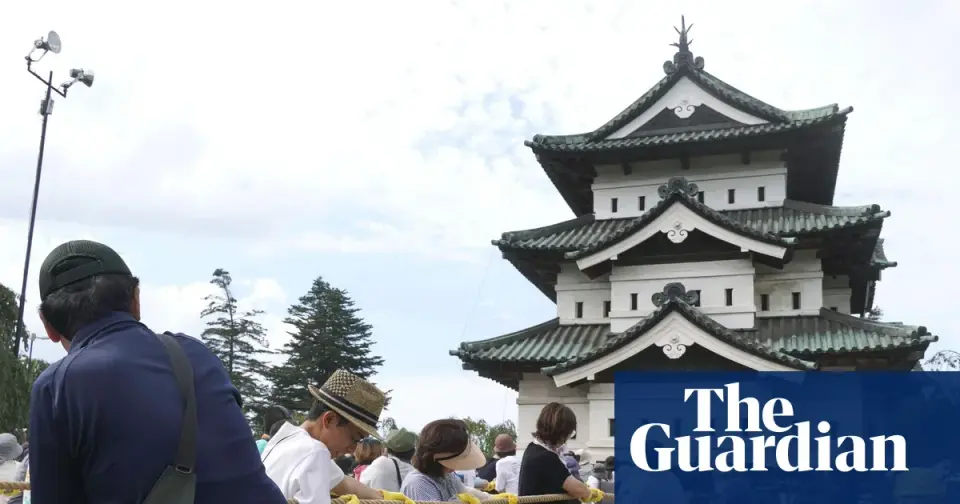
In Aomori, Japan, approximately 1,800 volunteers participated in a traditional manual relocation of the 360-tonne keep of Hirosaki Castle. Using the ancient technique of hikiya, which involves moving structures on rollers rather than dismantling them, the crowd shifted the historic tower by over two metres over a weekend. This effort is part of a larger preservation project following earthquake damage, with the structure scheduled to reopen to the public in 2033.
Key points
- The 360-tonne keep of Hirosaki Castle in Aomori prefecture was moved by hand using the traditional hikiya method, which places buildings on rollers to avoid dismantling.
- Rotating teams of 80 people pulled the structure on 30-metre ropes, shifting it 1.13 metres on Saturday and 1.09 metres on Sunday.
- The move was necessary to repair a wall damaged by a major earthquake, with the wall restoration completed in December 2024.
- The event drew 8,000 applicants for 1,800 slots, with participants from across Japan and internationally, including Southeast Asia, Europe, and North America.
- The keep is a nationally designated important cultural property and the only surviving castle keep in Japan’s Tohoku region.
- The manual pulling will continue until August, moving the structure a total of 5 metres, with the remaining 73 metres to be moved by machinery by year's end.
Background
Hirosaki Castle, completed in 1611 and rebuilt in 1810 after a fire, is a major tourist attraction drawing 2 million visitors annually during cherry-blossom season. The current preservation effort is part of a long-term project that began after earthquake damage, with the wall restoration completed in late 2024. The use of hikiya is a revival of a technique not used for castle relocation in a century, first employed for this specific project in 2015.
Why it matters
This event highlights the intersection of traditional craftsmanship and modern community engagement in preserving Japan's cultural heritage. The manual relocation of a massive historic structure using ancient techniques, involving thousands of volunteers, underscores the value placed on preserving architectural integrity and fostering public participation in cultural conservation. It also demonstrates the logistical and symbolic significance of maintaining historic sites through non-destructive methods.
What to watch
The manual pulling of the keep will continue until the end of August, with approximately 4,100 people scheduled to move it a total of 5 metres. The remaining 73 metres of the relocation will be completed using machinery by the end of the year. Once the keep is back on its original base, preservation work will begin, and the structure is expected to reopen to visitors in 2033.
Want the full story? Read the original reporting
Read on The Guardian