
Ukraine Confirms First AI Turret Kills of High-Speed Russian Drones
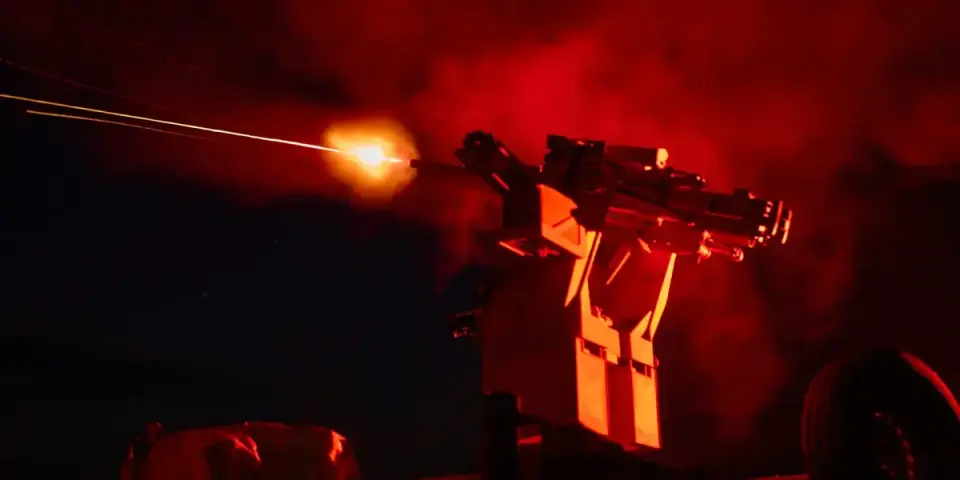
Ukraine has confirmed the first successful interceptions of Russia's fastest jet-powered attack drones using AI-enabled robotic gun turrets. Air Force spokesperson Yurii Inhat stated that these systems, which utilize machine vision and .50-caliber machine guns, have shot down Geran-5 drones. President Volodymyr Zelenskyy reported that over a dozen turrets are installed in Kyiv, with eight more planned for the region. This development aims to improve interception rates, which currently stand at 50-70% for jet-powered drones compared to over 85% for slower propeller models.
Key points
- Ukraine's AI-enabled robotic turrets achieved their first confirmed kills against Russian Geran-5 jet-powered drones, which can reach speeds of up to 375 mph.
- The turrets feature .50-caliber machine guns and rely on artificial intelligence and machine vision for target acquisition and interception.
- President Zelenskyy confirmed that more than 12 turrets are deployed in Kyiv, with an additional 8 planned for the wider region, including on bridges targeted by Russian strikes.
- Ukraine is simultaneously testing new interceptor systems, including the 'Nika' small missile and the German-developed 'SPYS' (also referred to as 'Spear') drone, to counter high-speed threats.
- Interception rates for jet-powered drones remain lower than for conventional drones, standing at 50-70% according to Air Force officials, versus over 85% for propeller-powered models.
Background
This development follows a significant escalation in Russian drone attacks, with Moscow launching 2,800 jet-powered drones in August 2026 compared to 350 in June. Ukraine previously deployed the Sky Sentinel AI turret in 2025 and has been upgrading its interceptor drone capabilities, including the 'Bars' long-range drone, to address the speed advantage of Russian jet-powered UAVs. Recent strikes on civilian infrastructure, including pharmaceutical warehouses and bridges, have prompted the accelerated deployment of these defensive systems.
How outlets are covering it
Business Insider emphasizes the technological breakthrough of AI-enabled turrets achieving first kills against the fastest Russian drones, highlighting the .50-caliber weapon system and limited range. Ukrinform and United24 Media focus on the broader defense strategy, including the testing of new 'Nika' missiles and the German-Ukrainian 'SPYS'/'Spear' interceptor, noting that Zelenskyy described the SPYS test as successful. While Business Insider cites interception rates of 50-70% for jet drones, United24 Media reports Zelenskyy's earlier figure of 50-60%, indicating slight variations in reported statistics. All sources agree on the deployment of turrets in Kyiv and the challenge posed by jet-powered drones, but differ in emphasis between the turret technology and the new missile/interceptor drone developments.
Why it matters
The successful interception of high-speed jet-powered drones by AI turrets represents a critical shift in Ukraine's air defense strategy, addressing a major vulnerability in its current defense capabilities. As Russia increases the use of faster, harder-to-intercept drones, Ukraine's ability to deploy automated, AI-driven defenses could significantly reduce damage to civilian infrastructure and critical facilities. The development of new interceptors like 'Nika' and 'SPYS' further diversifies Ukraine's defense options, potentially improving overall interception rates and reducing reliance on slower, traditional air defense systems.
What to watch
Ukraine plans to deploy an additional eight turrets across the Kyiv region, with some installed on bridges. Testing of the 'Nika' missile and 'SPYS' interceptor will continue, with results expected to inform future deployment strategies. Ukraine may also expand the use of these systems to other regions facing increased drone threats. The success of these new systems could lead to further integration of AI and machine vision in Ukraine's air defense network, potentially improving interception rates for jet-powered drones beyond the current 50-70% range.
- Ukraine's robotic gun turrets have scored their first kills of Russia's fastest attack drones Business Insider
- Ukraine preparing to possibility of Russia's increase jet drones speed Українська правда
- Zelensky: Ukraine tests Nika missile and SPYS interceptor against jet-powered drones Ukrinform
- Jet-powered drones outpace Ukrainian defenses as manufacturers race to build new interceptors AP News
- Ukraine Develops New Nika Missile to Shoot Down Jet-Powered Shahed Drones UNITED24 Media
Want the full story? Read the original reporting
Read on Business Insider